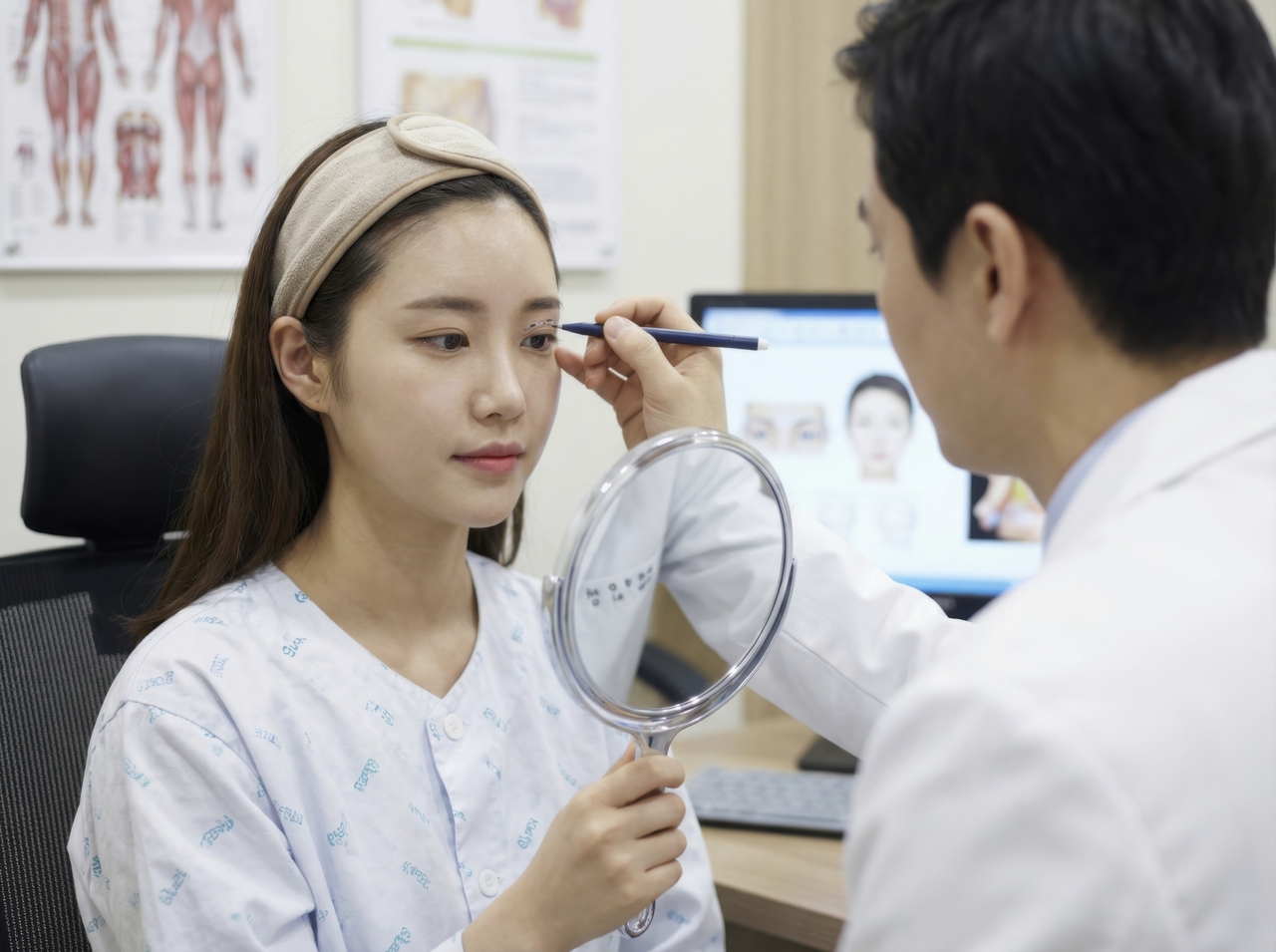
South Korea performed an estimated 844,000 cosmetic plastic surgery procedures last year — about 16 per 1,000 people — placing it among the highest rates in the world relative to population. More than 70 percent of all procedures targeted the face and head, and eyelid surgeries alone exceeded 200,000 cases.
About 17.9 million cosmetic plastic surgery procedures were performed worldwide last year, up roughly 25 percent from 2021, according to The Conversation, a US nonprofit academic outlet, on Tuesday (local time).
Scott Hollenbeck, a professor of plastic surgery at the University of Virginia and former president of the American Society of Plastic Surgeons (ASPS), and fellow University of Virginia researcher Amy Wen analyzed national trends in cosmetic surgery using data from the International Society of Aesthetic Plastic Surgery (ISAPS).
An ISAPS report released in September estimated that South Korean plastic surgeons performed 844,085 surgical cosmetic procedures and about 1.12 million non-surgical cosmetic treatments last year. The combined total of about 1.97 million procedures ranked fifth among surveyed countries, behind the United States, Brazil, China and Japan.
By body area, the face and head accounted for 594,734 procedures, or 70.5 percent of all surgeries. Breast-related procedures totaled 137,311 (16.3 percent), while surgeries on the torso and limbs came to 112,039 (13.3 percent).
The most common procedure was eyelid surgery — including double-eyelid operations — with 203,018 cases, approaching one in four of all cosmetic surgeries performed. Facial fat grafting followed at 96,595 cases, then brow lifts (77,782), rhinoplasty (74,974) and liposuction (49,421).
Among non-surgical treatments, botulinum toxin injections led with 532,397 cases, followed by hyaluronic acid filler procedures at 374,026. Together, the two treatments accounted for 80.7 percent of all non-surgical cosmetic procedures in the country.
Countries showed clear differences in preferred procedure types. While South Korea and China concentrated on facial surgeries, the United States and Brazil leaned toward body-contouring procedures.
China performed about 1.41 million cosmetic surgeries last year, with face and head procedures totaling about 805,000 — 57.1 percent of the national total. As in South Korea, eyelid surgery was the most commonly performed procedure.
Japan showed a similar concentration on the face and head. Of 427,248 total cosmetic surgeries performed last year, 342,211 — roughly 80 percent — involved the face and head.
Brazil led all surveyed countries with about 2.36 million cosmetic surgeries last year, equivalent to roughly 11 procedures per 1,000 people. Body-contouring operations such as liposuction, breast augmentation and abdominoplasty were particularly prevalent.
The United States also skewed toward body procedures over facial ones. Of roughly 2.23 million surgeries last year, about 920,000 involved the torso and limbs. Non-surgical cosmetic treatments — including Botox and fillers — totaled about 3.23 million, the highest among all surveyed countries.
Hollenbeck and colleagues found that while aesthetic standards are increasingly shaped by cross-border social media influence, the types of procedures people prefer still vary significantly by regional culture and social context.
The so-called "Instagram face" — characterized by full lips and high cheekbones — has spread across borders through social media. In South Korea, the appearance of K-pop singers and drama series actors was found to play a significant role in shaping local beauty standards.
A 2022 study published in the journal Aesthetic Plastic Surgery by researchers at Jeju National University also found that women in South Korea are frequently exposed to cosmetic surgery-related content.
In an online survey of 291 women aged 20 to 69 conducted in 2021, about 90 percent of respondents said they had encountered cosmetic surgery advertisements. Some 30.2 percent had undergone a surgical or non-surgical cosmetic procedure, and 52.6 percent said they were considering one in the future.
South Korea is also a leading destination for medical tourism centered on cosmetic surgery and aesthetic treatments, with foreign patients increasingly making the trip for procedures.
In the ISAPS survey, the median share of foreign patients reported by South Korean plastic surgeons was 10 percent, with the mean reaching 24 percent. China, Japan and the United States were cited as the top source countries.
The number of foreign patients visiting South Korean medical institutions has grown rapidly. According to the Ministry of Health and Welfare, about 2.01 million foreign patients visited South Korea last year, up 71.9 percent from the previous year — the first time the annual figure has surpassed 2 million since the government began tracking the data in 2009.
By medical specialty, dermatology drew the most foreign patients at about 1.31 million, followed by plastic surgery at 233,100. The two specialties together accounted for 74.1 percent of all foreign patient visits by department.
According to a 2025 statistical analysis report on foreign patient attraction by the Korea Health Industry Development Institute, Japanese patients made up the largest share of foreign visitors to South Korean plastic surgery clinics at 97,847, or 42.0 percent of the total. Chinese patients numbered 57,121, accounting for 24.5 percent.
The Ministry of Health and Welfare attributed the rise in foreign patients to growing demand for cosmetic and non-surgical treatments, as well as the rising global popularity of Korean cosmetics and K-content.
Hollenbeck and colleagues projected that the global cosmetic surgery market will continue to grow, driven by advances in surgical techniques, the spread of information through social media, and celebrities' increasing openness about their own procedures.
rainbow@heraldcorp.com