4 season 1 players from 'Rookie Coach Kim Yeon-koung' have reached the V-League
Sports entertainment moves beyond discovery to bid for a pro franchise
Growth narratives are reshaping the real sports market
A promising Japanese volleyball player has found a new beginning through a Korean television program. Setter Tanyama Tsubaki, 19, who won Japan's national high school volleyball championship — known as the Haruko — in January this year, has stepped onto a new starting line through MBC's "Rookie Coach Kim Yeon-koung 2."
Tsubaki had hoped to turn professional but received no offers from Japanese clubs and chose to enroll in university instead. Tsubaki then joined the Pilseung Wonderdogs on the show. Japanese sports outlet The Answer covered the move to Korea on Nov. 3, drawing attention to the fact that it was a Korean TV program — not the Japanese volleyball establishment — that gave the overlooked prospect a new opportunity. The report also noted that coach Kim Yeon-koung had highly rated Tsubaki's skills at the tryout.
Cases where a broadcast has uncovered a player's potential and led directly to a professional career have now emerged multiple times. Four players from season 1 went on to join V-League clubs, and with season 2 underway, Kim Da-sol has also received a call from a professional team. Sports entertainment has begun to function as a genuine new channel for player discovery, going well beyond content that simply shows matches.
Wonderdogs: a stage for players to try again
"Rookie Coach Kim Yeon-koung" is an MBC sports reality program that premiered Sept. 28 last year and wrapped its first season on Nov. 23 that year. Kim Yeon-koung, who represented the national team and played in overseas leagues, turned coach after retirement to lead the Pilseung Wonderdogs.
The roster was built around players cut from professional clubs, those who had struggled to get court time, and athletes from university and semi-professional teams dreaming of turning pro. Kim personally selected and trained the players before pitting them against university, semi-professional and professional sides in real competitive matches. By combining unscripted results with the players' personal stories and growth, the show put the journey of earning a second chance and developing as a team front and center, rather than playing purely for laughs.
The player who captured viewers' attention in season 1 was Mongolian outside hitter Inkushi. Chosen by Kim to join the squad, Inkushi gradually made her presence felt on attack while adapting to Korean volleyball and team culture. Her habit of responding to the coach's instructions with a clipped "Nep!" — a Korean affirmative — earned her the nickname "Nepkushi," and the combination of fierce focus on the court and unguarded reactions off it drew both laughter and warm support from fans.
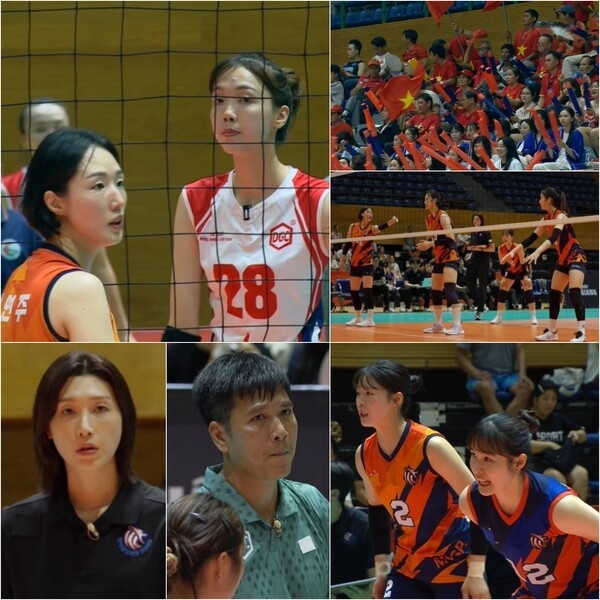
Kim's demanding coaching style also drew considerable attention. Kim did not let mistakes or lapses in concentration slide, telling players: "Don't compromise. Don't make excuses. Find solutions." A moment in which Kim told a player who had apologized to teammates after an error — "Stop saying sorry. You'll lose the match apologizing" — also became a talking point. The message was clear: instead of dwelling on mistakes, focus on fixing them in the next play.
The sharp criticism did, however, draw pushback, with some questioning whether it was too harsh to deliver in front of the players. Remarks by coach Cha Sang-hyun on the matter sparked debate among volleyball fans, and some viewers expressed discomfort with the way the show emphasized the players' desperate circumstances or called out errors publicly. At the same time, many praised the production for showing the coach's genuine commitment and the players' growth.
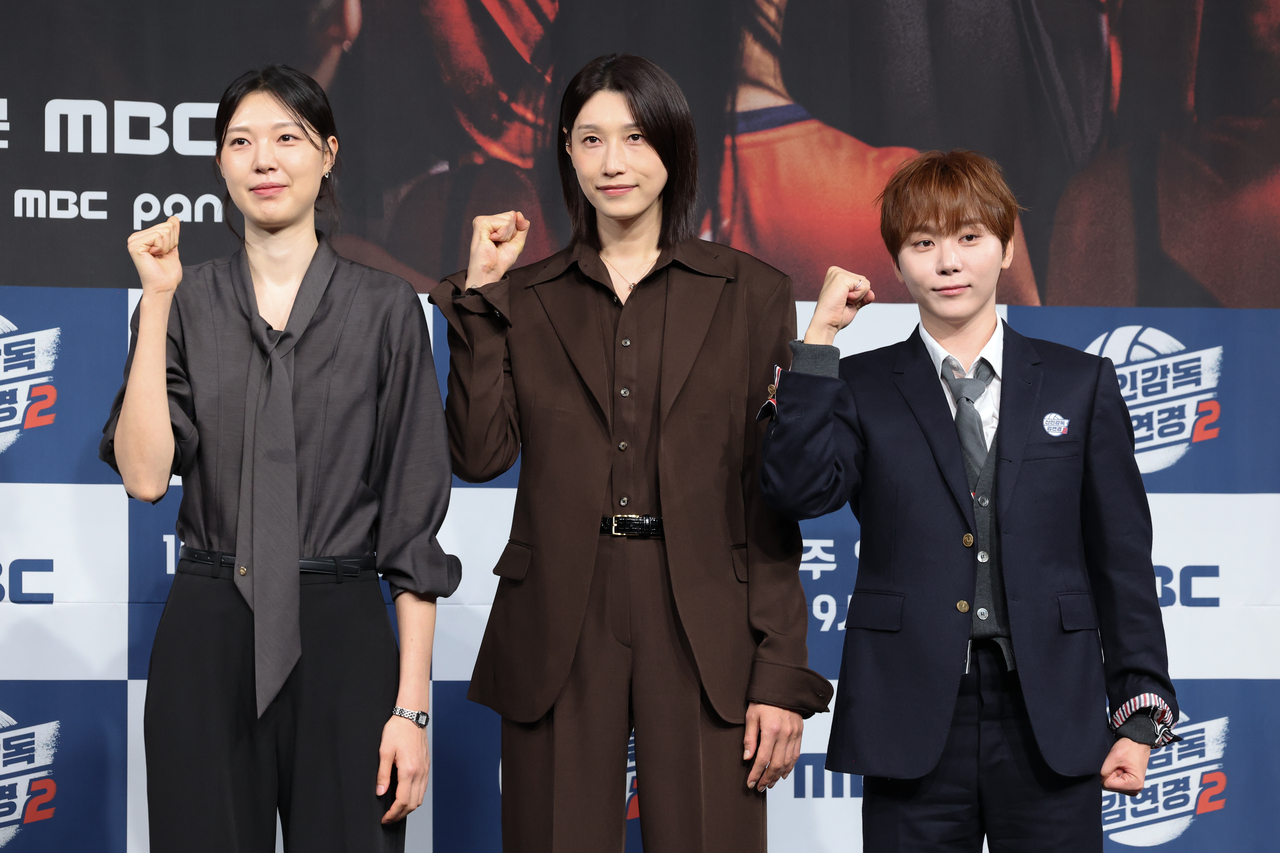
The debate resurfaced at the season 2 press showcase. At the event held at MBC's Sangam headquarters in Seoul on Oct. 8, Kim recounted hearing from a viewer who had watched season 1 on mute because watching Kim's angry outbursts was uncomfortable. Kim said the plan had been to show a softer side in season 2, but admitted that facing tough opponents had ultimately brought the old intensity back out.
Five players and counting have reached the pro stage
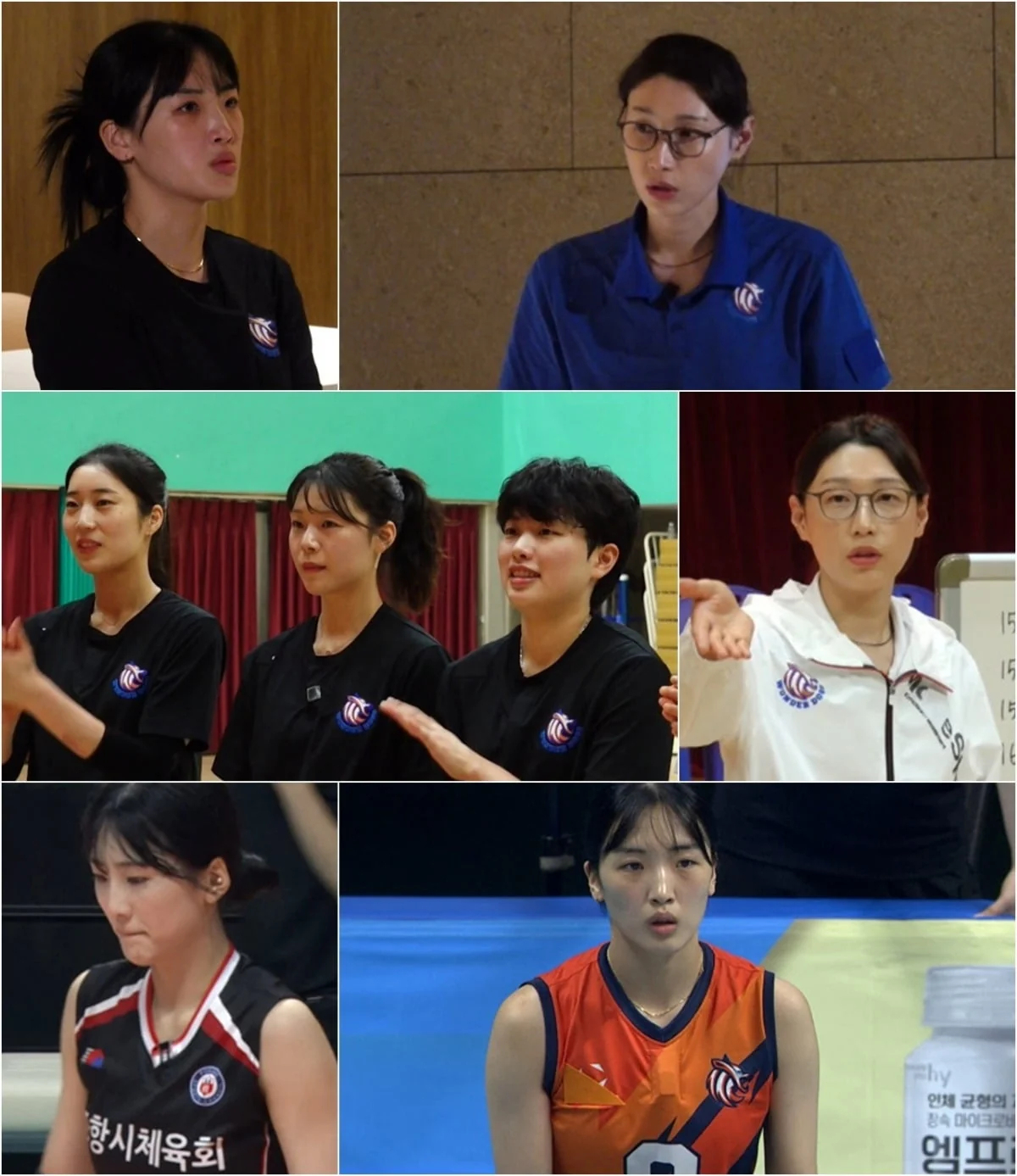
For players who had been passed over by professional clubs, the Wonderdogs became a chance to prove themselves again. Four season 1 alumni — Lee Na-yeon (Heungkuk Life), Inkushi (Jeong Kwan Jang), Pyo Seung-ju (Heungkuk Life) and Gu Sol (Hyundai Engineering & Construction) — were signed by V-League clubs. As players who had caught the public eye on the show went on to be chosen by actual professional teams, the program's role as a talent-discovery vehicle drew growing recognition.
The most emblematic case is Lee Na-yeon. A veteran setter who had joined the Industrial Bank of Korea in 2011 and gone on to play for GS Caltex and Hyundai Engineering & Construction, Lee announced her retirement after the 2023-2024 season. She then joined the Wonderdogs, showed she still had what it takes, and returned to the professional stage last October in a Heungkuk Life uniform. At the time, Heungkuk Life had been struggling to manage its setter rotation after starting setter Lee Go-eun was injured, and Lee Na-yeon's wealth of experience was expected to shore up the squad.
Inkushi, too, earned recognition for her potential through the show, signed with Jeong Kwan Jang and experienced the V-League during the 2025-2026 season. Inkushi later returned to student status but came back to the Wonderdogs for season 2 — the youngest member who had once been coached by Kim now returning as a sunbae looking out for the newer players. Kim demanded the same competitive standard from Inkushi as from everyone else, pro experience notwithstanding. The show does not simply tell a player's success story once and move on; it continues to follow what comes after the breakthrough.

Season 2 has also brought good news. Setter Kim Da-sol, 29, agreed to a contract with women's professional volleyball club Jeong Kwan Jang on Nov. 15. Kim had joined Heungkuk Life as a trainee player in the 2014-2015 season and spent 12 seasons with the club before parting ways after the 2025-2026 season ended. After taking on a new challenge as a second-generation Wonderdogs member, Kim received the call from Jeong Kwan Jang — becoming the first season 2 player to turn professional and the fifth overall from the program.
Finding players outside the clubs' field of vision
The structural constraints of how professional clubs recruit players help explain why a broadcast could become a discovery channel. Clubs select players by weighing positional needs, age, salary, injury history and tactical fit — all within a limited roster size and budget. Even a talented player can be shut out if the club does not need that position right now or if competition with existing players is too stiff.
Once a player has been pushed out of the professional tier, diminishing playing time makes it even harder to prove their worth again. The same is true for university and semi-professional players, athletes preparing to return from retirement, and prospects who developed overseas but have no connection to domestic clubs. Professional scouting alone cannot cover every player and every match. In sports with shallow talent pools in particular, even players with genuine potential have limited opportunities to show their abilities to the public or to clubs.
The show attacks that blind spot from a different angle. Players are selected through a tryout, trained together over a set period and put through real competitive matches. That process allows the production to assess not just match performance — which a single test can struggle to capture — but also adaptability, decision-making and chemistry with teammates, observed repeatedly over time. Players' personal backgrounds and development journeys are also made public, giving both viewers and clubs a fuller picture of each player's potential.
The presence of Kim Yeon-koung as coach is another differentiator. A player with world-class experience and a deep understanding of volleyball at home and abroad personally evaluates and trains the athletes. For the players, it is a chance to have their abilities assessed from a genuinely expert perspective; for viewers, it offers the pleasure of watching a player grow within a team.
Ratings and buzz confirm the appeal of a growth narrative
The show's popularity reflects the public's appetite for athletes' stories. Season 1 launched with a nationwide household rating of 2.2 percent but climbed to 5.8 percent in its ninth and final episode. The segment featuring Lee Na-yeon's return to professional volleyball and her reaction to it hit a per-minute peak of 7.7 percent. Viewers were drawn not only to the players' on-court performances but to the journey each took to get back on the court.
Season 2 opened on Oct. 11 with a nationwide household rating of 4.8 percent, a stronger start than its predecessor. It also topped GoodData Corporation's FUNdex chart for non-drama TV and OTT buzz in the fourth week of October, with coach Kim Yeon-koung ranking first among individual cast members. The show held the top spot in the non-drama buzz category for three consecutive weeks through earlier this month.
In season 2, an early draw was a rematch against Japan's prestigious Shujitsu High School, which had handed the Wonderdogs a comeback defeat in season 1. In the first episode, Kim declared: "Shouldn't we show them, on Korean soil, the bitter taste of defeat?" — signaling a determination to settle the score. The episode closed with a scene of a Shujitsu prospect issuing a challenge to the Wonderdogs, and the per-minute peak rating reached 6.6 percent.
Viewers' expectations have also risen. Season 2 has drawn criticism for an overuse of slow-motion and replay footage that disrupts the flow of matches, and complaints that frequent commercial breaks break immersion. Some viewers have called for more expert commentary from analyst Yang Hyo-jin. The feedback suggests audiences now expect the show to deliver not just the players' growth stories but also the genuine excitement and depth of volleyball itself.
Seeking an owner — and aiming to found an 8th club
Season 2 has set its sights beyond player discovery, announcing an ambition to establish a new eighth club in the women's professional volleyball league. Where season 1 demonstrated that players could earn a second chance and reach the professional level, the plan this time is to develop the team built through the show into an actual professional franchise.
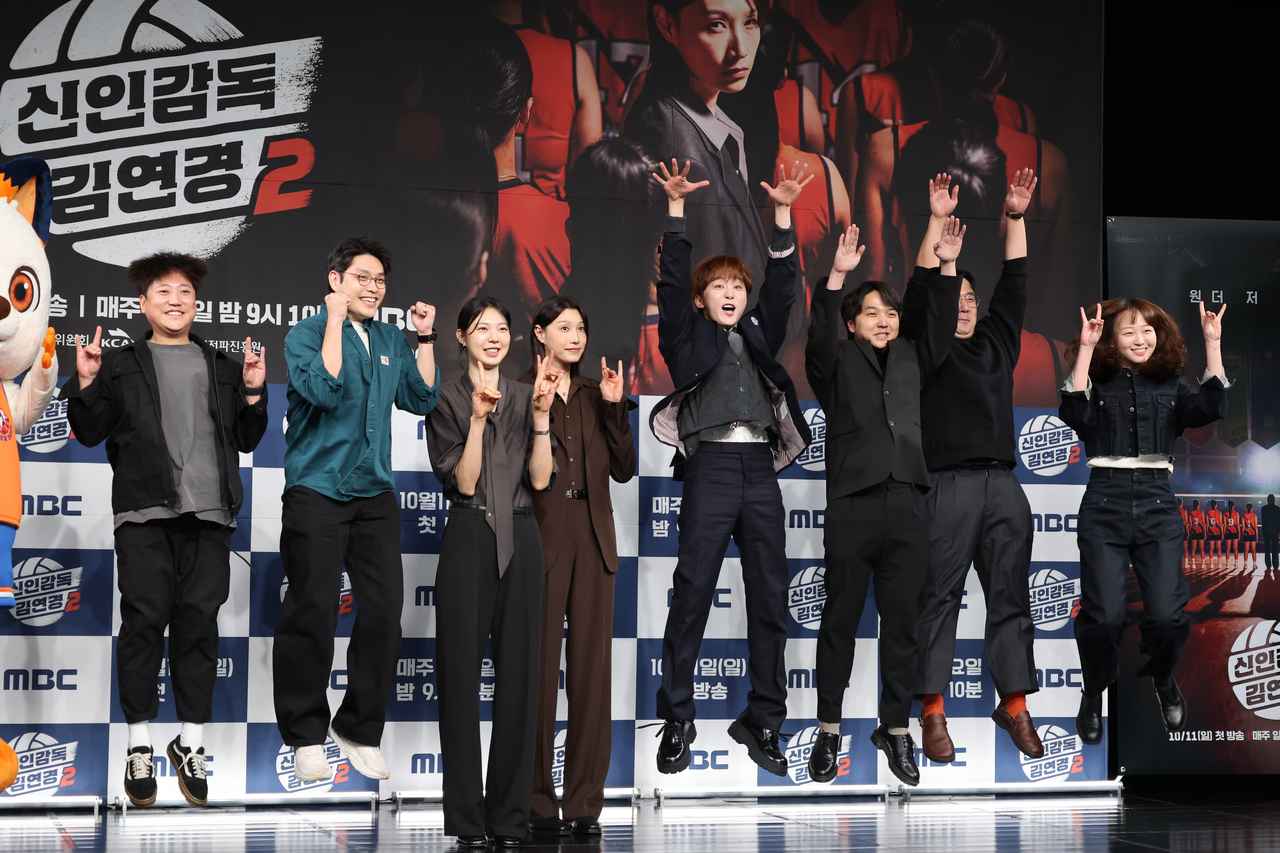
At the Oct. 8 press showcase, the production team outlined the season 1 players' professional moves and its own progress toward founding a club. Producer Kwon Rak-hee said several companies had expressed interest immediately after season 1 ended, adding that establishing a club was not an impossible goal. The production team also stated that if no owner came forward by the time season 2 finished airing, it would not produce another season.
Whether corporate interest translates into an actual club is, however, a separate question. Running a professional volleyball franchise requires sustained funding — player and coaching staff salaries, training facilities, travel costs for away matches and home-region operations. Strong ratings alone cannot solve that. It is precisely for this reason that the production team is exploring options beyond the conventional club-founding model, including naming sponsorships and other arrangements.
Whether sports entertainment can establish itself as a genuine new gateway into professional sports remains to be seen. The key questions are how long the players who turned professional through the show can remain competitive, whether clubs will use the program as a reference tool in their scouting, and whether the founding of an eighth club can actually be realized.
Even so, the cases of players who were overlooked in the professional selection process, reassessed through a broadcast and ultimately signed to professional contracts carry real significance. A 19-year-old prospect who received no offers from Japanese clubs has now embarked on a new challenge through a Korean television program. The show's role is growing — not merely presenting sport, but uncovering talent and testing new possibilities for the market itself.
yjc@heraldcorp.com