Emotional abuse definition to be clarified; scope of protected teaching activities expanded
Investigation procedures to be streamlined; cases with no evidence to be closed quickly
Legal fees of up to 10 million won to be covered through teacher mutual aid program
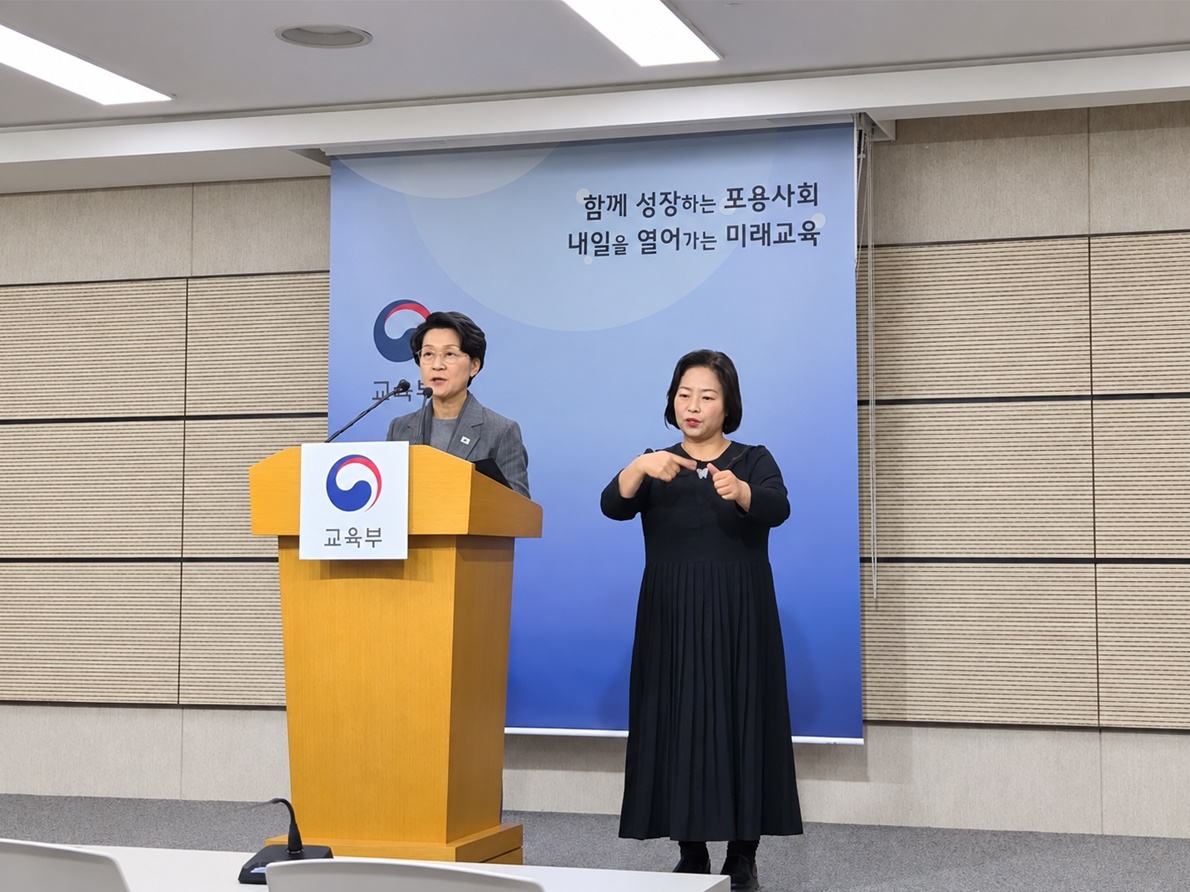
The government is moving to reform laws and regulations to protect teachers who face child abuse reports despite carrying out legitimate educational activities. The measures aim to clarify the definition of "emotional abuse," broaden legal protections for teachers' instructional conduct, reduce the investigative burden posed by false reports, and strengthen legal support.
The Ministry of Education announced the plan Thursday alongside the Ministry of Health and Welfare, the Ministry of Justice and the Korean National Police Agency at the 15th National Policy Coordination Meeting, chaired by the prime minister.
The government will first move to sharpen the definition of emotional abuse under the Child Welfare Act. The current law defines it as "acts of emotional abuse that harm a child's mental health and development," but critics have long argued the standard is too vague. The government plans to incorporate criteria established in Supreme Court precedent, defining the offense as conduct involving psychological violence or cruel treatment severe enough to harm a child's mental health or welfare, or to impede normal development.
Amendments to the Elementary and Secondary Education Act are also planned. Under the proposed changes, educational activities and student guidance by school principals and teachers would be recognized in principle as lawful conduct and excluded from the scope of the Child Welfare Act. An exception would apply when the conduct substantially exceeds what is socially reasonable given its educational purpose and causes, or risks causing, harm to a student's physical or emotional development.
Investigation procedures will also be overhauled. Police will be required to close cases quickly when it is clear that the conduct in question constituted legitimate student guidance and there is no evidence to support the allegation. At the prosecution stage, cases in which a provincial or metropolitan education superintendent has submitted an opinion and police have found no grounds for charges will be handled swiftly with minimal additional inquiry, under guidelines to be updated accordingly.
The safety net for teachers will be strengthened as well. Provincial and metropolitan offices of education will be required to provide close, hands-on support to teachers throughout any investigation stemming from a false child abuse report. Standard terms for the teacher protection mutual aid program will be revised in 2027 to raise legal fee coverage — teachers who need outside counsel will be eligible for up to 5 million won ($3,720) during the investigation stage and up to 10 million won per court instance, up from the current limits of 3.3 million won and 6.6 million won respectively.
The government said it will move quickly to amend the Child Welfare Act and the Elementary and Secondary Education Act, and will monitor implementation through an interagency working group involving related ministries.
Acting Education Minister Choi Eun-ok told reporters at the briefing in Sejong that "a warm word a teacher offers a student, or a sincere correction of wrong behavior, must never become the subject of a child abuse report," adding that "the government will provide solid legal and institutional backing for teachers' legitimate educational activities."
Choi added that protecting children's safety and rights and safeguarding teachers' legitimate teaching activities "are not in conflict with each other," saying, "Teachers must be able to teach with peace of mind for our children to learn and grow in a healthy way."
greg@heraldcorp.com