Defense Production Act considered as leverage against Nvidia board; concerns grow over administration's willingness to intervene in private business
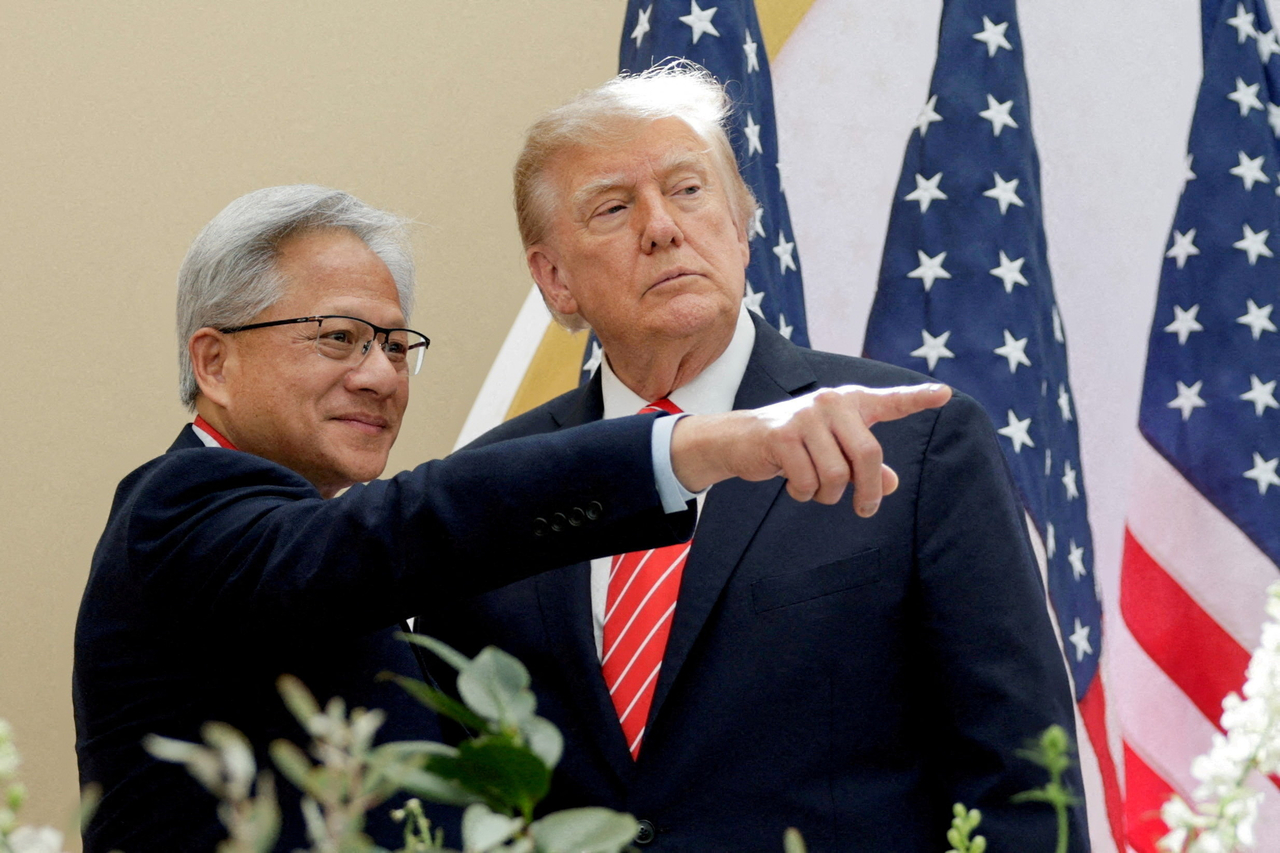
The Trump administration considered invoking a Cold War-era law to secure Jensen Huang's return as Nvidia's CEO, the Washington Post reported Wednesday (local time).
Citing multiple sources, the Post reported that senior Trump administration officials gathered last weekend to discuss Huang's reinstatement. At that meeting, senior US Department of Defense officials — including Defense Secretary Pete Hegseth and Deputy Secretary Steve Feinberg — raised the idea of using the Defense Production Act of 1950 as leverage to pressure Nvidia's board into restoring Huang to the top post.
The Defense Production Act grants the president sweeping authority to intervene in the economy and has historically been used to mobilize private companies to supply materials needed by the military during wartime or national emergencies. During Trump's first term, the administration invoked the law to compel General Motors to produce ventilators during the COVID-19 pandemic.
Invoking the act to force Nvidia to allocate more of its semiconductor output to defense-related industries could disrupt the company's production plans and hurt its profitability. While the law cannot directly dictate the appointment of a CEO, it could serve as a warning or pressure tool against Nvidia.
"The fact that the Trump administration considered mobilizing the Defense Production Act vividly illustrates how seriously the US military takes the AI competition with China, and how willing the administration is to take extreme measures to intervene in the economy," the Post said.
It remains unclear whether the idea of invoking the Defense Production Act was ever communicated to Nvidia. However, President Trump and Vice President JD Vance were reportedly willing to exercise federal authority to secure Huang's return, and officials are said to have mounted an all-out effort to that end.
After Nvidia's share price slumped following the scandal, Trump personally asked Vance to mediate Huang's reinstatement. Huang returned as CEO on Monday.
Balaji Srinivasan, a partner at US venture capital firm Andreessen Horowitz, said on social media last week that the US Department of Defense's intervention could have become a real possibility had Nvidia refused to reinstate Huang. Given the recent wave of cyberattacks in the United States, he argued, restoring the most important figure in the AI industry to the helm of an AI company could be viewed as a matter of US national security.
Some observers have raised concerns about how the Trump administration views private enterprise.
Pete Harrell, a visiting fellow at Georgetown University's Institute of International Economic Law, said the episode "shows how easily the Trump administration believes it can intervene in the affairs of private companies," adding that the administration "has little interest in actually crafting regulations and is instead focused on gathering companies together and telling them what to do."
Bill Greenwalt, a senior fellow at the American Enterprise Institute and an expert on the Defense Production Act, said the law "basically prioritizes US government orders above everything else," and that "the more effective tool for pressuring Nvidia without invoking the act would have been export controls."
yckim6452@heraldcorp.com