National Changgeuk Company's 'Oedipus' runs through Dec. 5
All-female cast marks a first in the company's history
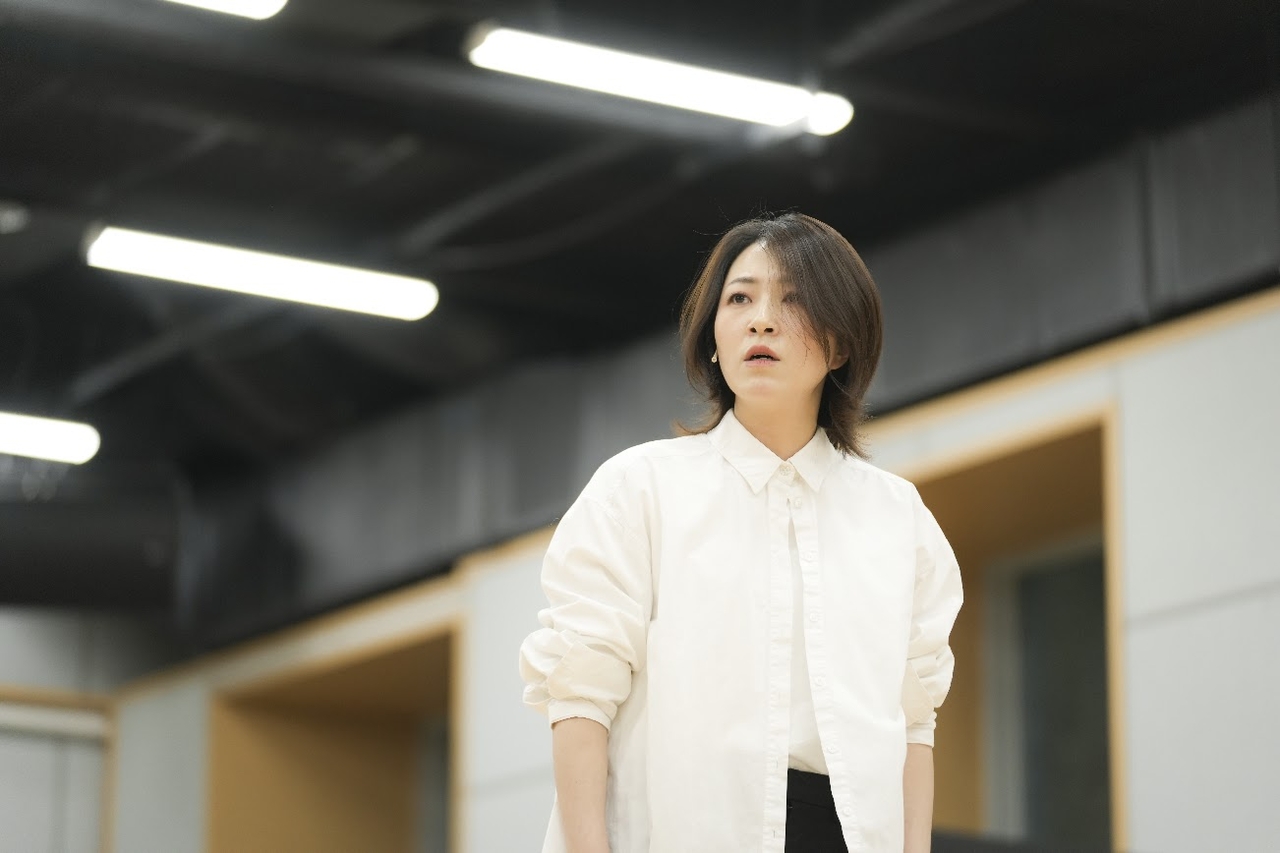
"In the end, it's a magnificent role — someone who blinds himself by his own will. And yet, until now, only men have played it."
The king of Thebes, a role long held by male performers, now speaks in a woman's voice. In the National Changgeuk Company's new production of "Oedipus" — running Thursday through Dec. 5 at the Dalorum Theater of the National Theater of Korea — every role on stage, from Oedipus and his brother-in-law Creon to the blind prophet Tiresias, is performed by a female company member. It is the first time in the company's history that an all-female cast has taken the stage.
Director Choi Jin-a, speaking to reporters ahead of opening night, said casting women in these roles opens up a different kind of freedom. "When a woman takes on this role, you move away from 'what would a man do, what would a king do' and arrive at 'what would a human being do,'" she said.
The production is based on Sophocles' tragedy "Oedipus Rex." As Oedipus races to find the murderer of the former king Laius in order to save plague-stricken Thebes, every clue he uncovers points back to himself. The script was written by Bae Sam-sik, who also wrote the changgeuk productions "The Trojan Women" and "Lear," while Choi — who won the directing prize at Romania's Babel Festival for her theater production "Oedipus — One Who Seeks to Know" — takes the helm. It is her first changgeuk.
'Pansori never distinguished by gender'
The casting of a female singer as Oedipus does not mean the character's gender has changed. In this production, Oedipus remains male.
Yoo Eun-sun, artistic director and head of the National Changgeuk Company, described the work as "female changgeuk" — distinct from the older tradition of female gukgeuk. The departure of the company's two leading male stars, Kim Jun-su and Yoo Tae-pyeong-yang, earlier this year also helped lay the groundwork for the experiment. "After two male actors who had long carried leading roles left, it was not easy to immediately fill their places," Yoo said. "For the sake of the production's quality, we concluded that an all-female cast was the most optimal configuration."
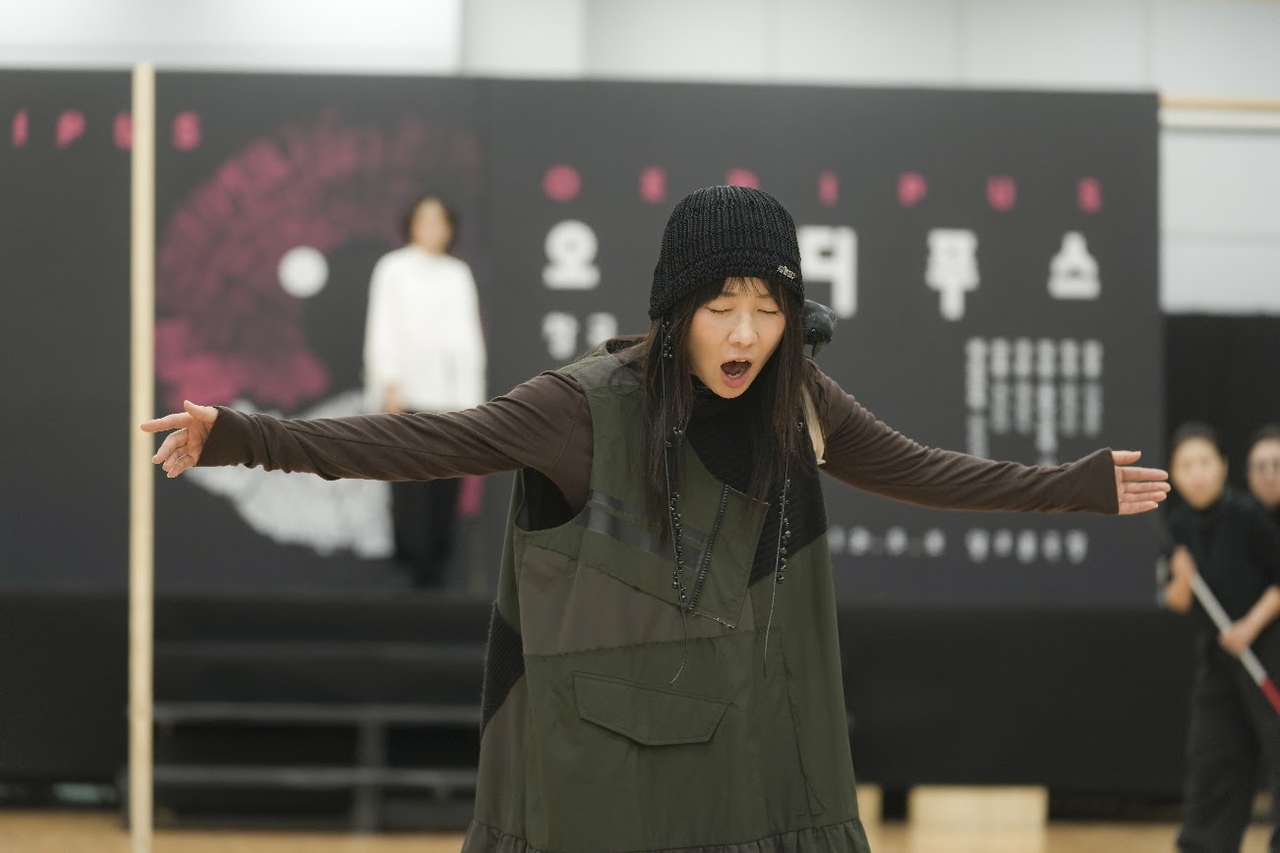
In pansori, where a single singer can embody both the romantic hero Yi Mong-nyong and the villain Byeon Hak-do, crossing gender lines is nothing new. Lee So-yeon — who has moved from leading roles such as Chunhyang and Baengdeok to a wide range of supporting characters — takes on Oedipus. "Ironically, I found female roles harder," Lee said. "Producing a delicate, plaintive voice required more technique. Now I perform with the confidence that if I carry it with the full force of pansori, I can be convincing without imitating a man's voice."
Lee also cited the ability to portray masculine charisma through a woman's gaze as one of the production's distinctive strengths. "Personally, I found it striking to watch a male pansori singer gather his hanbok robe as he sits — there's a certain elegance to it. It's interesting to be able to express that quality of a male character through a female perspective," Lee said. Lee Yeon-ju, who plays Creon, drew a sharp contrast between the two central figures. "If Oedipus is a passionate character driven by the heart, Creon is one driven by a cold head," she said, pledging to make that clash vivid on stage.
Women's low voices embrace the dark
With an all-female cast, the music and vocal texture of the production have shifted as well. In mixed-gender changgeuk, the lower registers have traditionally belonged to male singers, which meant female performers grew accustomed to softening their voices when playing women's roles.
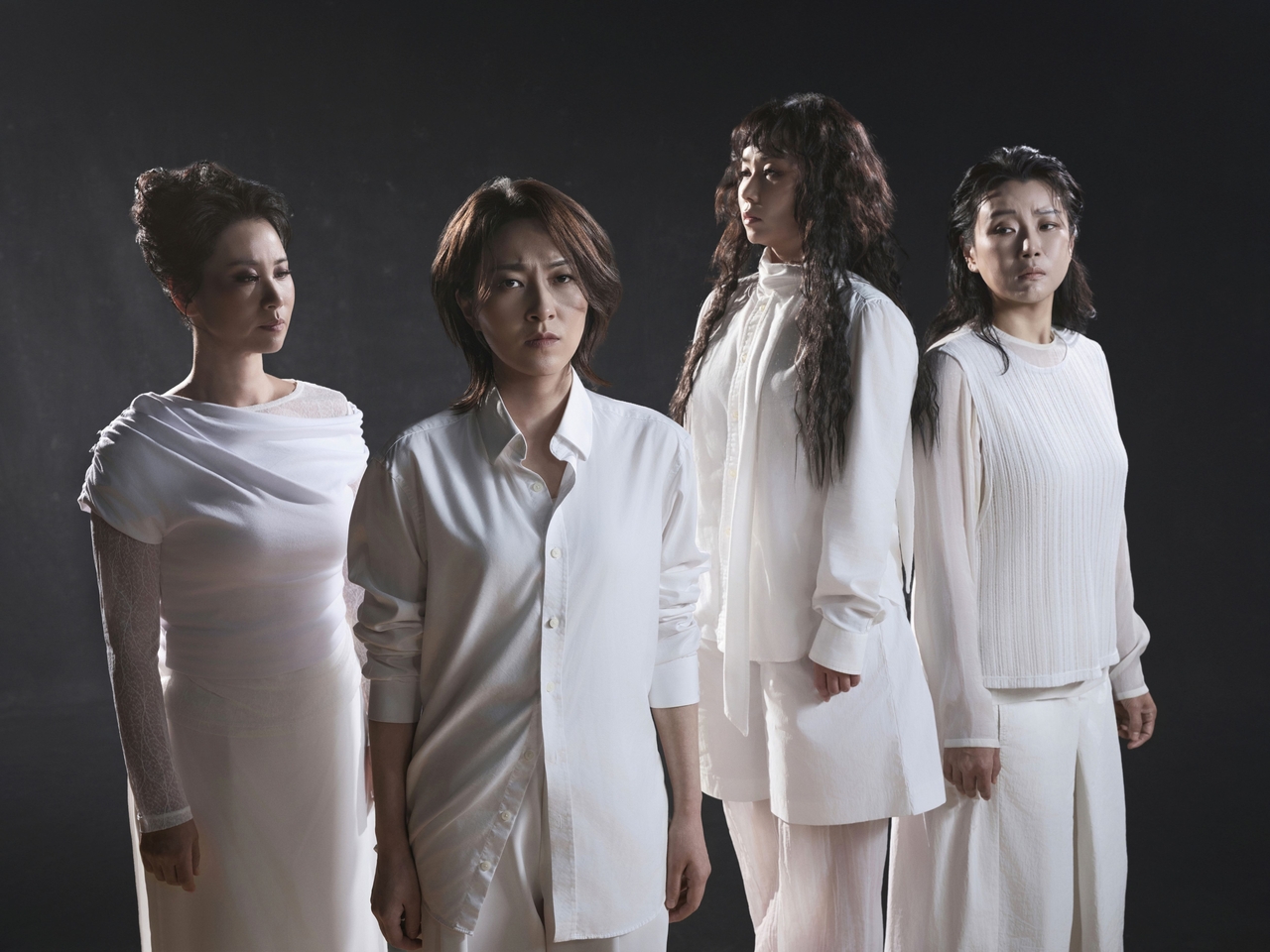
Jang Seo-yun, who serves as musical director and composer of the vocal arrangements, said the all-female ensemble made it possible to draw on the full spectrum of women's voices. "Because everyone is a woman this time, we were able to use the entire range of what the female voice can do," Jang said.
One piece, which opens with the lyric "When night falls dark, all must sleep," would in a mixed-gender production have been carried by a deep, solemn male bass. Jang chose instead to push through with women's low voices. "The music is very cold, but when women sing together in the low register, there is a warmth to the timbre — a quality that holds loneliness and darkness together in one embrace," Jang said. "It's a choice I could not have easily made in a mixed-gender production."
The musical palette is rich. A 16-piece ensemble combining traditional Korean instruments with violin, viola, cello, double bass and keyboard underpins the pansori rhythms, while a chorus divided into vocal parts weaves in and out of the soloists' lines. A circular LED screen 7.8 meters in diameter, mounted on a raked stage, displays imagery inspired by the blood vessels of the human body.
Oedipus as an anxious human being
Oedipus has appeared on Korean stages with unusual frequency this year.
A theater production starring Choi Su-jong and Yang Jun-mo explored the will of "Oedipus as a human being," while "Anthropolis," a series by German playwright Roland Schimmelpfennig staged by the National Theater Company of Korea, reimagined Oedipus as a disabled immigrant and social outsider.
The changgeuk "Oedipus" leaves the original's skeleton intact. A prophet who knows but cannot speak faces a king who cannot see the truth before him, and the king suspects his brother-in-law Creon of orchestrating a conspiracy. Director Choi emphasized that Bae's adaptation aims not at society or politics but at "a fundamental anxiety about existence" — a different path from her 2017 production "Oedipus — One Who Seeks to Know" at Culture Station Seoul 284, which placed the debate over preserving the classrooms of students killed in the Sewol ferry disaster at the center of the stage.
"What is life? Why do I encounter these particular outcomes, these particular coincidences?" Choi said. "I keep trying to find even one more scene that can pose that question."
shee@heraldcorp.com