Seoul apartment price growth hits 94-week low at 0.01 percent
Listings climb to 83,000 — up 45.6 percent from start of year
Ministry cautious on Seoul's request to raise floor-area ratios
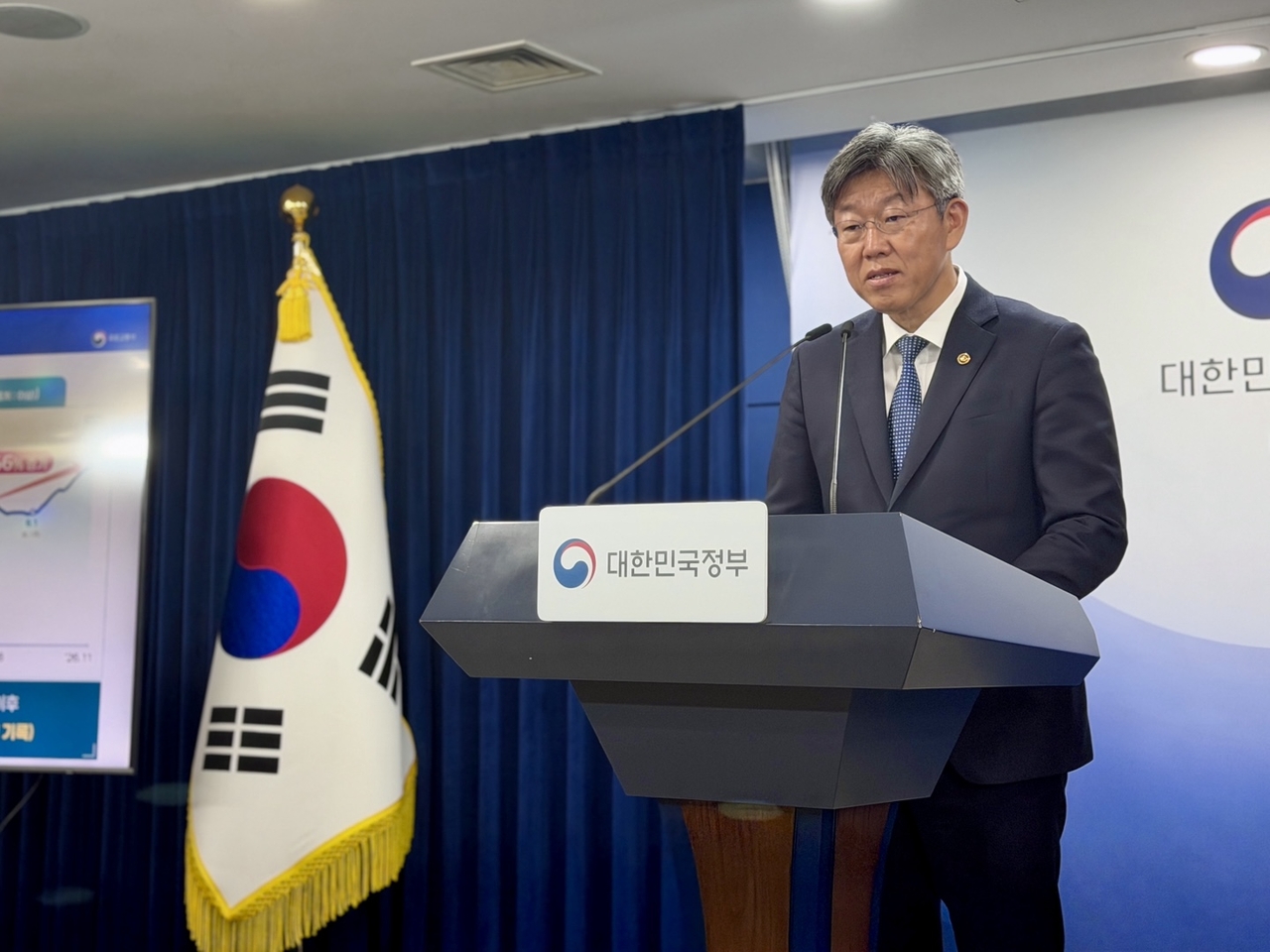
The Ministry of Land, Infrastructure and Transport said Thursday that indicators pointing to a cooling in Seoul's housing market continue to strengthen, while signaling it will decide whether to extend land transaction permit zones set to expire at year's end closer to the deadline.
The ministry held its fourth regular housing supply briefing at Government Complex Seoul on Thursday, where First Vice Minister Kim I-tak said the downward trend was spreading. "The decline in Gangnam, Seocho and other Gangnam-area districts, as well as the Han River belt, is widening," Kim said. "Nine autonomous districts in Seoul have now recorded price drops, and the downward stabilization is gradually expanding."
According to the Korea Real Estate Board, the monthly rate of change in Seoul apartment sale prices slowed for three consecutive months — from 1.27 percent in July to 1.05 percent in August, 0.74 percent in September and 0.54 percent in October — cutting the pace of gains to less than half the July level.
Weekly data showed the number of falling districts growing. Seoul apartment prices rose just 0.01 percent in the fourth week of November, the slowest pace in 94 weeks. Seocho-gu and Gangnam-gu posted declines for 16 consecutive weeks, and Yeongdeungpo-gu and Gwangjin-gu turned negative, bringing the total number of districts recording price drops to nine. Songpa-gu fell 0.50 percent this week, a steeper drop than Gangnam-gu's 0.34 percent decline and Seocho-gu's 0.30 percent fall.
Listings are also piling up. Seoul apartment listings stood at 83,000 as of Wednesday, a record high for the year, according to Asil, a real estate big data platform — up 45.6 percent from the start of the year. The ministry described the figures as evidence that "Seoul home price stabilization is clearly under way."
On whether to extend the land transaction permit zones, the ministry struck a cautious tone. Shin Yun-geun, the ministry's land policy director, said during the briefing's question-and-answer session that the government was taking a comprehensive look at the zones covering all of Seoul and 12 areas in Gyeonggi Province, which are set to expire at the end of this year. "We will review it in line with the timing," Shin said. The government designated all of Seoul and 12 locations in Gyeonggi Province as land transaction permit zones through its Oct. 15 measures last year, with the designation running through Dec. 31. Three areas added to the permit zone in July this year — Guri, Dongtan and Giheung in Gyeonggi Province — are covered through Dec. 31 next year.
There are, however, differing views on market conditions. When asked about the gap between private-sector data and Korea Real Estate Board figures, Kim said the government bases its assessments on the board's national statistics. "Private firms publish their own data as they see fit," he added. Asked whether rising prices in Seoul's outer districts remained a concern even as the pace of gains slowed, Kim said the situation warranted more time to observe.
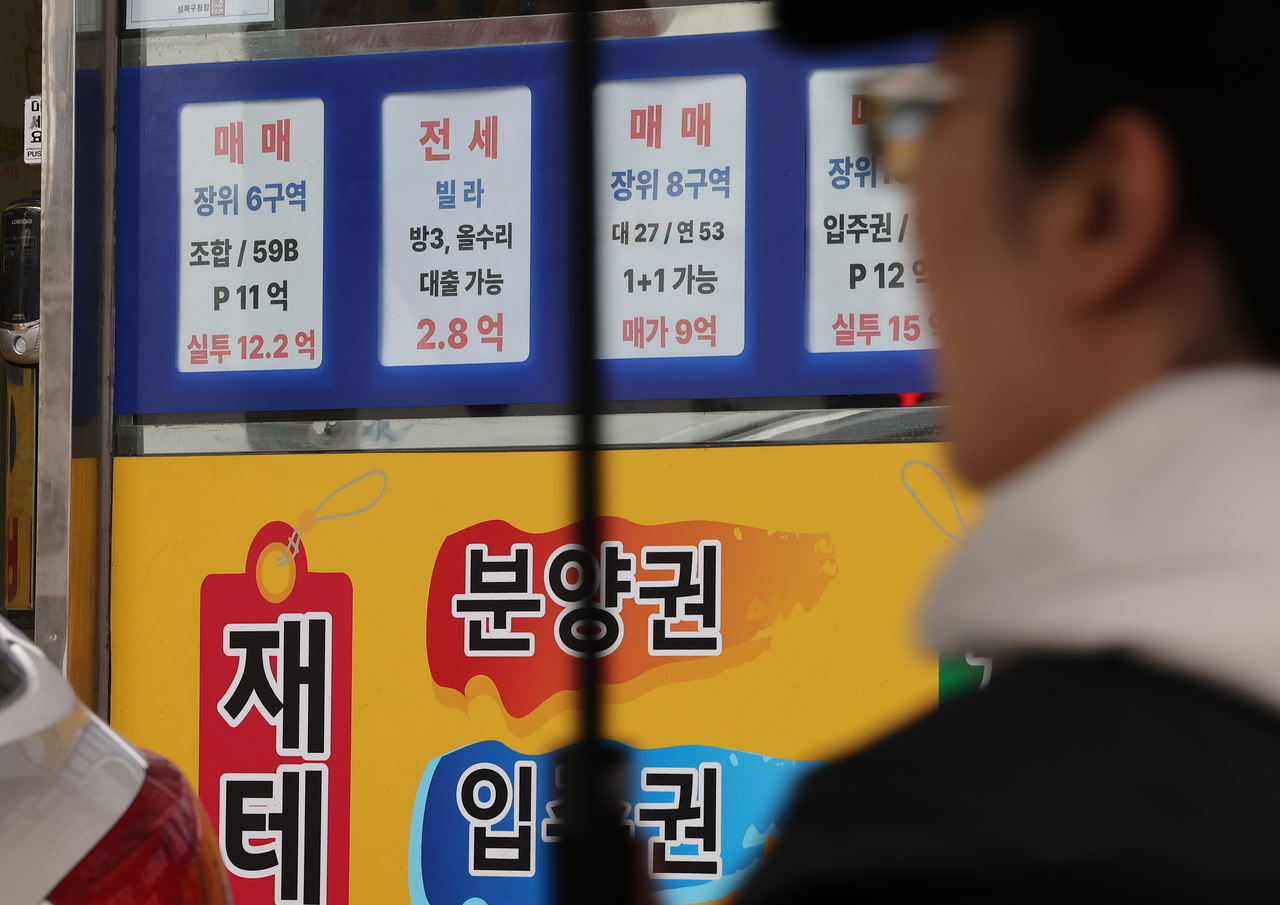
On instability in the jeonse and monthly rent market across Seoul and the broader metropolitan area, the ministry said it would continue monitoring conditions and take necessary steps. Kim said the government had increased next year's housing budget by more than 40 percent. "That budget is essentially the jeonse and monthly rent budget," he said.
The government also moved up the recruitment timeline for public rental housing tenants as a measure to help renters plan ahead. The recruitment window will shift from roughly one year before move-in to two years and six months in advance, with about 9,000 units in the greater Seoul area — 10,000 nationwide — to be recruited early next year. Jung Woo-jin, head of the ministry's housing supply promotion office, acknowledged the longer wait but said the change would improve predictability. "Considering that jeonse and monthly rent contracts typically run two years, I think this will help people plan ahead," Jung said.
Consultations with the Seoul Metropolitan Government over housing supply in central Seoul are ongoing, the ministry said. On discussions about housing supply in the Yongsan International Business District, Kim said the ministry was continuing working-level talks with the city government and would share results when available.
The ministry was more guarded on Seoul's request to raise the floor-area ratio for private redevelopment projects by 1.2 times. Jung said the Urban and Residential Environment Improvement Act amendment currently before the National Assembly's plenary session contains no floor-area ratio provisions. He noted that the ruling party was said to be pursuing a revision through the plenary session — which requires the agreement of 50 lawmakers — but said it was too early to comment in detail. He added that passing the follow-up legislation from last year's Sept. 7 measures, which remains pending before the plenary session, was more urgent. "The floor-area ratio issue needs more time," Jung said.
hwshin@heraldcorp.com