
Mayor Ku Ja-yeol unveils three citizen-focused policy initiatives
On garden city competition with Chuncheon, Yeongwol: 'They have a head start'
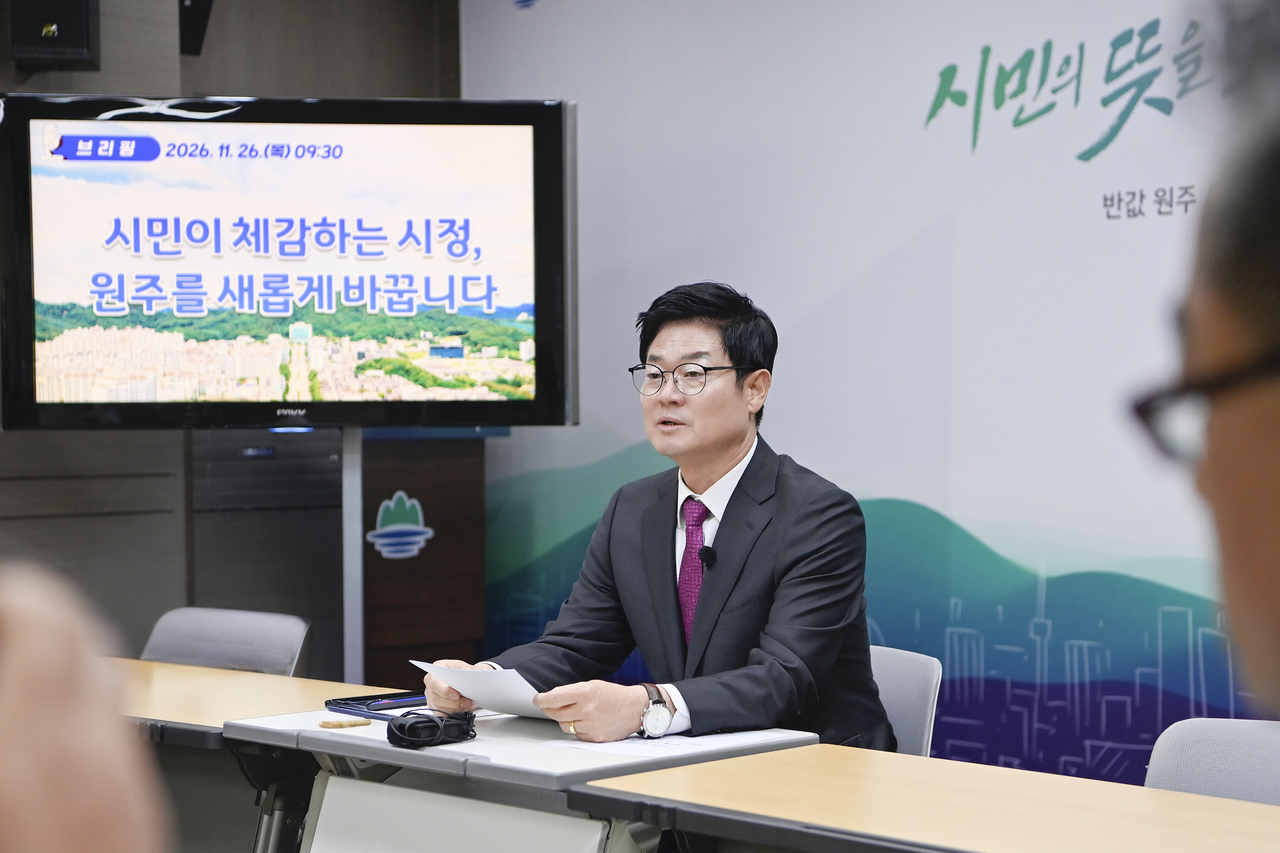
Wonju Mayor Ku Ja-yeol said Thursday the city will transform long-closed parcels of land into public green spaces and build "garden city" into Wonju's defining brand.
Speaking at a press briefing, Ku said the city will create gardens and walking trails on the former livestock breeding station site — a plot that has cycled through haphazard development and neglect — and convert the old prison site in Musil-dong into an urban civic plaza.
Ku also unveiled plans to establish seasonal flower fields covering about 33,000 square meters across three locations: along the Wonju Stream, at Saemmaru Park in the enterprise city zone, and at Dumul Waterfront Park in the innovation city district.
The mayor said the three sites will be linked into a "Wonju Garden Trail" connecting Chiaksan's wind-corridor forest with the Wonju Stream.
The city plans to extend garden spaces into idle urban land, green zones and waterfront areas, aiming to create a city where residents encounter the changing seasons on their daily routes.
Ku said the city will run a civic gardener training program and launch a project for residents to tend their own community gardens, adding that Wonju will apply — as early as 2027 — for a government garden city grant competition worth 10 billion won ($7.44 million).
Ku added that the city will revise its Wonju Garden Culture Promotion Ordinance in early next year to lay a legal foundation for the initiative, and will form a dedicated team, a professional advisory panel and a civic consultative body to prepare the effort together with residents.
Asked about the risk of excessive competition with neighboring Gangwon Province municipalities such as Chuncheon and Yeongwol, Ku said: "Chuncheon and Yeongwol are frontrunners who are well ahead of us. Wonju is a latecomer — we are not yet in a position to call them rivals."
Ku also said the city will take on a greater share of residential complex management costs that have traditionally fallen to residents.
The expanded public support will cover basic elements of the residential environment, including roads within complexes, children's playgrounds and aging facilities.
The city plans to revise its Wonju Apartment Management Support Ordinance in the first half of next year to establish a stable legal basis for the support, and will set up a dedicated task force, the Apartment Support TF Team.
The number of facility repair support categories will grow from the current 14 to 17, with elevators, transformers and landscaping added to the list. The city said it intends to broaden support to cover both safety and convenience facilities.
Ku also said the city will develop agriculture across its nine towns and townships into a growth engine for Wonju's K-food industry, going beyond simply supplying food to residents.
To build a distinctive agricultural identity for Wonju, Ku said the city will launch a Special Committee for Agricultural Growth directly under the mayor's office in January.
The city will also increase its subsidized farm-input support fund by 1 billion won each year to ease the financial burden on farming households.
To improve living conditions in rural areas, Ku said the city will sharply raise the community project budget for each town and township from 300 million won to 500 million won, allowing faster upgrades to rural infrastructure.
Noting that Wonju is the birthplace of Farmers' Day, the city said it will launch a feasibility study next year for the construction of a memorial hall — tentatively named the Farmers' Day Origin Memorial Hall — to preserve and promote that legacy.
abc@heraldcorp.com




