
Ministry of Land, Infrastructure and Transport, National Fire Agency and Ministry of Interior and Safety unveil fire safety plan
Sprinklers required when stacked rack shelving is newly installed in operating warehouses
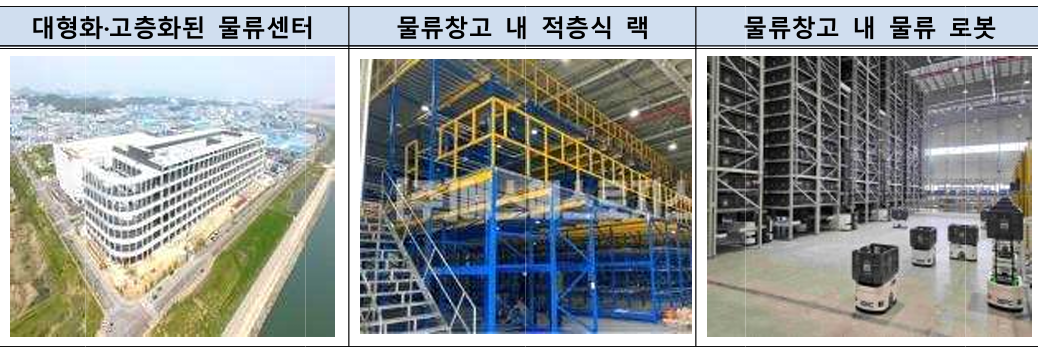
Large logistics warehouses with a total floor area of 100,000 square meters or more will be subject to a mandatory fire prevention safety inspection regime starting in the first half of next year, as the government moves to regularly assess fire risks at increasingly large distribution facilities.
Under the plan, warehouses that received building permits before 2024 will also be required to install sprinklers if they newly install stacked rack shelving — multi-tiered storage structures — a change from the current rules.
The Ministry of Land, Infrastructure and Transport announced Thursday that it had drawn up the "Logistics Warehouse Fire Safety Enhancement Plan" together with the National Fire Agency, the Ministry of Interior and Safety and other related ministries. The plan reflects the findings of a task force on improving fire safety regulations at logistics facilities, which the government ran with private-sector experts and the logistics industry following the Coupang Inc logistics center fire in Incheon in July.
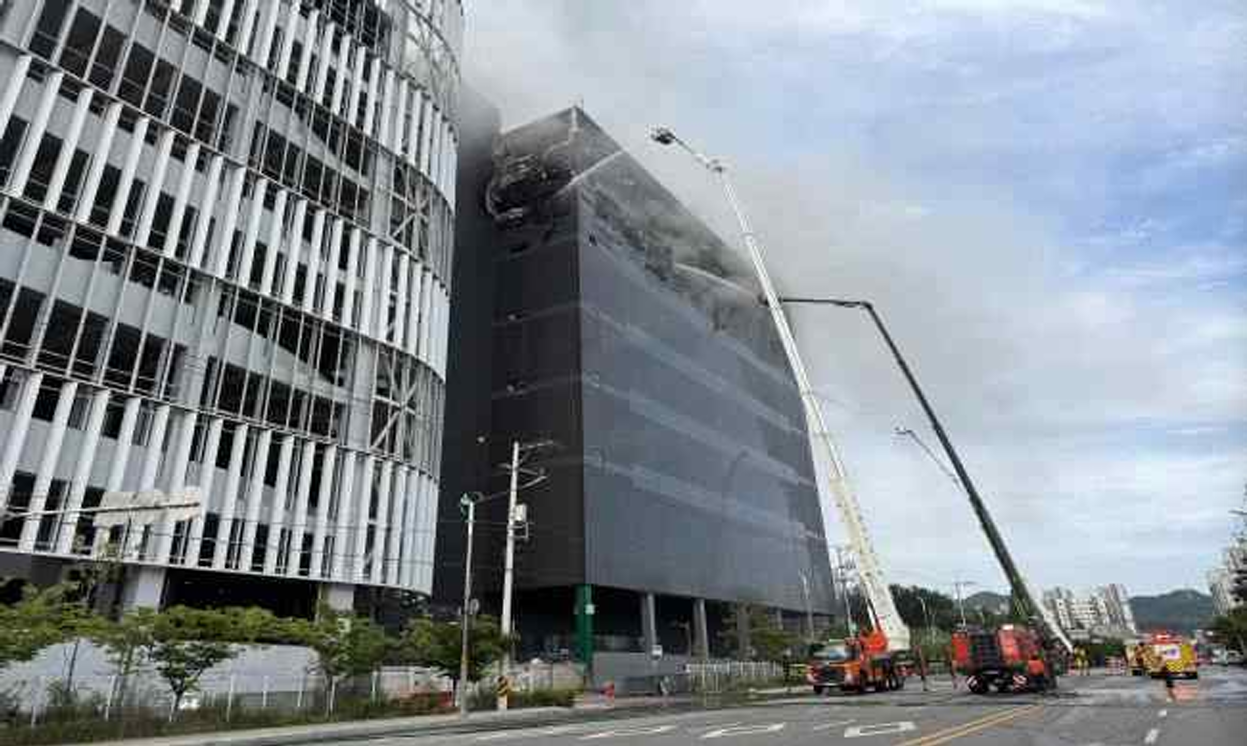
The fire broke out on the sixth floor of the Incheon Coupang Inc logistics center at around 6:54 a.m. on July 18, and was brought under initial control after 61 hours and fully extinguished after 109 hours on July 22. All occupants evacuated on their own and there were no casualties, but the prolonged blaze caused significant damage to nearby residents. The National Fire Agency's Central Joint Fire Investigation Team attributed the fire to thermal runaway in lithium-ion batteries found among household goods stored on stacked rack shelving.
The government concluded that current fire safety standards are calibrated for the construction phase, leaving operating warehouses in a regulatory blind spot. Although a January 2024 revision to the "Warehouse Facility Fire Safety Performance Standards" required sprinklers to be installed on stacked rack shelving, the rule applies only to warehouses that received building permits after the revision took effect. Of the 2,247 registered logistics warehouses, only 71 — about 3 percent — received building permits after 2024.
The enhancement plan is organized around four pillars: strengthening the management framework for existing warehouses, managing fire risk information, revising fire and building standards, and bolstering on-site response capacity.
As the first step, the government will introduce fire prevention safety inspections for large warehouse facilities with a total floor area of 100,000 square meters or more, enabling regular assessments of fire risk.
Accredited institutions will conduct comprehensive inspections covering stacked rack installation and management, storage of hazardous goods, and the adequacy of fire suppression systems, and submit their findings to fire authorities. The local fire station chief may then order repairs or reinforcements as needed. Warehouses will undergo their first inspection five years after receiving a certificate of use, and subsequent inspections every four to six years. The underlying enforcement regulation — the Enforcement Decree of the Fire Prevention Act — will be amended in the first half of next year, but large warehouses already registered as logistics businesses will begin inspections in sequence following a project briefing session in January, ahead of the formal regulation change.
More than 25,000 existing warehouse structures will be surveyed for fire vulnerabilities and regulatory violations. A comprehensive fire safety survey of factories and warehouses, launched in September, will be completed by next year. Any violations — such as having people permanently stationed on stacked rack shelving or placing office space there — will be subject to immediate corrective orders.
Fire safety management plans, which had previously been managed only as part of logistics warehouse registration documents, will be given a statutory basis requiring their establishment and implementation. The government plans to introduce an amendment to the Logistics Facilities Act next month under which operators must submit a plan before registration — with the registering authority verifying its adequacy — and submit annual implementation reports after registration. Failure to comply will result in fines or suspension of operations. Existing warehouses will be given a grace period to update and resubmit their fire safety management plans.
Small and midsize companies that make additional investments in safety facilities will receive support from next year, including coverage of 70 to 80 percent of facility and equipment investment costs — up to 100 million won ($74,400) — as well as low-interest policy loans and interest-rate subsidy support on borrowings.
Management of high-risk goods such as lithium-ion batteries will be tightened. The government will revise the "Fire Safety Management Plan Drafting Guidelines" next year to designate batteries above a certain capacity, personal mobility devices such as electric bicycles and electric scooters, and damaged or defective batteries as priority management items, with their storage information to be tracked separately. That information will be shared with fire authorities during a fire to assist in suppression and rescue operations. In 2028, the government will develop a "Warehouse Facility Fire Safety Guideline" covering storage methods, fire compartmentalization and charging-level restrictions.
Next year's amendment to the Enforcement Decree of the Logistics Facilities Act will require the presence and scale of stacked rack shelving to be included in logistics warehouse registration records, with operators required to file a change of registration whenever shelving is newly installed or modified.
Warehouse operators will be required to immediately notify the registering authority when a fire occurs and to submit a recurrence-prevention plan. The government will also build a dedicated "Logistics Warehouse Fire Safety Information System" — a working title — to manage this process. The system will store fire safety management plans and implementation results, inspection histories and incident records. The government will introduce an amendment to the Logistics Facilities Act this year to begin designating a specialized institution to manage the system and support on-site inspections.
To expand sprinkler coverage, the government will amend the Fire Facilities Act and the Warehouse Facility Fire Safety Performance Standards next year. Newly installed stacked rack shelving in existing logistics warehouses will trigger a mandatory sprinkler installation requirement, and operators that install sprinklers on already-operating stacked rack shelving will receive fire insurance premium discounts of 15 to 60 percent to encourage broader adoption.
Building standards will also be revised. Installation of fire-resistant structural walls and other safety compartments will be made mandatory in spaces with a high risk of fire ignition and spread, and radiant heat and fabric support capacity will be added as criteria in fire-resistance tests for fire shutters. Logistics warehouses will be included among facilities required to install evacuation support spaces such as outdoor emergency staircases, and the government will develop guidelines for calculating evacuation distances that account for stacked rack shelving. All of these measures are planned for next year.
The National Fire Agency will establish standardized response procedures tailored to logistics warehouses this year and begin specialized training from next year. Unmanned firefighting robots will be deployed at nine additional sites next year. A joint public-private "Emergency Maintenance Support Team" will be operated to reduce equipment maintenance gaps during large fires. During the Incheon fire in July, more than 200 fire vehicles were mobilized from 10 cities and provinces, with 53 on-site maintenance operations carried out.
Park Jae-soon, director general for transportation and logistics at the Ministry of Land, Infrastructure and Transport, said the reforms were intended to go beyond simply meeting safety standards at the time of construction. "We hope this regulatory overhaul will help establish a full life-cycle management system on the ground — one that continuously monitors actual operating conditions and evolving fire risks," Park said.
National Fire Agency Commissioner Choe Yong-cheol said the agency would move swiftly to revise relevant laws so that fire prevention safety inspections for large warehouse facilities and the expansion of sprinkler installation on stacked rack shelving could be implemented as soon as possible. "We will also ensure there are no gaps in our on-site response capabilities," Choe said.
smh@heraldcorp.com




