
Monoclonal antibody shots cover different age groups — check approvals carefully
Maternal vaccine requires at least 2 weeks between injection and delivery
Tailoring prevention to due date and infant age matters more than product choice
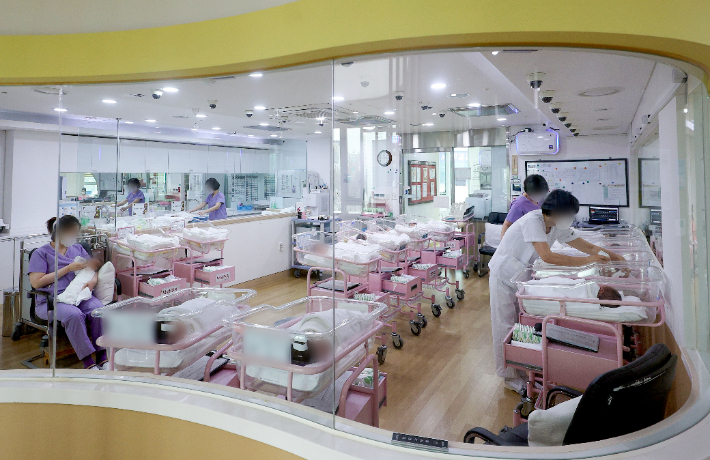
Respiratory syncytial virus hospitalizations are rising again, drawing growing attention from families with young infants to available prevention options.
According to KDCA sentinel surveillance data, RSV hospitalizations began climbing in week 40 of this year, reaching 92 in week 44 and 106 in week 45 before jumping to 168 in week 46.
RSV initially resembles a common cold, but in young infants — whose airways are narrow and immune systems immature — it can progress to severe lower respiratory tract disease such as bronchiolitis or pneumonia. Even healthy full-term newborns without underlying conditions can deteriorate rapidly, making proactive prevention essential as the peak season approaches.
The domestic market for infant RSV prevention has expanded considerably. A new monoclonal antibody product has joined the long-acting preventive antibody injection introduced last year, and a maternal vaccine that transfers antibodies to the fetus through the mother's immunization is also set to launch.
That makes it all the more important to carefully weigh each option's approved indications, timing requirements and accumulated real-world evidence.
Antibodies delivered directly to infants: Beyfortus builds real-world track record at home and abroad
Unlike vaccines, which prompt the infant's own immune system to produce antibodies, monoclonal antibody injections deliver RSV-fighting antibodies directly to the baby. Because no antibody-generation period is needed, protection begins immediately after administration.
In South Korea, the long-acting preventive antibody injection Beyfortus has been in use since February last year. It is approved for all newborns and infants entering or already in their first RSV season.
Both preterm infants and those with underlying conditions are eligible, as are healthy full-term babies. A single dose provides at least five months of protection against RSV lower respiratory tract disease.
As the first mover in this space, Beyfortus has accumulated substantial real-world data domestically and internationally. As of December 2025, it had been administered to more than 11 million infants worldwide, with its preventive efficacy confirmed through more than 50 studies covering over 400,000 infants.
Its impact on infant hospitalizations has also been visible in Korea since its introduction. Citing KDCA sentinel surveillance statistics, reports show that infant RSV hospitalizations at the peak of the 2024–2025 season — 191 cases in week 52 of 2024 — fell to 79 at the peak of the 2025–2026 season (week 48 of 2025), a roughly 60 percent decline following Beyfortus's introduction.
A second long-acting monoclonal antibody, Enflonsia, has recently entered the Korean market. Both products help prevent lower respiratory tract disease during the first RSV season, but their approved indications differ.
Enflonsia's approval covers only newborns and infants facing their first RSV season, while Beyfortus is additionally approved for children up to 24 months of age who remain at high risk of severe disease during a second RSV season.
Families of high-risk infants who may need protection through a second season should confirm which product's approved age range applies to their child.
Preparing for RSV during pregnancy: gestational week and due date both matter
Another approach involves vaccinating the pregnant mother so that neutralizing antibodies produced in her body are transferred to the fetus through the placenta.
Abrysvo, an RSV vaccine for pregnant women set to launch in South Korea, helps protect infants against lower respiratory tract disease from birth through six months of age. The delivery route differs from a direct injection, but the goal — equipping the infant with protective antibodies — is the same.
Choosing the maternal vaccine requires calculating gestational week, due date and RSV season timing together. Abrysvo is approved domestically for administration between 28 and 36 weeks of pregnancy, and updated adult immunization guidelines recently issued by the Korean Society of Infectious Diseases recommend a single dose between 32 and 36 weeks.
The minimum interval between vaccination and delivery also matters. The US Centers for Disease Control and Prevention notes that at least 14 days are needed for maternal antibody production and placental transfer, and recommends that infants born within 14 days of the mother's vaccination receive a separate preventive antibody injection regardless of the maternal shot.
Given that post-birth protection lasts about six months, the US also recommends vaccination between September and January, when the protection window aligns with peak RSV season. When a baby is born outside the peak season and the protection period does not overlap with it, administering a monoclonal antibody injection at birth is the preferred approach.
The mother's own health status is another variable. The pivotal clinical trials for Abrysvo focused on healthy women with singleton pregnancies and excluded those at high risk of preterm birth. Women carrying multiple fetuses or experiencing pregnancy complications should consult their physician before proceeding.
The key is not choosing one product over another in the abstract, but building a tailored prevention plan — one that accounts for gestational age, due date, infant age, approved indications and real-world evidence — to ensure the baby is protected without gaps during its most vulnerable period.
silverpaper@heraldcorp.com




