
'A vast public housing market that competes with the private sector must take shape'
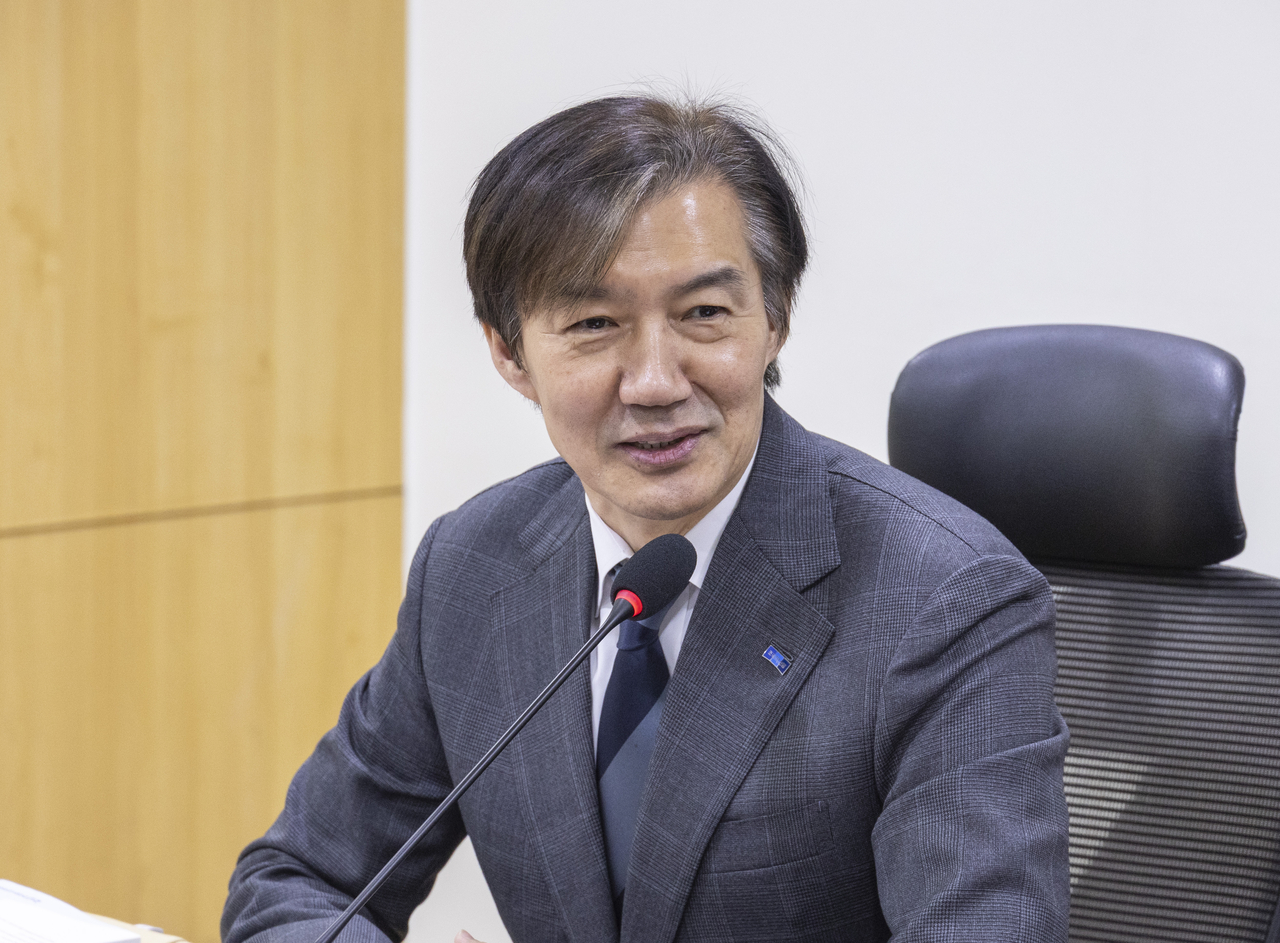
Cho Kuk, director of the Rebuilding Korea Party's innovation policy research institute, said public housing must be built as a landmark — as in Singapore, the Netherlands and Austria — to change public perceptions and create a vast housing market that competes with the private sector, ultimately stabilizing home prices.
Cho said Thursday on his Facebook page that public housing "must become not a home people live in because they have no choice, but a home they choose because they want to live there." He said the principle that "the best land must become the best homes for the people" should serve as the foundational premise of the government's residential welfare policy.
"Land to build on is beginning to open up," Cho said. He noted that the government has announced a plan to relocate 31 central administrative agencies to Sejong by 2031. The Board of Audit and Inspection and the Korean National Police Agency will move into newly built offices, while 13 agencies — including the Ministry of Justice and the prosecution service — will follow after legislation is amended. Cho added that the Ministry of National Defense officially announced Nov. 18 that it was reviewing the relocation of the Korea Military Academy to the Chungcheong region, and that a second round of public institution relocation plans is expected by year's end.
He added, however, that not every site vacated by a departing agency would be available for housing. "When an agency that occupied only part of a government building or a private office block moves out, it simply leaves empty offices — no new site is created," he said.
Cho said there are three categories of land worth watching: sites exclusively occupied by a single agency, such as those of the Board of Audit and Inspection, the Korean National Police Agency and the Korea Military Academy; buildings that will stand entirely empty after multiple agencies depart at once; and former real estate left behind by the second round of public institution relocations. "Most of these are prime sites in Seoul and the greater metropolitan area," he said.
Cho proposed three measures: that land vacated by departing agencies not be sold off, that high-quality public housing be built on those sites, and that the question of financing be resolved.
"As President Lee Jae Myung has said, there must be no situation where supply falls short because of insufficient fiscal resources," Cho said. He proposed that a "land and housing bank" he has advocated for purchase all former institutional real estate in bulk, with financing raised through a "national REIT" open to any citizen.
He added that the future response fund should not be duplicated in areas already receiving adequate support, but instead invested fully in housing and care. He also said linking the national pension to public investment would be highly effective in the long run as a way to expand the pension's subscriber base.
Meanwhile, at a forum on the use of relocated public institution sites for housing and affordable housing supply held Wednesday at the National Assembly members' office building, Cho said that during the first round of public institution relocations, "prime sites in the greater metropolitan area were handed over to private developers." He said that if decisions on how to use the vacated sites from the second round are not made now, it will be too late, and called for those sites to be used to supply public rental housing.
Cho outlined what he called three transformations in housing rights: shifting the goal of housing policy to guaranteeing universal residential rights for all citizens, converting sites from the second round of public institution relocations into residential welfare assets, and transitioning to an affordable housing model. He said he would actively pursue all three.
bigroot@heraldcorp.com




