District to run comprehensive cold-snap plan from December through February; three new windbreaks to be installed
Meal deliveries for vulnerable elderly to be expanded; senior center heating costs covered; home repairs supported up to 2 million won
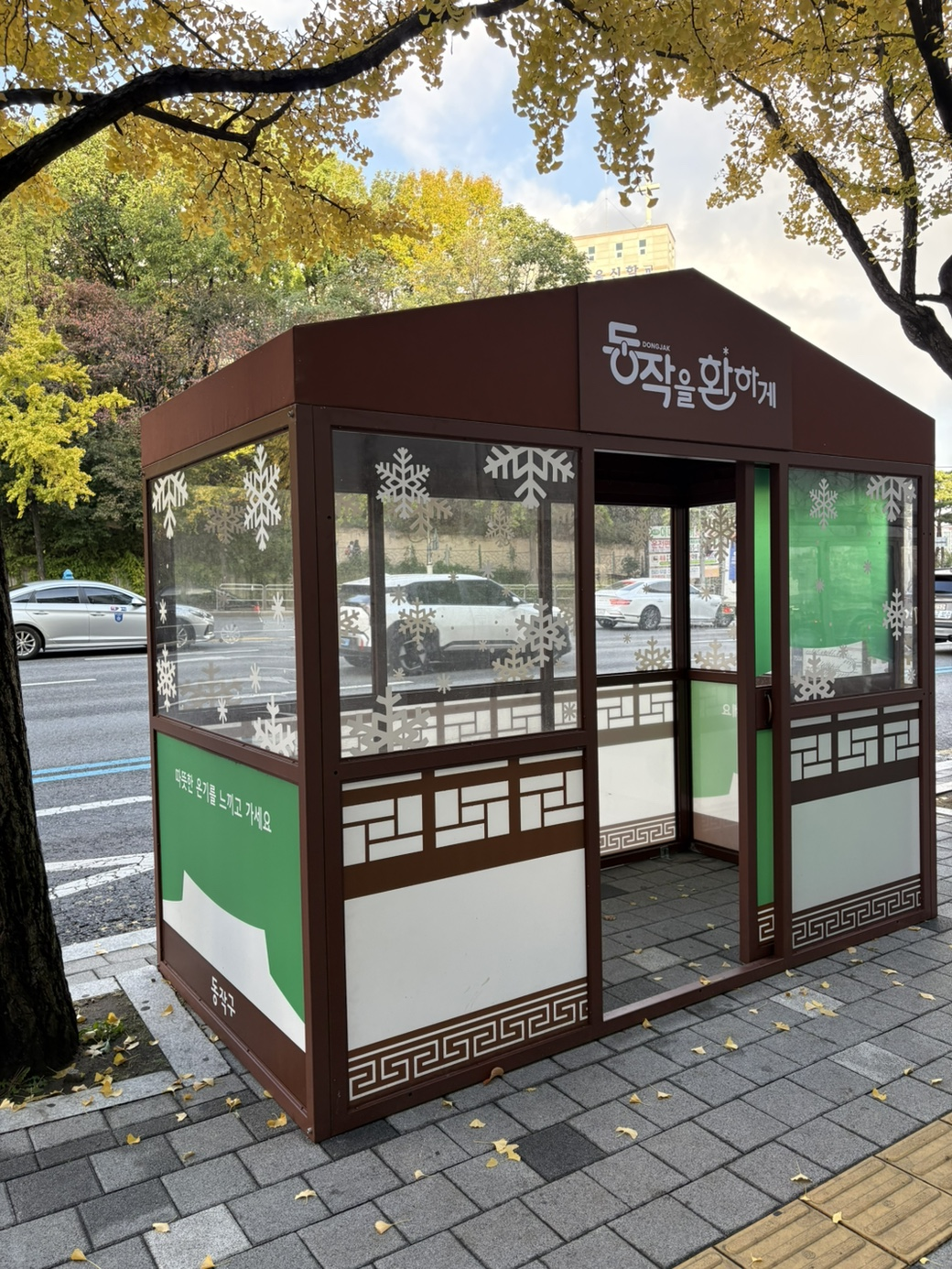
Seoul's Dongjak-gu is expanding its cold-weather infrastructure — including warming tents and heated outdoor seats — and launching a comprehensive winter plan covering protection for vulnerable residents and improvements to residential environments.
The district said it will run a comprehensive cold-snap response plan from December through February. It will stand up a cold-wave task force, an integrated operations center and an emergency command unit in stages depending on weather conditions, and establish a hotline linking relevant departments, the 15 neighborhood community centers and partner agencies to enable rapid responses to emergencies.
To ease the burden of the cold on residents, the district will operate 12 warming tents, 167 heated outdoor seats, 6 smart rest shelters and 31 cold-snap shelters. The cold-snap shelters will be set up at the district office, 16 neighborhood community centers and 15 senior centers.
At three locations where space for warming tents is limited — near Chung-Ang University Hospital, Cheonghwa Hospital and the Chongshin University Station bus stop — the district will install new windbreaks using existing bus shelter structures to reduce the chill for waiting passengers.
Support for vulnerable residents during winter will also be strengthened. Dosirak deliveries for low-income elderly residents with mobility difficulties will increase from one meal a day to two, and side-dish deliveries will rise from twice a week to four times. All 44 district-run senior centers will receive full reimbursement of heating costs, while 23 standalone or poorly resourced private senior centers will receive up to 400,000 won ($298) per month in heating support.
When snow or rain falls, the district will prioritize clearing areas around senior centers to ensure safe walking conditions for elderly residents.
Households receiving livelihood and housing assistance will receive 150,000 won per month in fuel costs, while recipients of livelihood and medical benefits and low-income veterans will receive 50,000 won per household in winter living allowances. Hand warmers, gloves and other cold-weather supplies will be provided to recipients of home medical benefits and participants in self-sufficiency work programs.
The district will also offer tailored home-repair support for residents in vulnerable housing situations. Residents aged 65 or older and others receiving integrated care services will be eligible for residential environment improvements of up to 2 million won per household. Safety measures will include removing door thresholds, installing non-slip tiles to prevent falls, and fitting fire detectors and automatic gas shutoff valves.
Households below 100 percent of the median income that need urgent repairs will receive up to 200,000 won per year in materials costs. The support covers measures such as applying door draft seals and insulating water pipes to improve winter living conditions.
The district will also focus on protecting residents with health vulnerabilities. Visiting nurses will call on or telephone elderly residents and those with chronic conditions to check on their health and provide education on preventing cold-weather illness.
Dongjak-gu District Mayor Ryu Sam-young said winter cold hits vulnerable residents especially hard, making careful attention and proactive responses essential. "We will operate our cold-wave response system without gaps and strengthen practical, everyday support so that every resident can spend a safe and warm winter," Ryu said.
seouldream01@heraldcorp.com