
'Jongno will open a new future through culture and arts'
Expanding support for educationally disadvantaged students and strengthening teacher rights protection
Responding to AI-driven changes in education, with emphasis on nurturing creative talent
Pursuing specialized education that draws on Jongno's historical and cultural resources
Leveraging local storytelling to build global urban competitiveness
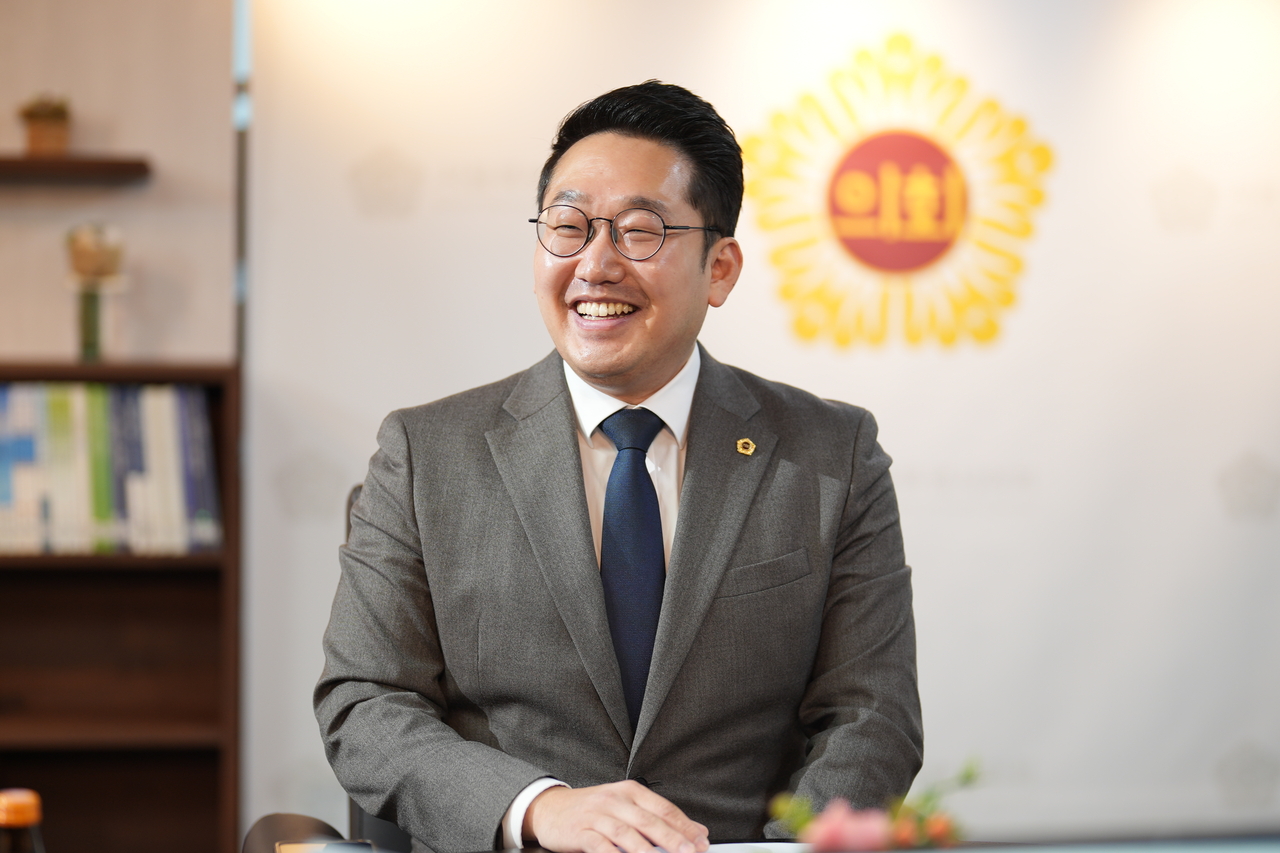
Calls are growing for a new direction in Seoul's education policy as the landscape shifts rapidly — driven by a shrinking school-age population, the spread of AI technology and widening educational inequality. Sun Jeong-hwan, a member of the Seoul Metropolitan Council's education committee representing the Democratic Party of Korea in Jongno District 2, said in an interview that he would focus his legislative efforts on closing the gap between education policy and classroom reality, and on building an educational ecosystem where students, teachers and parents can grow together. He also outlined a differentiated development strategy for his constituency of Jongno, one that weaves the district's historical and cultural identity into education and tourism.
Sun was born and raised in Jongno and has kept his roots there through marriage and raising children. After joining his party in 2008, he built a relationship with former Prime Minister Chung Sye-kyun and served as youth committee chair, then went on to lead the Jongno Junior Chamber of Commerce in 2017. He entered local politics to translate a wide range of personal experiences — salaried work, running his own business, raising children and caring for aging parents — into concrete policy.
Strengthening policy effectiveness in schools — AI education and teacher rights in focus
The most important thing for Sun in his work on the education committee is whether policy actually works on the ground. He said the committee must verify that policies drawn up by the Seoul Metropolitan Office of Education are functioning properly in individual schools, and build a structure that faithfully channels the needs of the educational community into the budget.
He particularly highlighted the need for tailored support matched to each district's educational environment — pointing to overcrowded classrooms in areas such as Gangnam, Yangcheon and Gangdong alongside the growing number of small schools in Jongno. Support for students in special education classes and multicultural students also featured among his key policy priorities.
"The temperature you feel on the ground is really different from what policy looks like on paper," Sun said. "We need to scrutinize policy and budgets carefully so that teachers, students and parents — all members of the educational community — can work in sync."
On support for educationally disadvantaged students, Sun said he plans to examine not only the size of the budget but also actual support rates and the delivery process. Rather than uniformly cutting education welfare budgets on the grounds of a shrinking school-age population, he said the priority should be raising the quality of educational benefits each individual student receives. He also stressed the importance of reforming the system so that low-income students and parents do not experience psychological alienation or a stigma effect when applying for support.
To improve student commuting safety, Sun plans to push for AI-based pedestrian signal extension systems and an expansion of the school manager program. He expressed support for opening school facilities to the wider community, while noting that institutional safeguards are needed to address student safety and teachers' legal liability at the same time.
Transforming the education system to meet the demands of the AI era is also a core legislative priority. He said schools must respond to new challenges such as AI-assisted cheating while establishing teaching methods that strengthen students' critical thinking and creativity.
"Instead of rote learning the way we used to, we need to focus on education that poses questions to children and lets them find the answers themselves," Sun said. "AI equipment matters, but what matters more is building an environment where it can be used effectively."
To that end, he called for expanded teacher training to improve the use of Dibut digital learning devices and for upgrades to school network infrastructure. He also stressed that AI-integrated instruction must go hand in hand with programs supporting students' emotional development.
On teacher rights, Sun called for a responsible response from the Seoul Metropolitan Office of Education and its district-level support offices. Rather than placing the burden on individual teachers when they become embroiled in legal disputes, he said a systematic response manual must be prepared that provides legal and administrative support.
"When trust breaks down between teachers, students and parents, creative education becomes very difficult," Sun said. "District education support offices need to take active responsibility so that teachers can educate children in a stable environment."
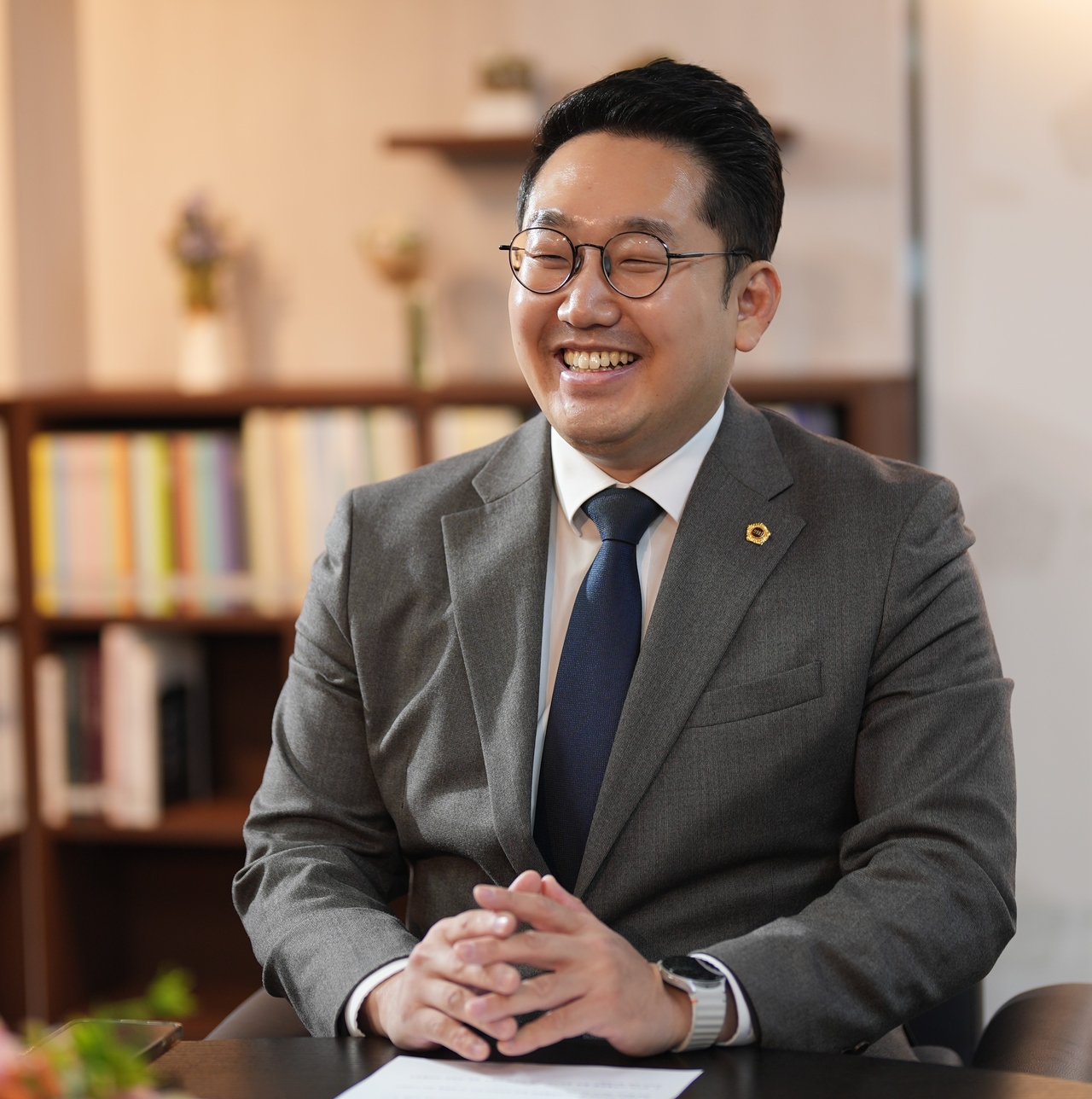
Jongno's historical and cultural identity as the foundation for education and tourism
Sun's vision for his constituency centers on a strategy that organically links education, history, culture and tourism. The goal is to build a distinctive educational foundation unique to Jongno — one that draws residents who have left the district back, rather than letting population decline and a deteriorating educational environment continue to push them away.
Concrete ideas include history education using the district's palaces and cultural heritage sites, after-school programs in traditional instruments run in partnership with intangible cultural heritage practitioners, cultural heritage interpretation activities that draw on the linguistic strengths of multicultural students, and international exchange programs with schools abroad. The aim is to cultivate globally minded talent rooted in Jongno's own identity, rather than simply replicating the educational models of other districts.
On tourism, Sun said the focus must shift beyond simply increasing visitor numbers toward encouraging longer stays. He plans to uncover the historical and cultural value embedded throughout the district — in Jongmyo, Daehangno, Sungin-dong and elsewhere — and connect all of Jongno into a single cultural content experience through neighborhood-level storytelling. He also proposed a virtuous cycle in which the cityscape where tradition and modernity coexist is preserved, and the fiscal returns from a more active tourism sector are reinvested in education.
"Facilities and objects are visible, but the budget that creates cultural value is invisible — yet it stays in the hearts of residents and people around the world," Sun said. "Going forward, I want to look after that kind of budget carefully and play a part in helping Jongno move beyond being the home of politics to becoming the home of culture and arts."
7toy7@heraldcorp.com




