
'Autos need same support as semiconductors… tax credit needed for domestic EV production'
'Considering fuel-by-fuel exit strategy for oil price cap'
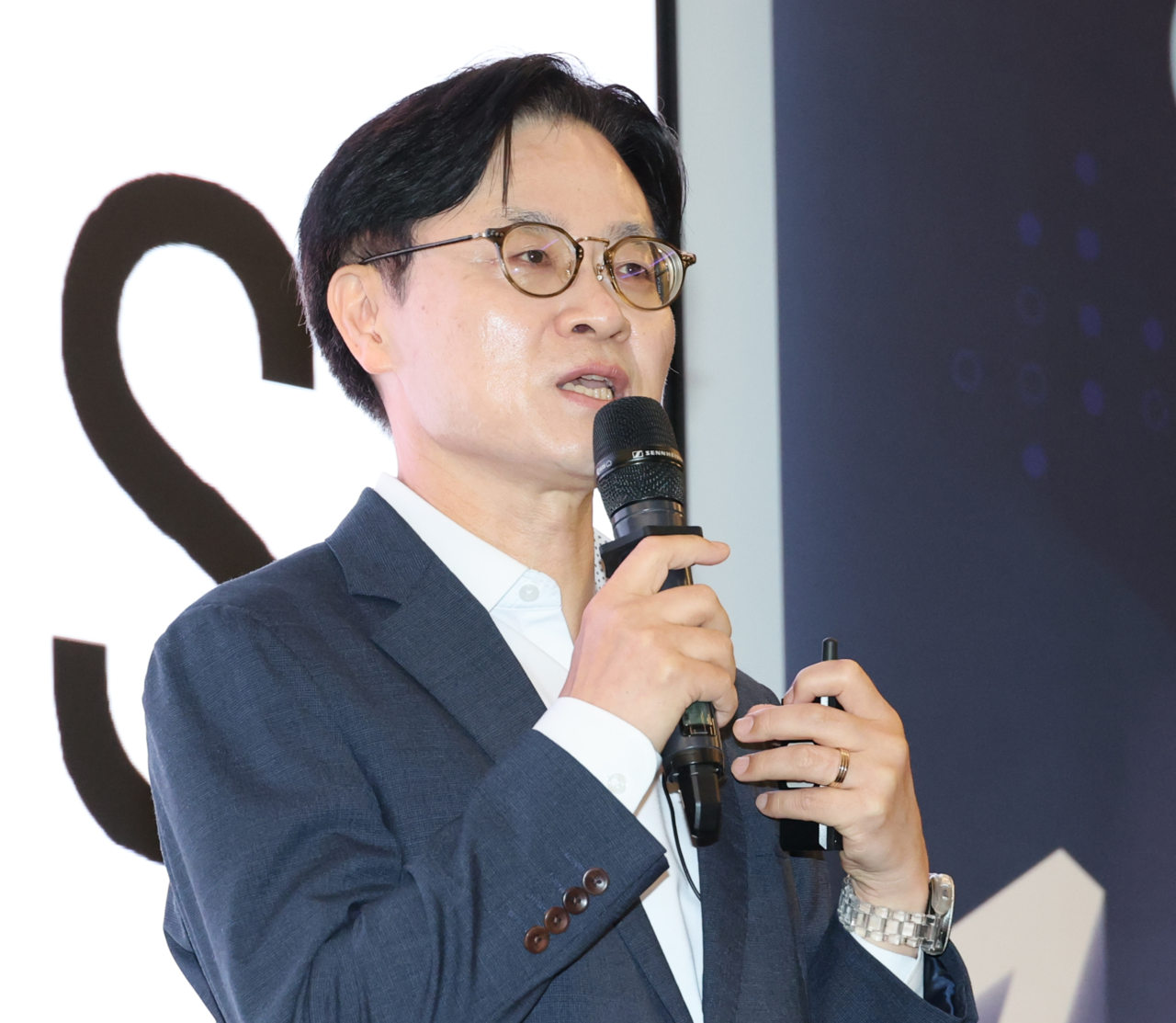
Minister of Trade, Industry and Energy Kim Jung-kwan said Wednesday that South Korea is already losing ground to China in research and development competition — and that the country is losing on time, making an exemption from the 52-hour workweek rule for R&D workers an absolute necessity.
Speaking at a press briefing at Government Complex Sejong, Kim drew on a recent visit to Shenzhen to make his case. "When we compete with China, where we are falling behind is time — R&D time," he said.
Shenzhen, which hosted last week's Asia-Pacific Economic Cooperation summit, has emerged as a hub for cutting-edge industry innovation, including physical AI.
Kim relayed the words of a Korean researcher he met there: "A project that takes one year in Korea gets done in three months in China."
"R&D to develop new technology is our last competitive battleground," Kim said. "If we can't do it now, when we say we'll do it later, we may have already lost even that opportunity. I feel anxious and desperate."
Kim said the exemption should begin with the semiconductor industry.
"I would like semiconductors to go first," he said. "The R&D workers covered under the bill — the super-regional special zone legislation — earn more than 100 million won ($74,400) a year. We should at least guarantee those people the right to work as much as their work demands."
Kim went on to say that the 52-hour rule was originally designed to prevent overwork among low-wage blue-collar factory workers, and that applying it to highly paid research professionals who want to work more does not make sense.
Addressing labor groups' concerns, Kim drew a line against criticism that the exemption would enable wage exploitation. "The basic premise is that all existing policies protecting workers' health rights are maintained," he said. "The understanding shared with management is that there will be no wage cuts — compensation will follow performance."
However, disagreements with the Ministry of Employment and Labor, the ministry with primary jurisdiction over the issue, remain.
"I fully understand the labor minister's position that guaranteeing total working hours should be sufficient," Kim said. "But the Trade Ministry's stance is that, at least for R&D, we should allow flexible working when research demands it." He added that the two sides are still searching for common ground: "We're finding points of contact, but it's still tense."
Kim shrugged off the option of using the existing special extended work hour system, saying it would burden companies in sensitive sectors like semiconductors by requiring them to submit detailed reports to the government and obtain approval for each instance.
"I would like the exemption to start tomorrow," Kim said. "Even if it starts tomorrow, it takes time before it actually applies to companies — so if we can do it, I really hope it happens as fast as possible."
Turning to the domestic auto industry, Kim said a tax credit for domestic electric vehicle production is essential.
"If we had given up on semiconductors three or four years ago, we would not be enjoying the current boom," he said. "From the Trade Ministry's perspective, support for the auto sector is absolutely necessary, and we are actively communicating with the industry."
Kim also pushed back against the characterization of an EV production tax credit as a handout to large conglomerates. "There are those who say it is preferential treatment for big companies, but in practice the money would go toward strengthening the competitiveness of suppliers and benefiting consumers," he said. "The idea that it favors large companies is a misunderstanding."
On the oil price cap, Kim said the government is considering a gradual, fuel-by-fuel exit strategy. "When the right opportunity comes, we intend to normalize it in stages, one way or another," he said. "Each fuel type has different characteristics, so we are taking those differences into account to some degree."
Unlike gasoline, which is used primarily in passenger cars, diesel is the main fuel for freight trucks, delivery vehicles and light commercial trucks — vehicles closely tied to people's livelihoods. Kim's remarks were seen as reflecting the greater economic impact that diesel prices have on ordinary households.
However, when asked whether gasoline would be phased out first, Kim cautioned against reading too much into his words. "I am not saying we will do anything right now — I mean that if we do pursue an exit strategy, that would be one of the options available," he said.
The oil price cap sets a ceiling on the prices that refiners charge gas stations and other distributors. Any losses refiners incur as a result are compensated by the government through fiscal funds.
The Ministry of Trade, Industry and Energy plans to soon notify each refiner of the first-round loss compensation settlement amount, covering the period from March 13, when the cap was first introduced, through June 30. The settlement process is understood to be in its final stages.
"The settlement work is nearly complete and is now in the final fine-tuning stage," Kim said.
Asked about the possibility of refiners pushing back or filing lawsuits after the results are announced, Kim said the government would respect whatever course of action companies choose. "This is a matter we have communicated closely with companies on over a long period, so we will fundamentally respect their judgment — whether that means filing objections or pursuing litigation," he said.
Kim nonetheless reminded the industry of the support it had received. "It was because the government supported crude oil imports and the public backed it with their taxes that refiners were able to operate stably," he said. "If refiners had absorbed enormous profits while citizens were suffering from soaring fuel prices, they would have faced fierce backlash, including calls for a windfall tax." He added that he expects the industry to weigh the situation with a sense of overall balance, given the significant role the price cap has played in stabilizing society and prices.
oskymoon@heraldcorp.com




