
Four working groups of AI and AX technology innovation council complete preliminary meetings
Execution strategies for pilot testing and industry diffusion take shape
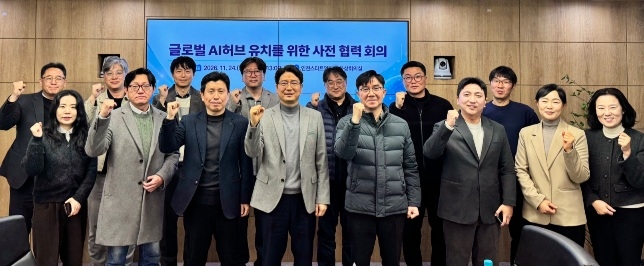
Incheon has completed an execution framework consolidating the city's industry, academic, research and government capabilities as it formally enters the race to host the government's planned "global AI hub."
The city said it held preliminary meetings for the "public pilot cooperation" and "technology diffusion cooperation" working groups of its Incheon AI and AI Transformation (AX) Technology Innovation Council on Tuesday and Wednesday at Incheon Startup Park, finalizing each group's operational direction and plans for delivering concrete results next year.
Co-organized by the city and Incheon Technopark, the meetings followed earlier sessions for the "AI technology company cooperation" working group on Nov. 13 and the "industry-academia innovation cooperation" working group on Friday, completing the preliminary coordination process for all four core working groups under the council.
The two groups that met this week will each lead one of two pillars central to the global AI hub bid: on-site pilot testing and industry-wide diffusion.
The public pilot cooperation working group includes major local public institutions such as Incheon International Airport Corporation and Incheon Port Authority, which will open Incheon's specialized infrastructure — spanning airports, ports and logistics — as AI testbeds.
Through this, the group will verify AI solutions designed to tackle global challenges such as climate change and logistics bottlenecks in real-world settings, while also identifying new areas of demand.
The technology diffusion cooperation working group brings together research, standardization and business organizations, including the Korea Electronics Technology Institute, the Telecommunications Technology Association, the Korea AI Association and the Incheon Chamber of Commerce and Industry.
The group will support technologies that clear the pilot stage through standardization, commercialization and investment attraction, helping them reach not only the local industry but also global markets.
Through the four preliminary working-group meetings, the city said it has built a one-stop cooperation structure that organically links private-sector innovation, university talent and research capacity, public pilot infrastructure, and commercialization support from specialized institutions.
Kim Sang-gil, head of the city's future industry bureau, said Incheon's industry, academia, research and government sectors "are closely united under the shared goal of winning the global AI hub designation," adding that once the council officially launches next month, the city will "quickly flesh out joint tasks for each working group and complete a differentiated bid strategy unique to Incheon."
The global AI hub the government is pursuing is envisioned as an "international campus-style cooperation platform" staffed by international organization personnel, where participants would work on joint AI projects, conduct pilot testing, and discuss international standards and policy to address shared global challenges including climate change, public health, food security and employment.
After the council's official launch in December, the city plans to hold a steering committee meeting twice a year and quarterly regular sessions to mount a full-scale response to the government's competitive selection process.
gilbert@heraldcorp.com




