
Analysis of 2025–2026 Seoul funding disclosure forms
Stock and bond proceeds: 1.36 trillion won in May → 258.7 billion won in October
Share of home purchase funds falls from 9.8% to 5.9%
Tighter loans and weak equities squeeze buyers
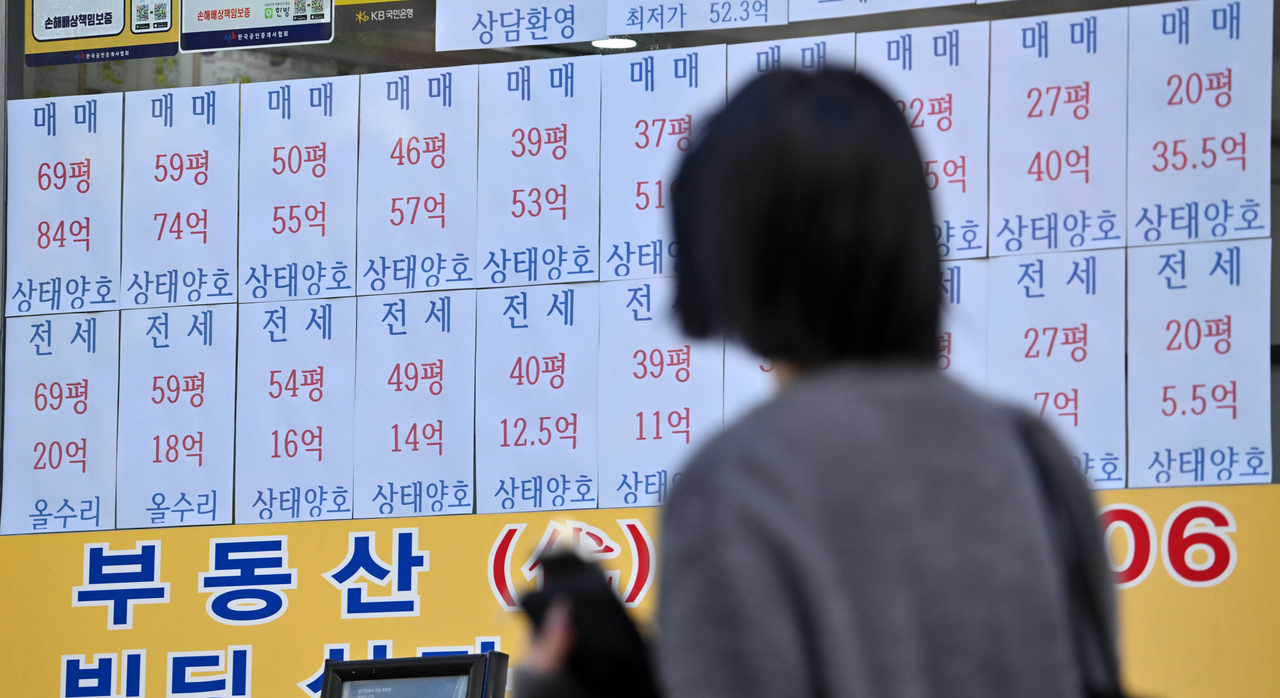
When the Kospi crossed the 8,000 mark for the first time in history last May, Seoul's housing market absorbed 1.36 trillion won ($1.01 billion) raised from the sale of stocks and bonds. That sum accounted for roughly 10 percent of all home purchase funds declared that month, as buyers cashed out financial assets to help cover the cost of a home while equities were riding high.
But the mood shifted as equities retreated. In October, when the Kospi slid to the 5,000 range, proceeds from stock and bond sales channeled into Seoul home purchases fell to 258.7 billion won — an 81 percent drop from May. Their share of total home purchase funds also declined to 5.9 percent. Buyers who had planned to sell stocks to bridge the gap left by tighter mortgage lending now found themselves facing a second obstacle: a struggling stock market.
Fewer buyers selling stocks to fund home purchases as share of acquisition funds falls
An analysis of Seoul funding disclosure forms for 2025–2026, obtained by People Power Party lawmaker Jeong Hee-yong from the Ministry of Land, Infrastructure and Transport, shows that transactions in which buyers used stock or bond proceeds toward a home purchase fell from 4,036 cases in May to 1,183 in October.
Total transactions accompanied by a funding disclosure form also dropped over the same period, from 13,040 to 5,221. As overall home buying slowed, the volume of money moving out of equities and into real estate fell in tandem.
The Ministry of Land, Infrastructure and Transport requires all buyers — domestic and foreign alike — to submit a funding disclosure form along with supporting documents when signing and reporting a housing transaction within a land transaction permit zone. The forms cover not only stock and bond sale proceeds but also virtual asset sales, non-mortgage loans including business loans, and overseas funding sources.
The proportion of all transactions that drew on stock or bond proceeds also fell, from 31.0 percent in May to 22.7 percent in October. In May, roughly one in three home buyers put money from stock or bond sales toward their purchase; by October, that had dropped to about one in five.
The decline was equally pronounced in won terms. Of the 13.78 trillion won in total home purchase funds declared in May, stock and bond proceeds accounted for 1.36 trillion won, or 9.8 percent. By October, that share was limited to 5.9 percent.
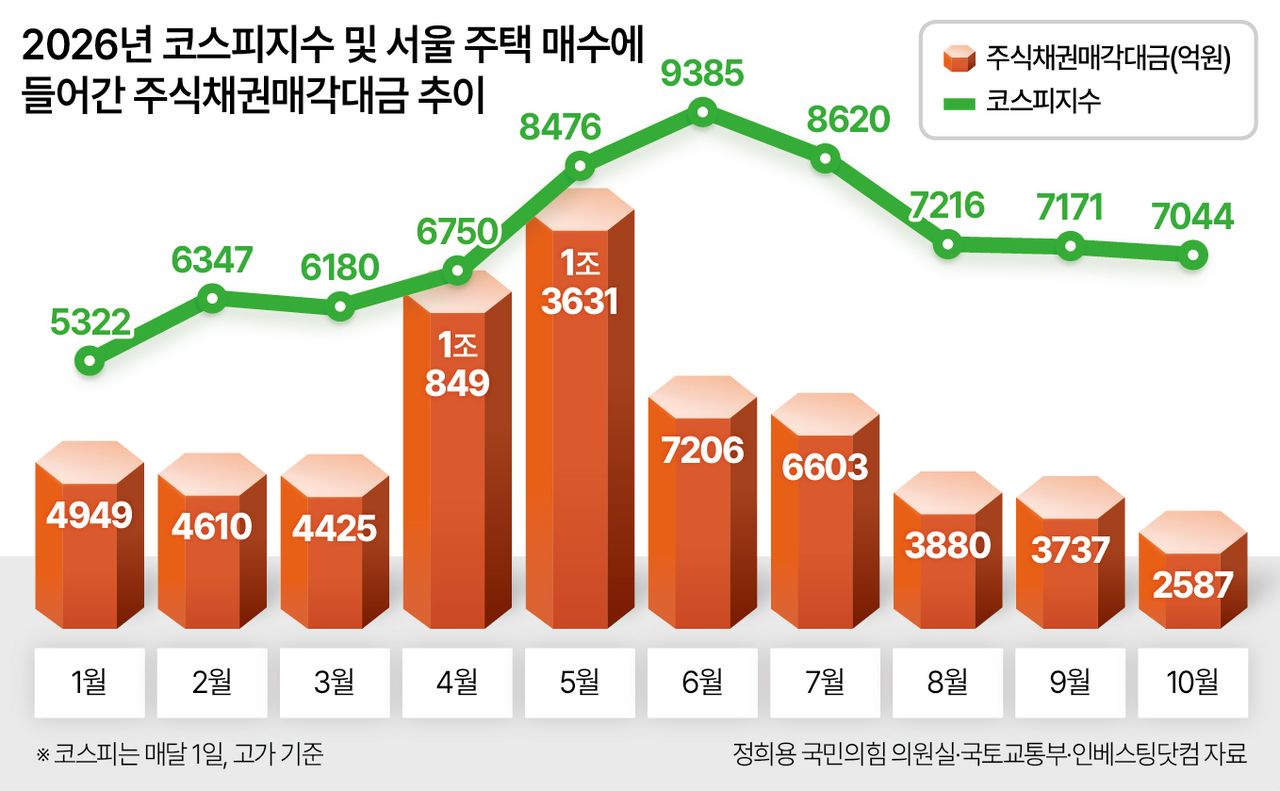
Through the first half of this year, the flow of financial asset sales into housing remained brisk. Stock and bond proceeds declared as home purchase funds in Seoul totaled 4.57 trillion won in the first half alone — already surpassing last year's full-year figure of 3.89 trillion won.
In the second half, however, a weakening stock market began to weigh on the funding plans of buyers who had counted on selling equities to help finance a purchase.
Proceeds from virtual asset sales followed a similar trajectory. In May, 31.4 billion won from virtual asset sales was declared as home purchase funds across 290 transactions. By October, that had fallen to 86 transactions and 6.3 billion won — a 79.9 percent drop in won terms.
By contrast, the share of buyers relying on company subsidies or private loans edged up. Transactions listing "company subsidies and private loans" on their funding disclosure forms accounted for 3.0 percent of all transactions in May, rising to 3.4 percent in October.

With loans and stocks both falling short, newlyweds' home plans unravel
For would-be buyers who had hoped to grow their savings through stock investments and put the gains toward a home, the market downturn has become a serious setback. When borrowing capacity is already capped by tighter lending rules, a drop in the value of one's stock portfolio can put a previously affordable home out of reach.
A 34-year-old office worker surnamed Kim, who is preparing to marry, said the situation had upended plans. "I was weighing whether to buy a home for after the wedding or move in on a jeonse lease, and then every stock I held went negative — completely wiped out," Kim said. "The plan to use the proceeds from selling stocks to buy a place has in effect fallen through."
Experts say that as lending regulations have tightened, a clearer link has emerged between stock market returns and the ability to buy a home.
Jung Jae-hoon, a professor in the department of urban planning and real estate at Dankook University, said prolonged tightening of mortgage rules has rapidly shifted the funding base for home purchases away from traditional bank lending and toward the liquidation of financial assets such as stocks, or intrafamily gifts and inheritances. "The core of the problem is that young people and owner-occupiers without homes — those who were trying to climb the housing ladder by repaying loans out of earned income — are taking the most direct hit from this structural shift in how purchases are financed," Jung said.
Jung added that young buyers who can no longer afford to purchase are likely to remain in the jeonse and monthly-rent market for an extended period, which risks compounding instability in the rental market and adding to housing costs in a chain reaction. "What is needed is a carefully calibrated policy fix that blocks speculative leverage while guaranteeing predictable access to housing finance for young people and genuine owner-occupiers whose repayment capacity has been verified, so as to reduce uncertainty around housing," Jung said.
hss@heraldcorp.com




