Our neighborhood police station (15): Guro Police Station, Seoul
In its 81st year of Korean policing, The Herald Business introduces Seoul's 31 police stations.
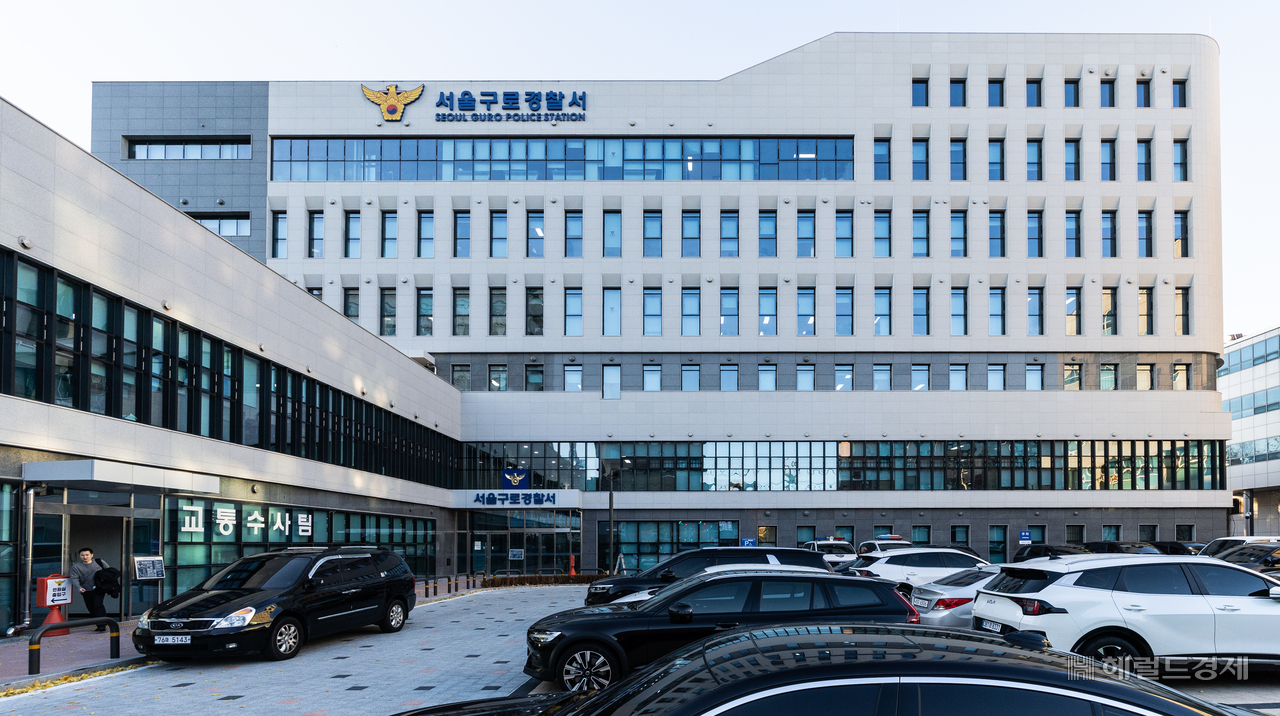
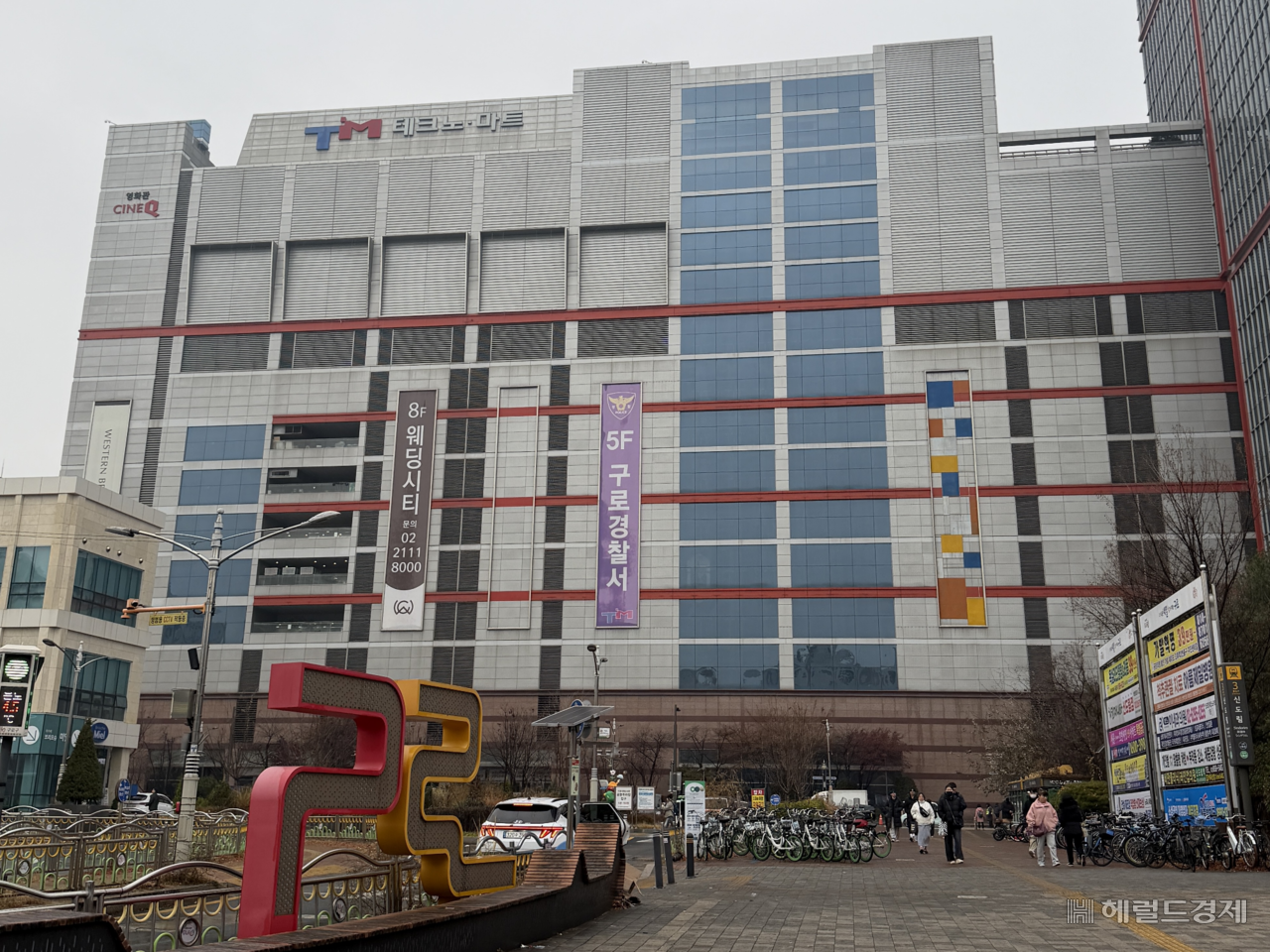
An E-mart in the basement, a wedding hall on the eighth floor, a movie theater on the 12th — and a police station on the fifth. Guro Police Station has been operating out of the fifth floor of the Technomart building near Sindorim Station in Guro-gu, Seoul. With a police station tucked inside a bustling commercial complex, locals joked that a wrong move while shopping could land you directly in police custody.
The original station building had been in use for more than 40 years and had fallen into severe disrepair, prompting a reconstruction project that began in late 2022. A temporary home was needed, but finding a building large enough for some 400 staff within Guro-gu proved difficult. Technomart happened to have vacant space, and negotiations with the building's owner went smoothly. The station moved in after workers partitioned off areas to separate police and civilian foot traffic and converted several floors to public-service use.
After spending three years and seven months as an unlikely tenant of a major shopping complex, Guro Police Station will hold an opening ceremony Thursday and begin full operations at its new, purpose-built home. Staff began moving into the new six-above-ground-floor, two-basement-level building in stages over the summer, though lingering construction work kept things unsettled. Final touches — including the installation of police emblems on the exterior walls — were completed only recently.
Guro Police Station opened on Nov. 3, 1980, and marks its 46th year of operation this year. Established the same year Guro-gu was split off from Yeongdeungpo-gu, the station initially had no building of its own and used part of a factory as a temporary headquarters. It took over 12 police boxes from the Yeongdeungpo, Nambu and Gangseo stations to begin its work, and secured an independent building in Guro-dong in 1982.
Faces of Guro Station: the officer keeping residents safe
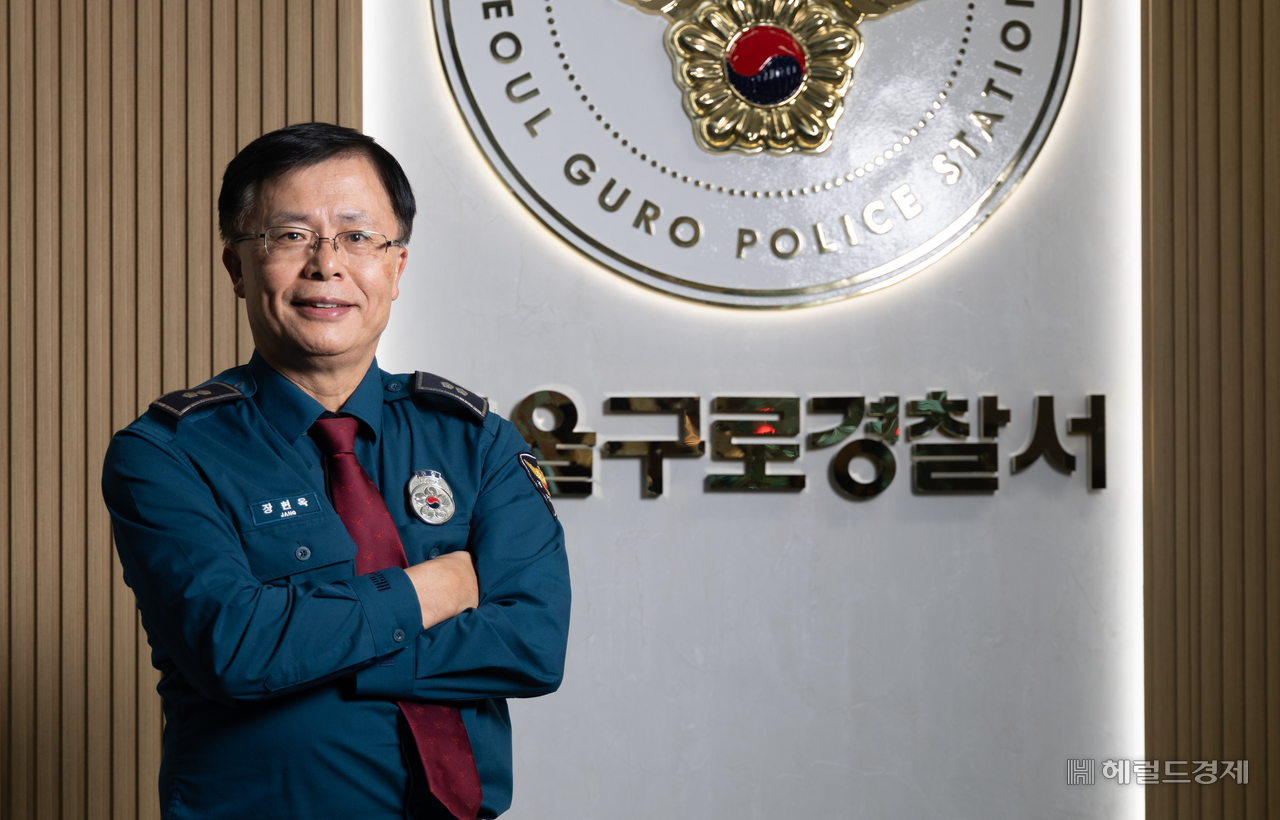
Jang Heon-ok, who leads the crime prevention unit at Guro Police Station, focuses on community-based policing built on cooperation with residents and local organizations. Guro-gu is home to roughly 40,000 single-person households headed by women, creating strong demand for safety measures tailored to women and small-business owners. The unit conducted crime-prevention inspections at 210 small businesses, identified 117 shops run solely by women and installed safety warning lights at 49 of them.
In June, the station signed an MOU with security firm KT Telecop to secure crime-prevention services — including patrols in high-risk areas and the provision of safety equipment — worth about 71.65 million won ($53,300). The station also carried out a large-scale overhaul of pavement markings along safe-return routes for women. The Seoul Metropolitan Police Agency and the Seoul Metropolitan Government's autonomous police committee recognized Guro Station as a best-practice case.
"Crime prevention is not something the police do unilaterally — it is a process of finding what residents are genuinely worried about and solving it together," Jang said. "We focus on creating changes that residents can actually feel, even if they start with small improvements to the environment."
The unit is also working to expand community policing through direct resident participation. In Guro-gu, 511 volunteer patrol members across 21 organizations are active. The crime prevention unit conducts joint patrols with these volunteers every Thursday and continues targeted crime-prevention activities in the Garibong-dong area, which has a large foreign resident population.
Cracking a cold case after 19 years: Lee Chun-gi, head of the violent crimes team
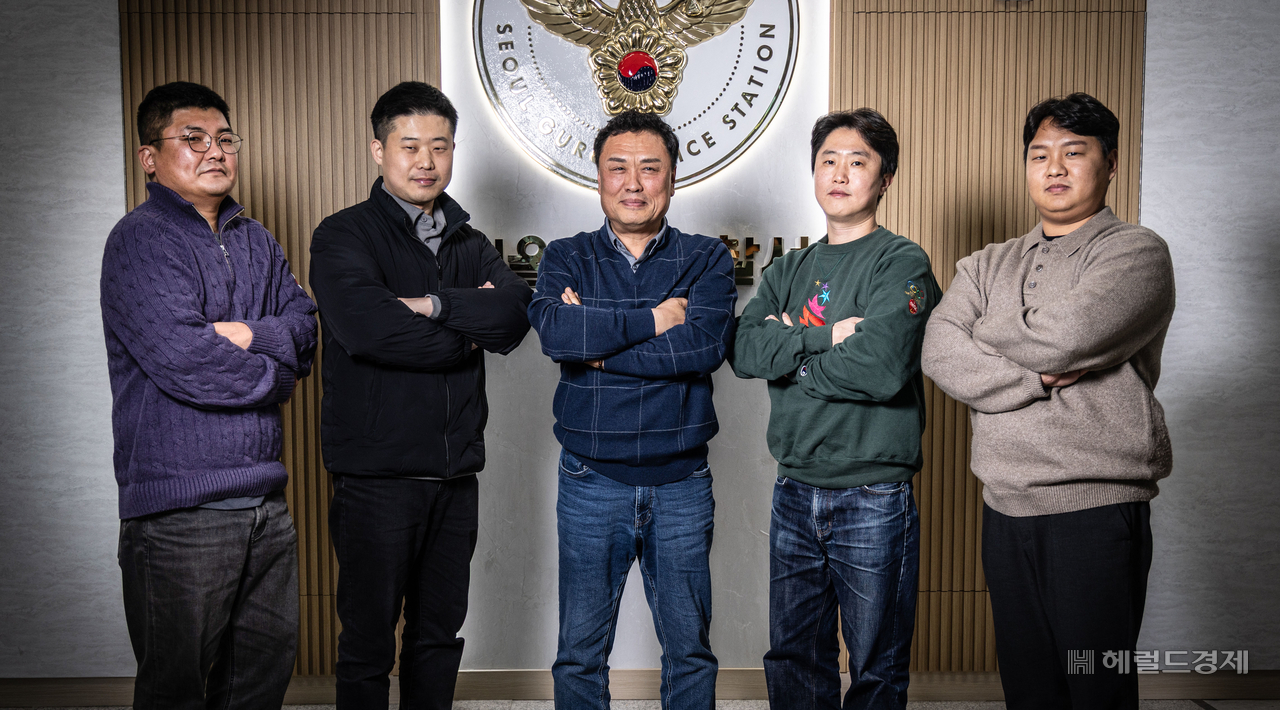
"Don't live a life of crime. You will be caught eventually." That was Inspector Lee Chun-gi's answer when asked what he would say to suspects in long-unsolved cases. Lee leads the second violent crimes team under the second detective division, and last month his team cracked a sexual assault cold case that had gone unsolved for 19 years. The crime occurred in August 2007 at a residence in Guro-gu, Seoul. Police at the time were unable to identify the perpetrator, and the case ultimately remained open for nearly two decades.
The breakthrough came in September. While investigating a separate case, detectives obtained a blood sample whose DNA profile matched genetic material recovered from the scene of the 2007 assault — a finding confirmed by the National Forensic Service. With just 10 months left before the statute of limitations expired, the violent crimes team launched an investigation and arrested the suspect. Upon arrest, it emerged that the same person had also committed an unsolved armed robbery and rape in Bucheon, Gyeonggi Province, in 2007.
Lee contacted the victim in the Bucheon case to report that the perpetrator had been caught. The victim expressed gratitude and said the offender should be punished for as long as possible.
Lee began his police career in 1998 and has spent about 23 years as a violent crimes detective — a veteran of the field. He said he had dreamed of becoming a detective since childhood, captivated by the sight of his uncle, a violent crimes officer, walking around with a gun on his hip. While working at a police box early in his career, he made a string of theft arrests that caught the attention of the detective division, leading to his transfer to the violent crimes team.
The principle he emphasizes most to junior detectives is teamwork. "The violent crimes team pursues one case as one unit, so individualism has no place here," Lee said. "It is important for everyone — from the most junior member to the team leader — to look out for one another and stay aligned."
Rescue on the Anyangcheon: Hong Han-na, officer at Singuro District Unit
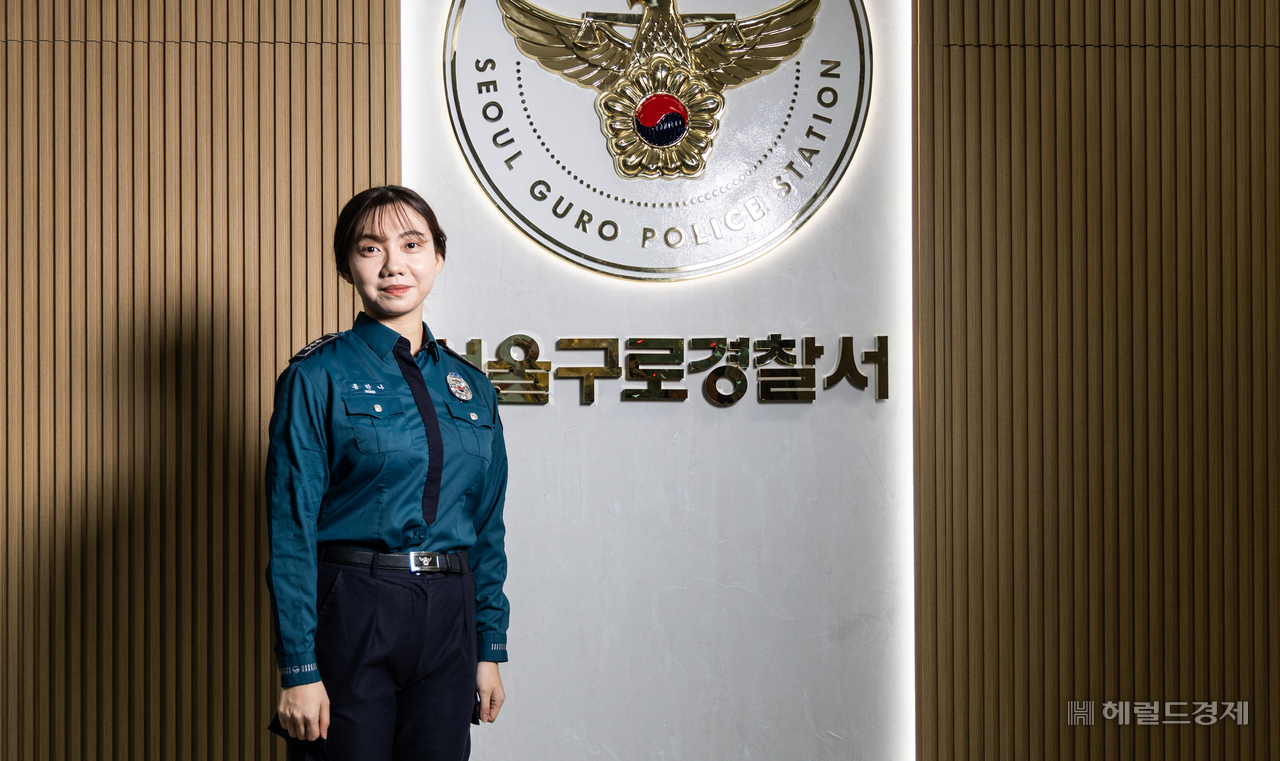
At around 4:35 a.m. on July 14, a call came in reporting that someone had fallen into the Anyangcheon. Hong Han-na, a patrol officer with the Singuro District Unit who responded to the scene, spotted a woman struggling in the water. Without hesitation, Hong shed a police vest, put on a life jacket and jumped in. Heavy rain that had fallen the previous day had raised the water level to the point where her feet could not touch the bottom. A fellow officer who arrived at the scene also entered the water. Together, they fitted the woman with a life jacket, locked arms with her and brought her safely to shore.
"The moment I saw her struggling, I went in without thinking," Hong recalled. "I wasn't even scared at the time, but afterward my colleagues asked how I could have jumped in without any fear."
As a community police officer who meets residents up close every day, Hong actively looks into everyday concerns. When complaints about juvenile delinquency at Guro Neighborhood Park increased in May, Hong convened a coordination meeting with the local community center and stepped up joint patrols with volunteer crime-prevention teams. Working with Guro-gu Office, the unit also put up banners prohibiting minor public-order violations. As a result, related reports that had numbered in the dozens dropped to just one in July.
The Singuro District Unit ranked first among more than 2,000 district units and police boxes nationwide in the Korean National Police Agency's 2026 evaluation of outstanding local police offices. Last month, on Police Day, the unit received a presidential group citation.
One resident sent a letter to the unit's staff saying that while people around them used to warn that Guro was a dangerous place, they could now say with confidence that it had become a safe one. "I want to keep being the kind of officer who is the first to run to someone in need," Hong said.
newday@heraldcorp.com