
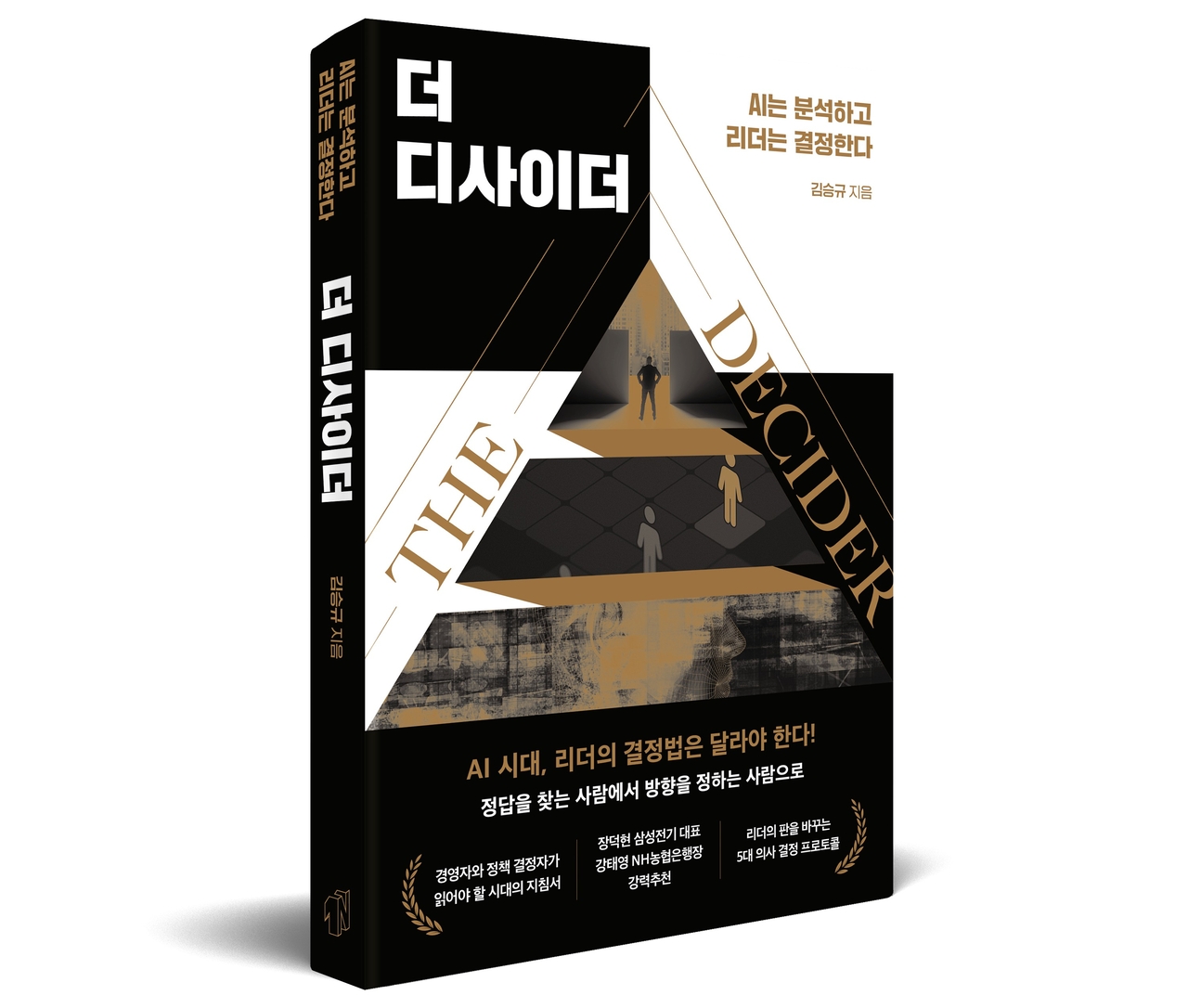
A new book examining what makes leaders competitive in an era when AI can analyze vast amounts of information and propose optimal solutions has been published under the title "The Decider."
Author Kim Seung-gyu, who spent 27 years covering industry for the Electronic Times and served as its editor-in-chief and publisher, argues that a leader's core competency lies in grasping the essence of a problem, making decisions at the right moment and taking responsibility for the outcome.
While AI can forecast and recommend, Kim contends that bearing risk and choosing what to value in the future ultimately falls to humans.
The book focuses on the importance of timing over perfect analysis. It argues that leaders need the decisiveness to act on 70 percent of available information rather than waiting for complete certainty, adjusting strategy as execution unfolds, along with the flexibility to keep multiple options in play.
Through cases such as Apple — which upended the music industry with the iPod while Sony was still mired in internal coordination — and Netflix, which pivoted to streaming at the peak of its DVD rental business, the book examines how the timing of a decision can determine a company's fate.
It also addresses the courage required to abandon existing revenue streams and enter new markets, and the limitations of organizational cultures built around reports and meetings.
The book extends beyond corporate management to national decision-making. It analyzes how policy judgments shape industrial ecosystems and national competitiveness through the social conflicts surrounding ride-hailing service Tada and telemedicine, as well as the regulatory dilemmas that arise between emerging and established industries.
Kim also explores what choices South Korea must make to secure leadership in future industries, including content, data, AI full-stack and physical AI.
Drawing on common traits he observed among leaders encountered in the field, Kim highlights clear messaging, trustworthiness, swift execution, the ability to connect partners and the skill of asking questions that cut to the core.
On that basis, he proposes a "five-protocol decision-making framework" built around essence, structure, timing, execution and accountability.
Kim's central message is that competitiveness in the AI age depends less on how much information one possesses than on what one chooses, when and how it is carried out.
mss@heraldcorp.com




