
Chuseok base effect drives slight uptick in movers
Declining home sales and apartment completions weigh on mobility
Long-term slowdown persists amid aging and population decline
More than 450,000 people changed their place of residence within South Korea last month, official data showed Wednesday. The number of movers edged up slightly due to a base effect from last year's chuseok holiday, though the long-term slowdown in domestic migration driven by population decline and aging continued.
According to domestic migration statistics released Wednesday by the Ministry of Statistics, 453,000 people relocated in October, up 2.6 percent, or 11,000 people, from the same month a year earlier. It marked the second consecutive month in which the number of people crossing township, township-level county or neighborhood boundaries to change their residence remained in the 400,000s.
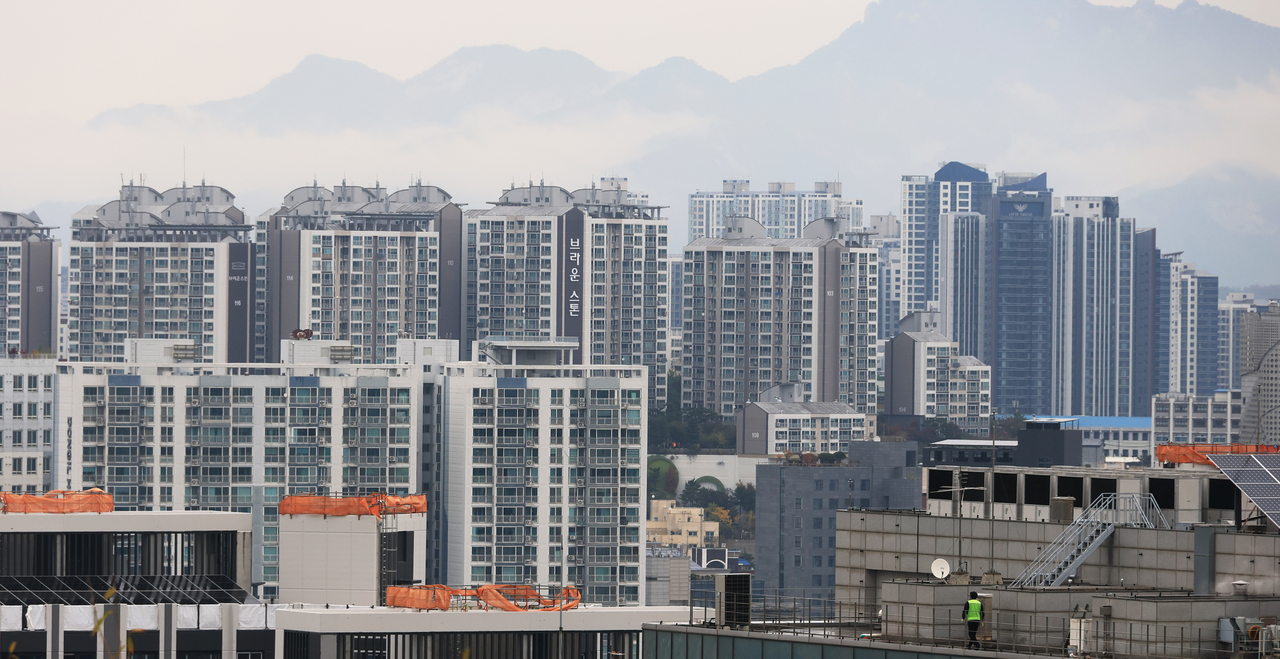
The year-on-year increase is attributed to a base effect: domestic migration had fallen sharply in October last year due to the chuseok holiday.
Domestic migration has been on a long-term decline amid demographic shifts, and housing market conditions are adding further drag on mobility. Home sales in August and September this year fell 11.2 percent from the same period last year, while apartment completions dropped 13.9 percent.
The migration rate — the number of movers per 100 people — stood at 10.5 percent, up 0.3 percentage points from the same month a year earlier.
By region, population inflows were concentrated in parts of the greater Seoul metropolitan area and the Chungcheong region, where semiconductor industries are clustered.
Gyeonggi Province recorded the largest net inflow at 3,560 people, measured by subtracting outbound movers from inbound movers. Six cities and provinces posted net gains, including Incheon (1,835), South Chungcheong Province (1,414) and North Chungcheong Province (862).
Housing supply and employment opportunities are believed to have influenced regional population inflows, though specific reasons for relocation will be confirmed through annual statistics.
Seoul, by contrast, recorded the largest net outflow at 5,560 people. Ten other cities and provinces also saw more residents leave than arrive, including Busan (minus 768) and North Gyeongsang Province (minus 436).
In terms of net migration rate relative to population, South Chungcheong Province (0.8 percent), Incheon (0.7 percent) and North Chungcheong Province (0.6 percent) posted the highest figures. Seoul recorded minus 0.7 percent, while Sejong and Busan each came in at minus 0.3 percent.
y2k@heraldcorp.com




