
Young Poong's Seokpo smelter cited for environmental violations, fines
MBK portfolio companies flagged for restructuring, unpaid wages
Voting rights, CEO nomination handed to MBK — 'self-contradiction,' Korea Zinc says
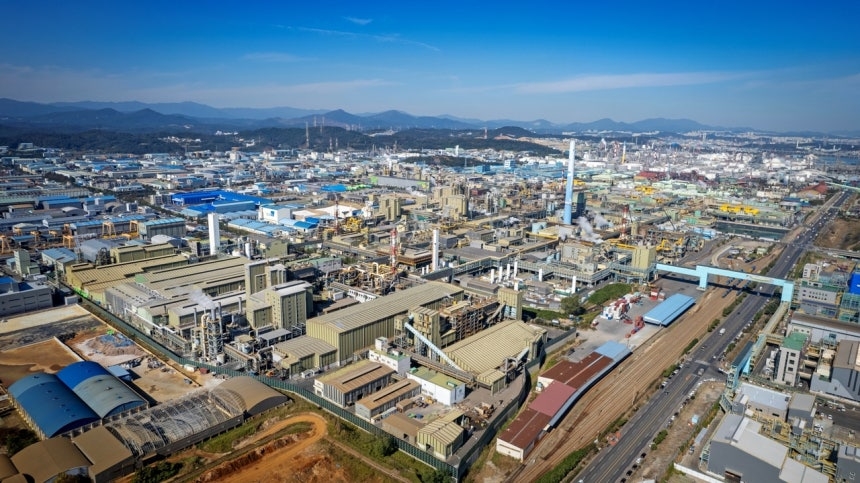
Korea Zinc rebuffed Young Poong and MBK Partners, questioning whether the two have any standing to speak on social responsibility. After MBK and Young Poong trained their fire on Korea Zinc and its management, the company hit back by pointing to environmental violations and labor issues at their operations.
In a statement Wednesday, Korea Zinc said "this matter is not a simple management dispute" and sharply criticized what it called "a predatory M&A by private equity fund MBK, which has joined hands with Young Poong to seize control of a company in a key national industry."
Korea Zinc pushed back on Young Poong's claim to social responsibility — made on the basis of 590 billion won ($438 million) in cumulative environmental investment — calling it "a basic legal and social obligation." The company said Young Poong should be judged not by the amount invested but by actual improvements to the environment and remediation outcomes for affected communities.
Korea Zinc cited data submitted to the National Assembly in September by the Ministry of Climate, Environment and Energy. Young Poong's Seokpo smelter had committed 109 violations of environmental laws and regulations from 2013 through June, with 26 additional violations confirmed even after the integrated environmental permit was issued. A final report from a North Gyeongsang Province research project found that as of August, the soil remediation rate around the Seokpo smelter stood at just 13.1 percent.
Korea Zinc also noted that the Financial Services Commission voted in July to impose a fine of 20.47 billion won on Young Poong for accounting violations related to environmental provisions and other liabilities, and that a complaint was filed with a UN Human Rights Council special procedure in January. Korea Zinc urged Young Poong to apologize to the public and local communities and to first demonstrate tangible results in environmental cleanup and victim relief.
On MBK, Korea Zinc said the private equity firm's portfolio companies have been repeatedly embroiled in controversies over restructuring, unpaid wages, large dividend payouts and asset sales. Some of those companies, it added, face uncertain survival prospects even as they undergo corporate rehabilitation proceedings. "Without any fundamental solutions of its own, MBK is in no position to lecture other companies on governance," Korea Zinc said.
Korea Zinc particularly took issue with the management cooperation agreement between MBK and Young Poong. Under the agreement, Young Poong agreed to exercise voting rights on Korea Zinc shares subject to a call option in accordance with MBK's wishes, and also granted MBK the right to nominate the CEO and CFO. MBK is entitled to recommend one more board director than Young Poong.
"It is a self-contradiction to invoke the rights and responsibilities of the largest shareholder while handing over voting rights and management control to a private equity fund," Korea Zinc said. "Since MBK is the real party seeking to take control, the criteria for judgment should be post-acquisition management performance, how it plans to recoup its investment, and its vision for the industry."
On the acquisition of Igneo Holdings, Korea Zinc said the deal represents a proactive response to the growing importance of critical materials such as copper, driven by the proliferation of AI data centers and the expansion of power infrastructure. Securing raw material supply chains through the recycling of electronic waste and other resources is a forward-looking investment, it said, adding that dismissing the deal's value based solely on financial metrics at a single point in time reflects a lack of understanding of industry trends.
Korea Zinc also raised economic security concerns, citing Project Crucible — an integrated critical minerals smelting facility it is pursuing with the US government in Tennessee — and said it is only natural that concerns arise over a private equity fund seeking to take control of a company in a key national industry.
Korea Zinc called on MBK to answer three questions: what measures it has to address the loss of competitiveness from business spin-offs, the sale of core assets and cuts to long-term investment; how it plans to respond to concerns about capital outflows should its No. 6 fund — reportedly funded roughly 80 to 90 percent by foreign capital — succeed in the acquisition; and how it intends to ensure continuity in critical mineral supply chains and South Korea-US economic security cooperation.
"We will respond resolutely to MBK's predatory M&A attempt, while doing our utmost to strengthen South Korea's industrial competitiveness, stabilize global critical mineral supply chains, and expand South Korea-US economic security cooperation," Korea Zinc said.
eyre@heraldcorp.com




