
'Term 8 focused on redevelopment, delivering results'
"Foundation laid for 90,000 housing units across the district;
Line 2 extension to Gimpo must be included in rail network plan;
Mokdong Stadium and retention basin site to become MICE complex"
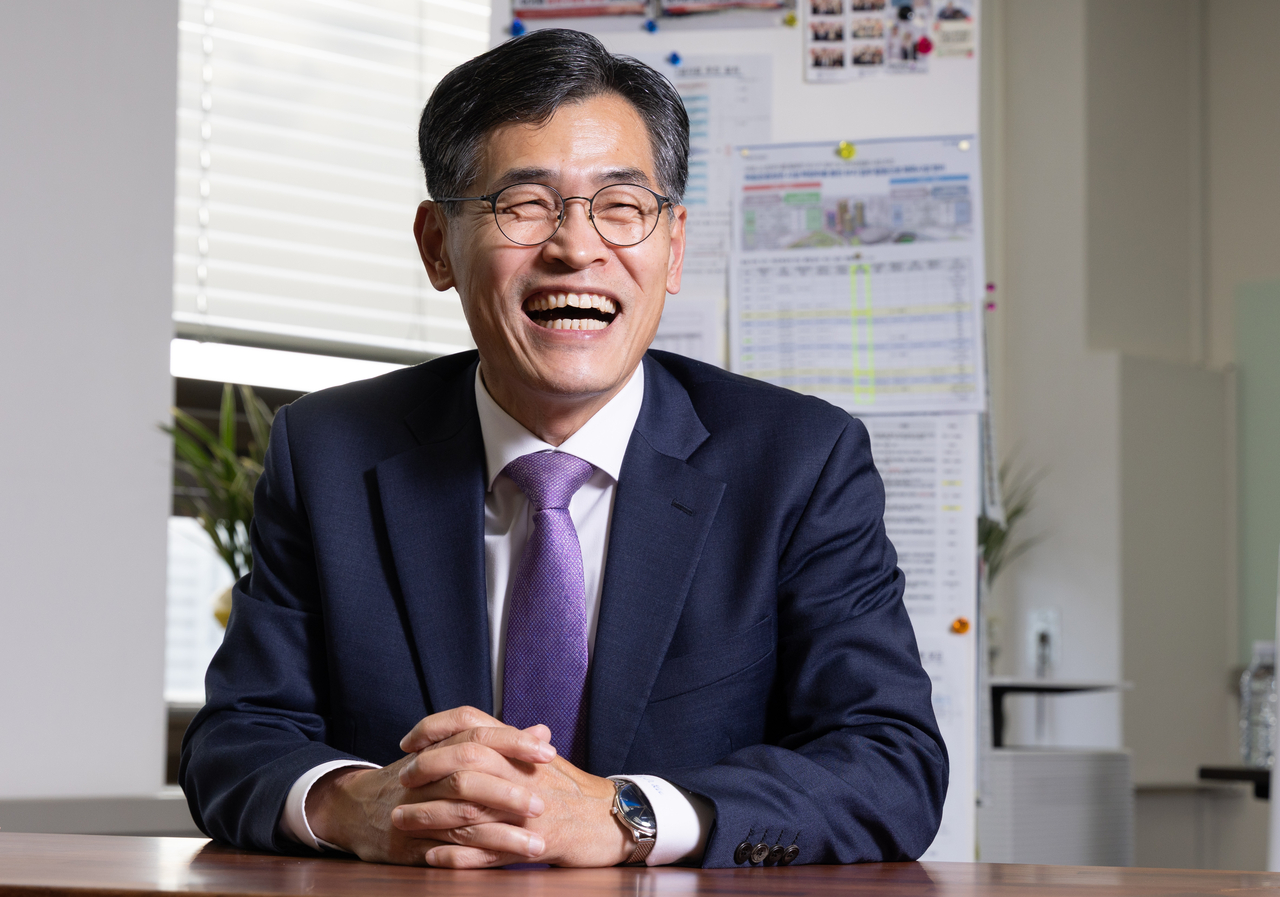
"Yangcheon-gu lacks an adequate urban rail network and has few corporate or commercial hubs, which drags down the district's vitality. Addressing those shortcomings is the central task of my new term."
Lee Ki-jae, who won re-election in the June 3 local elections, is credited with putting stalled reconstruction and redevelopment projects back on track during the first term. Lee's signature achievement was securing retroactive application of the government's relaxed safety-inspection standards to existing apartment complexes, which accelerated reconstruction timelines by two years. For Mokdong Apartment Complexes 1 through 3, Lee resolved a zoning upgrade dispute by introducing the Mokdong Greenway — an open green-space public-contribution model — as an alternative to mandatory rental housing construction.
Yangcheon-gu's campaign-pledge fulfillment rate under Lee's first term reached 96.5 percent, far above the national average of 70.42 percent and the Seoul average of 83.22 percent, earning Lee a renewed mandate from residents. Lee described the first term as a period of concentrated focus on redevelopment, and said the new term would pivot to boosting urban vitality through rail network expansion and corporate attraction. The following is an edited transcript of an interview conducted Nov. 16.
— What gave you the greatest sense of accomplishment during your first term?
We laid the groundwork for supplying roughly 90,000 housing units across Yangcheon-gu. Most complexes are now advancing through key procedures — forming associations, designating project operators and completing integrated reviews. The fastest-moving complex, Mokdong Apartment Complex 6, is on the verge of receiving project implementation plan approval.
— You have long argued that permit authority over redevelopment projects should be transferred to individual districts to break the supply logjam. After the local elections, Democratic Party district mayors are also calling on Seoul to hand over permit authority for projects under 500 units. Is your position the same as before the election?
My thinking differs from that of the Democratic Party district mayors. The "under 500 units" threshold is vague. It now appears to be moving forward as a transfer of permit authority for projects under 20,000 square meters, which has become the party line. Dividing authority by size can create problems. Redevelopment projects vary by their own characteristics — they differ depending on zoning categories such as second- and third-class general residential zones. That could become a source of conflict. The right approach is to divide authority by project type, not by size — for example, granting permit authority for transit-oriented revitalization projects, urban acceleration projects and public housing complex projects.
— The Democratic Party says the pace of redevelopment slowed during Seoul Mayor Oh Se-hoon's tenure.
That makes no sense. It was former Seoul Mayor Park Won-soon, a Democratic Party figure, who dissolved redevelopment and reconstruction zones, leaving projects stalled for a decade. After Mayor Oh returned to City Hall and redesignated those zones, the pace got back on track. Progress has been incomparably faster than before. I feel that firsthand.
— You have identified expanding the urban rail network as the most urgent task of your new term and have set up a subway promotion task force reporting directly to you.
During my first term, the urban development task force was the engine driving reconstruction and redevelopment. Those projects are now on track — they just need to keep moving forward. The rail situation, by contrast, has fallen far behind. Rail projects can no longer remain a vague, distant hope for residents. Progress must be made. To that end, I needed to elevate the status of the relevant department and set up a structure with a direct reporting line to the district mayor, so I can personally monitor progress on each project and handle everything from coordination with Seoul City, the Ministry of Land, Infrastructure and Transport and other agencies to administrative procedures. Through those channels, I learned that the Line 2 Sinjeong branch extension to Gimpo and the Sinjeong depot relocation project were at risk of being dropped from the government's Fifth Metropolitan Area Wide-Area Transport Implementation Plan. The plan is said to be cutting the volume of Greater Seoul transport projects to concentrate resources on five poles and three special zones under the banner of a "local era," which could mean the metropolitan area faces reverse discrimination. Everything accomplished over the past four years could be undone. That is why I have been moving quickly. I recently met with Gimpo Mayor Lee Ki-hyung of Gyeonggi Province and signed an agreement. I also visited the local constituency lawmakers and met with National Assembly Land and Transport Committee Chairman Yoo Eui-dong and Kim Yong-seok, chairman of the Ministry of Land, Infrastructure and Transport's Metropolitan Area Wide-Area Transport Commission.
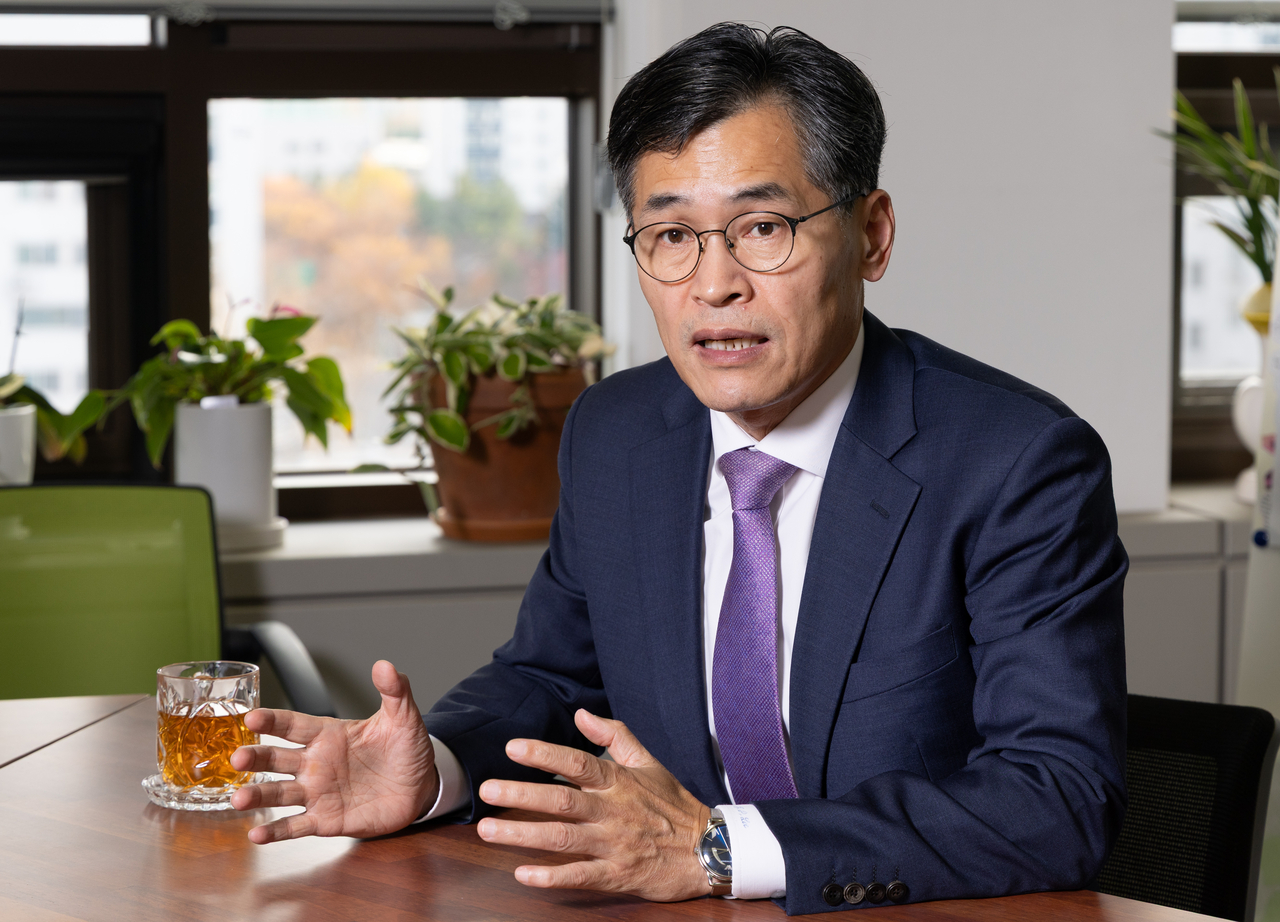
— Why are the Line 2 Sinjeong branch extension to Gimpo and the Sinjeong depot relocation project necessary?
These projects would simultaneously ease traffic congestion in Yangcheon and Gimpo, add a new Line 2 station at the Sinwol intersection on Nambusunhwan-ro, and relocate a depot sitting in the middle of the urban core. I have personally championed and driven this agenda since my first term. The plan is to use development gains from the Sinjeong depot relocation to fund the Gimpo extension — a win-win model that reduces the burden on national finances while benefiting both areas.
— As an urban planning expert, what is your outlook for the real estate market?
There may be a temporary correction in the three Gangnam districts following a sharp run-up, and tax policy could produce a short-term dip. But that will not turn into a sustained downtrend. Housing prices rise because new homes in desirable areas do not match the type of housing people want. That is how market economics works.
— Seoul is targeting ground-breaking on 310,000 units by 2031. What is your outlook for home prices after that?
I do not think that volume will cause Seoul home prices to collapse. This is different from Japan's real estate bubble. Korea has not seen that kind of explosive surge — prices have risen gradually. That level of real estate appreciation is common in advanced economies. Show me an advanced economy where real estate prices have retreated. As the value of money grows, asset prices will inevitably keep rising.
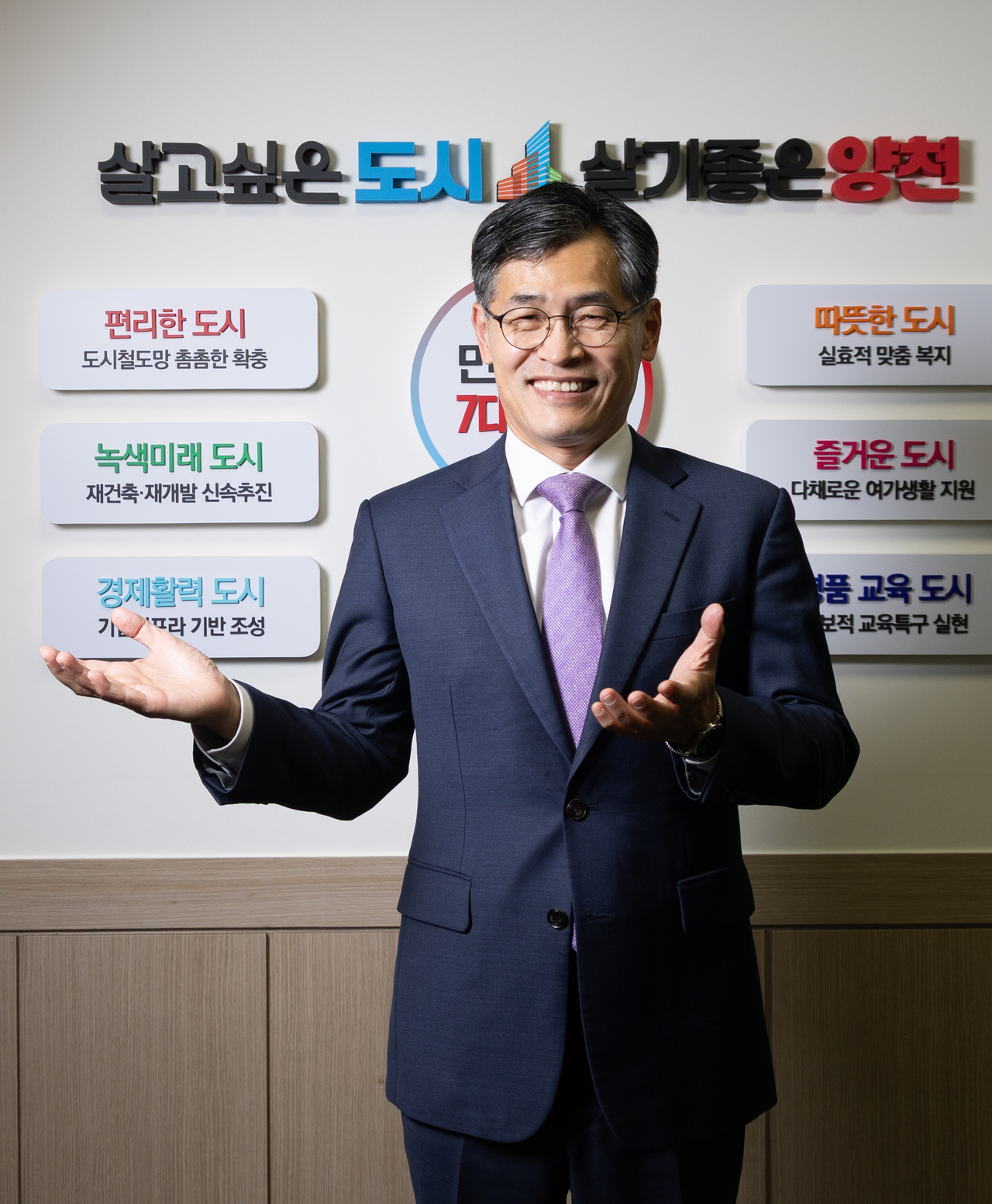
— You are pursuing a property tax reduction for residents affected by Gimpo Airport noise.
About 40,030 households in Yangcheon-gu suffer from noise. Gimpo Airport is close to central Seoul and provides considerable benefits to residents of Seoul and the broader metropolitan area, so commensurate support must follow. We need to pursue both measures to minimize airport noise damage and stronger resident support programs for fair compensation. I recently met with the president of Korea Airports Corporation. One of the most important steps toward minimizing harm is moving the late-night flight curfew forward by one hour, from 11 p.m. to 10 p.m. Noise surcharges, premium fees and changes to runway operating methods also need to be reviewed and applied. The idea is to raise surcharges in proportion to noise levels to reduce late-night takeoffs and landings, and return the proceeds to residents in affected areas. In my new term, I am pursuing a plan to reduce the Seoul city property tax urban-area levy by up to 60 percent for affected households. Since this is a campaign pledge of the Seoul mayor, I plan to institutionalize it through amendments to relevant ordinances. At a recent meeting with the Seoul mayor, I again asked for prompt implementation. I am also pursuing a plan to add one additional month of electricity bill support on top of the current 50,000 won ($37) per month provided over four months.
— What is your top priority for the early part of this term?
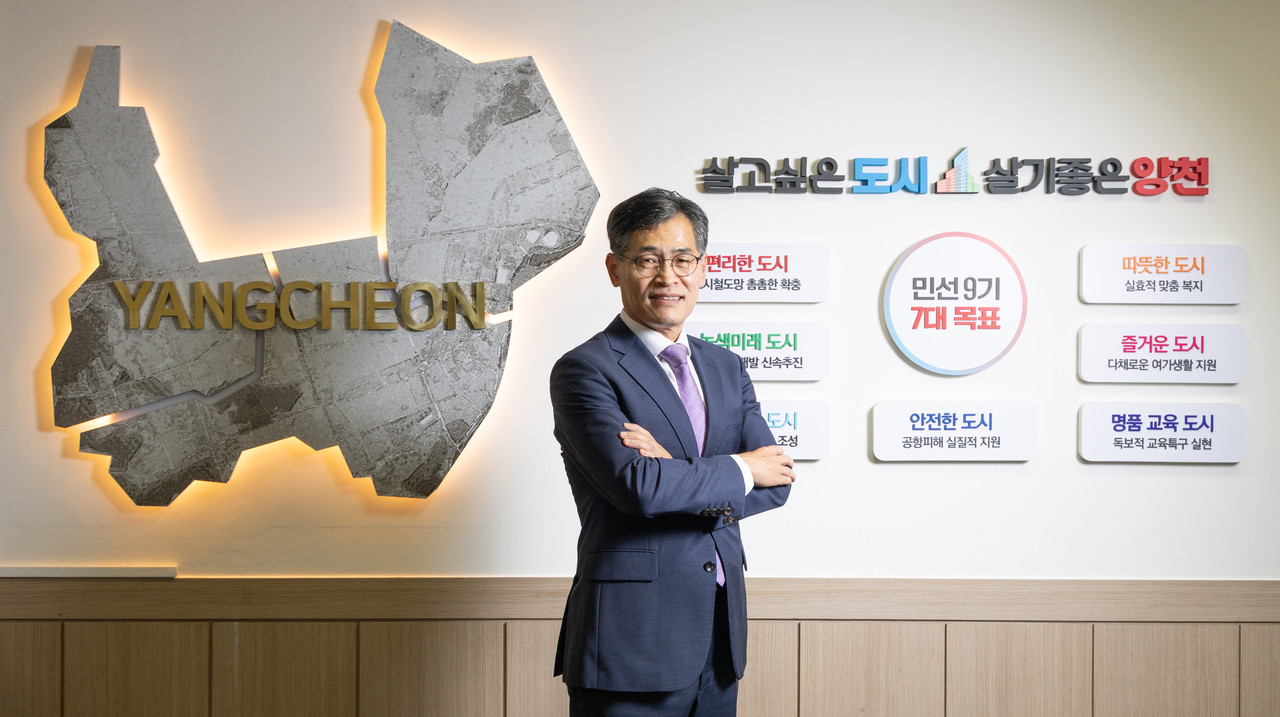
Yangcheon-gu is clearly a good place to raise children and a safe district. But it has a weakness: the lack of an urban rail network and the scarcity of corporate and commercial hubs drag down the district's vitality. Addressing that is the central task of my new term. With reconstruction and redevelopment set to deliver roughly 90,000 housing units in Yangcheon-gu, we must proactively build a rail network capable of handling the resulting growth in population and transport demand — that is why expanding the urban rail network is the top priority of my new term. The Ministry of Land, Infrastructure and Transport recently conducted a survey of all residents in connection with the Fifth Metropolitan Area Wide-Area Transport Implementation Plan. I expect the plan to be announced by year-end, and it is the single most important item in Yangcheon-gu's current urban agenda. Alongside this, I plan to develop a MICE complex with hotels, convention facilities and office space at the Mokdong Stadium and retention basin site. I am also considering creating an economy and startup cluster — attracting future-oriented high-tech companies and growth industries to the former Homeplus site and the sites of the Yangcheon post office and KT Corp.
cook@heraldcorp.com




