
Nvidia falls 6 percent after surging 31 percent on Tuesday
Micron, SanDisk, Texas Instruments drop 11 percent
SK hynix ADR also falls 10 percent
AI concerns persist as Trump tariff threat adds pressure
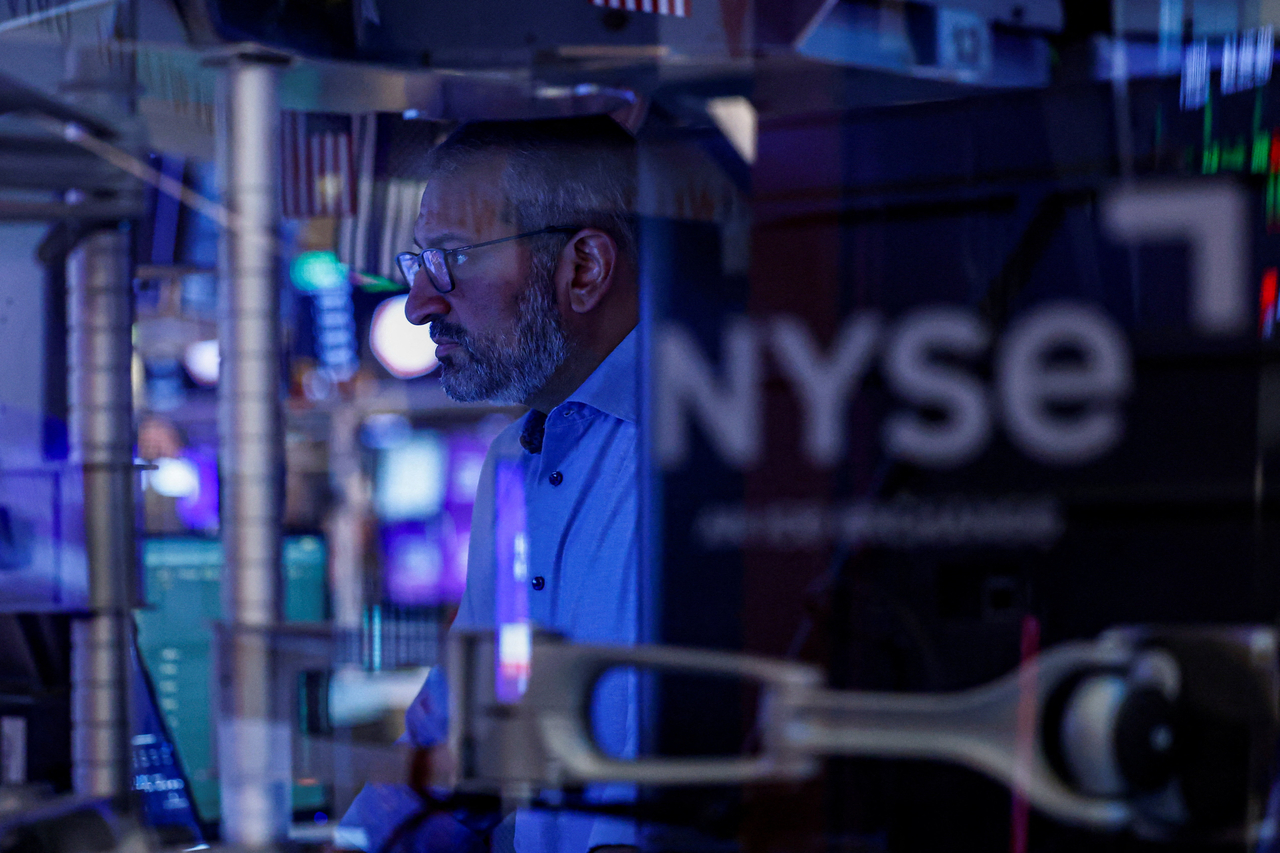
Wall Street's three major indexes closed mixed on Tuesday (local time), as profit-taking following the previous session's sharp rally and concerns over additional tariffs from the Trump administration weighed on sentiment.
Semiconductor and AI-related stocks bore the brunt of the selloff, with the Philadelphia Semiconductor Index tumbling nearly 8 percent.
The Dow Jones Industrial Average finished up 423.39 points, or 0.85 percent, at 50,018.70.
The S&P 500 fell 36.08 points, or 0.50 percent, to 7,201.09, while the tech-heavy NASDAQ Composite dropped 356.02 points, or 1.48 percent, to 23,733.54.
Nvidia, which had surged 31.5 percent on Tuesday on news of CEO Jensen Huang's return, fell 5.9 percent to close at $55.38 as profit-taking set in. The company's market cap shrank by roughly $233 billion in a single session.
Other AI-related stocks that had rallied alongside Nvidia on Tuesday also failed to hold their gains.
Market participants remained cautious about AI investment risks even after Huang's return, citing concerns over excessive AI capital expenditure, stretched valuations and the possibility of AI regulation following a Democratic sweep in the midterm elections — all of which dampened investor sentiment.
Micron Technology tumbled 11 percent to close at $629.79. Texas Instruments fell 11.25 percent, SanDisk dropped 11.13 percent, Marvell declined 9.1 percent, Arm slid 8.55 percent and Western Digital lost 7.84 percent.
The Philadelphia Semiconductor Index (SOX), which tracks the 30 largest chipmakers by market cap, plunged 7.88 percent to close at 8,832.5.
SK hynix's American depositary receipt fell 9.9 percent to $111.98, erasing roughly 60 percent of the gains from Monday's 20 percent surge in a single session.
Neo-cloud providers — companies that lease cloud computing capacity for AI workloads and depend heavily on demand for Nvidia chips — also sold off sharply, with CoreWeave dropping 11.85 percent, Nebius falling 10.73 percent and iRen declining 11.54 percent.
Large-cap technology stocks held up better, with Meta and Alphabet each slipping around 1 percent. Apple gained 1.43 percent and Microsoft rose 0.74 percent.
Anthropic fell 6.54 percent to $81.91, slipping below its IPO price of $83. The stock had already missed out on the broader AI rally on Monday, dipping 1.4 percent even as other AI names surged on news of Huang's return to Nvidia.
Analysts noted that the steepest declines on Tuesday were concentrated in stocks that had risen the most the session before, suggesting the pullback reflected an unwinding of overheated positions rather than any deterioration in fundamentals.
Adding to market uncertainty, the Trump administration moved to impose additional tariffs. The Office of the United States Trade Representative was expected to release as early as Tuesday the results of its "overcapacity tariff" investigation targeting 16 trading partners, including South Korea.
Han Ji-young, a researcher at Kiwoom Securities, said Tuesday's plunge in US AI stocks reflected not only profit-taking after the Jensen Huang-driven surge but also growing concern that the underlying causes of anxiety in the AI sector — such as free cash flow pressures and data center regulation — would not be resolved quickly even after his return. "The fact that Anthropic, another pillar of the AI industry, has seen consecutive share price corrections since its IPO also shows that market anxiety about AI is outweighing optimism," Han said.
Han added that the Trump administration's push to impose additional tariffs on 16 economies — including South Korea, China and the EU — was another headwind, though the impact as a fresh negative catalyst would likely be limited given that the move is an extension of the Section 301 trade investigation that has been under way since March.

jiyun@heraldcorp.com




