
Jeju pork exports to Singapore reach 105.6 tons, beef 34.7 tons; local market expansion remains elusive
Korean chilled beef shelf life half that of Australian rivals; Nanchuk Matdon supply falls short of demand
Government reviews higher slaughter weight, production controls and export diversification
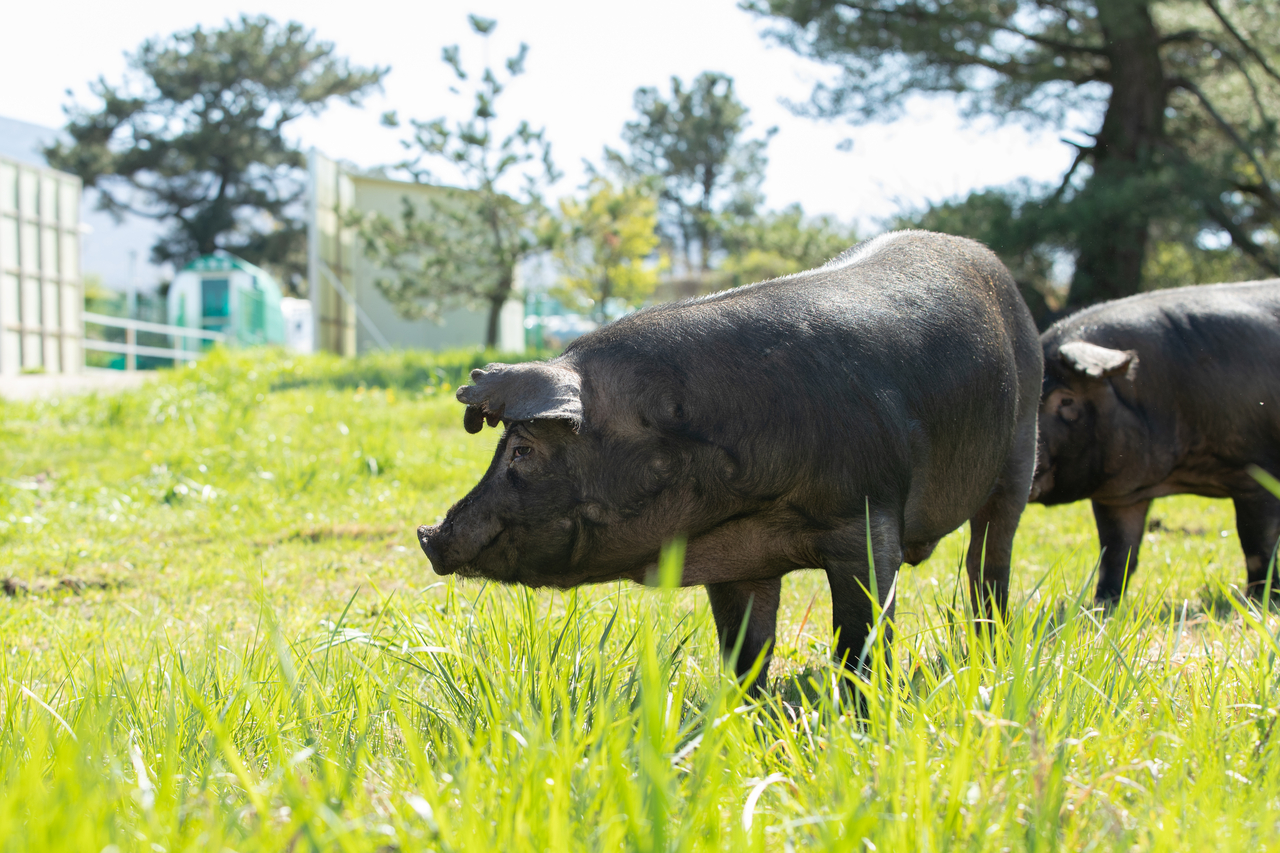
Jeju-raised pork and beef have broken into the Singapore market, but significant hurdles remain before local sales can expand meaningfully. For Korean beef, prices above Japanese wagyu and a shorter refrigerated shelf life are proving to be obstacles. Among Jeju pork products, the Nanchuk Matdon breed faces a supply shortage that makes it difficult to meet growing demand. The government says it plans to boost pork supply and strengthen the export competitiveness of Korean beef.
According to the Ministry of Agriculture, Food and Rural Affairs and the Korean Pork Producers Association, 105.6 metric tons of Jeju pork were exported to Singapore between last December and August this year. Jeju beef exports reached 34.7 metric tons over the same period through October. The exports became possible after quarantine negotiations that began in 2018 concluded last November, opening the Singapore market to both Jeju pork and beef.
Total domestic pork exports rose 162 percent in the January–August period compared with the same period last year, while total beef exports climbed 62 percent in the January–October period. These figures reflect overall export performance, not Singapore-specific growth, and the rates differ from those for the Singapore market alone.
Opening the export channel is one thing; securing price competitiveness in the local market is another. According to Daehan F&B, which exports Korean beef to Singapore, the retail price of Korean beef there runs about 5 percent higher than Japanese wagyu.
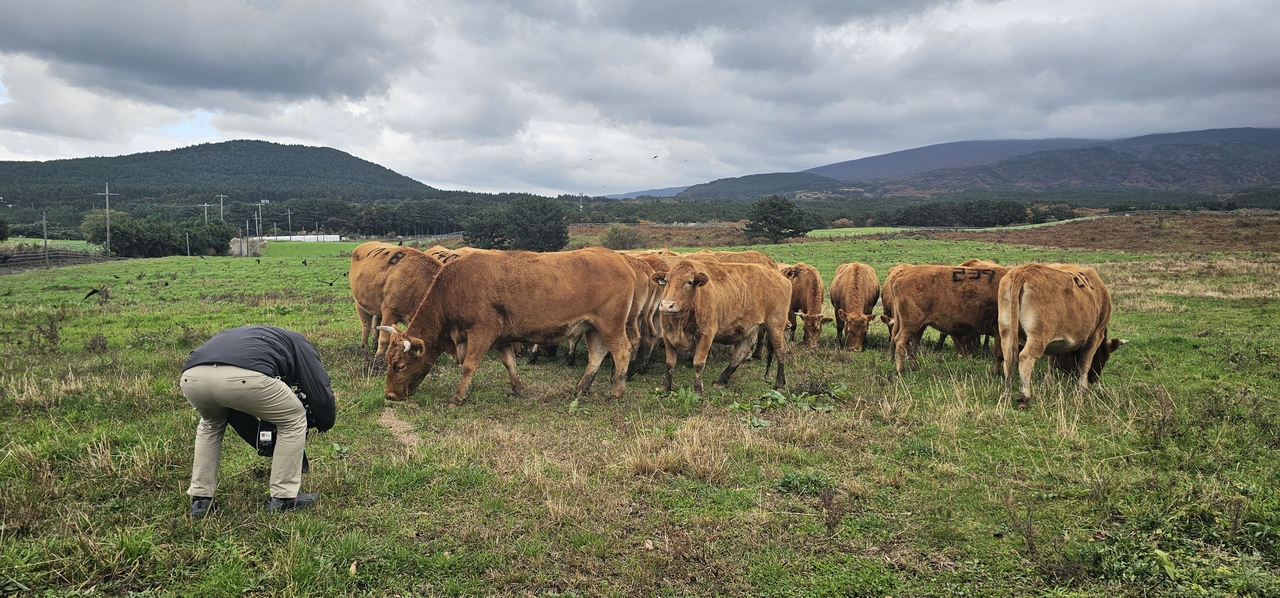
Industry officials say extending the shelf life of chilled beef is also essential to improving export competitiveness. According to Daehan F&B, the shelf life of Korean chilled beef in Singapore is 60 days — half the 120-day limit for Australian beef. "Because the shelf life of our chilled beef is shorter than that of competing countries, we inevitably fall behind in retail competitiveness," said Kim Gwang-ok, a deputy manager at Daehan F&B. "We are in talks with the Ministry of Agriculture, Food and Rural Affairs and have requested support to extend it to around 90 days."
For Jeju pork, securing adequate supply of Nanchuk Matdon is the central challenge. The breed was developed by the National Institute of Animal Science under the Rural Development Administration, using the native Jeju black pig as its base. It is prized for its meat quality, and its loin and hind-leg cuts can be used for grilling — a trait uncommon in standard pork. Nanchuk Matdon handled by Jeju Dream Pork sells for about 10 percent more than regular Jeju pork, and monthly processing volumes stand at only 200 to 300 head. With breeding farms limited to 12 on Jeju and two in Sancheong, South Gyeongsang Province, expanding the production base is a prerequisite for meeting rising demand.
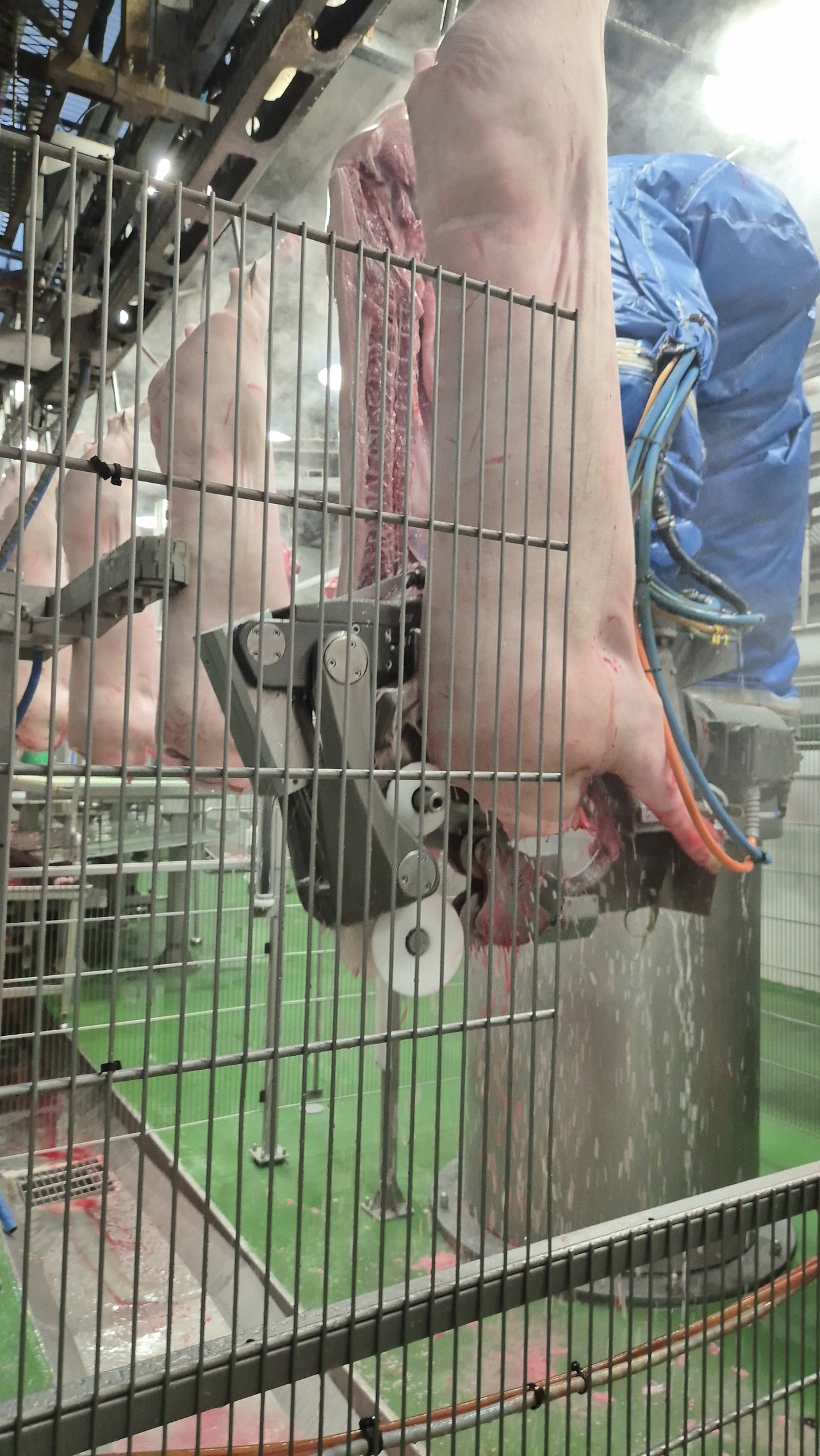
At the slaughterhouse level, automated equipment is being deployed to improve efficiency. The Jeju Swine Farmers Cooperative slaughterhouse has introduced robots into three of its 29 processing stages. Each pig takes about 24 minutes to move through the full slaughter line. Water consumption for washing has dropped sharply — from 26 liters per head under the old system to 8 liters, a reduction of roughly 69 percent.
Meeting Singapore's quarantine requirements was itself no small feat. "In preparing for the Singapore export, we exchanged documents many times, and trichinella testing for chilled pork was one of the key requirements," said Kim Hyeong-jun, head of the livestock distribution center at the Jeju Swine Farmers Cooperative.
The government plans to pursue both expanded pork supply and production controls for Korean beef simultaneously. The Ministry of Agriculture, Food and Rural Affairs is reviewing a proposal to raise the standard slaughter weight for pigs from 115 kilograms to 120 kilograms. The ministry estimates that doing so would increase pork supply by 4.3 percent, or about 43,500 metric tons. The measure was included in a plan to improve the egg and pork distribution structure announced last March.
Also under consideration are the introduction of biosecurity-compliant quarantine housing to reduce wasting diseases in pigs, and incentive payments to encourage market deliveries during the high-demand period from May through September. However, the quarantine housing initiative requires consultations with related ministries, while the incentive payments are contingent on securing budget.
For Korean beef, the government plans to build a medium- to long-term production management system based on supply-and-demand forecasts, analyzing herd size and calf production trends. A proposal has also emerged to raise the eligible cow threshold under the calf production stabilization program from 1.1 million head to 1.55 million head, and to increase the reference price from 1.85 million won ($1,370) to 2.7 million won.
The government also plans to revise related regulations to extend the shelf life of chilled Korean beef for export from 60 days to 90 days.
To broaden export channels, the government intends to diversify markets beyond Singapore to include Qatar and other destinations, while using overseas promotional activities to cultivate new demand. "We plan to pursue the use of wild grass to cut Korean beef production costs, expand short-term fattening, support direct-sales outlets to reduce distribution costs, and develop small-portion and ready-to-eat products targeting younger consumers," said Lee Jae-sik, director of livestock policy at the Ministry of Agriculture, Food and Rural Affairs.
adastra@heraldcorp.com




