
'No room for complacency on fine dust,' PM says, announcing integrated air quality control center
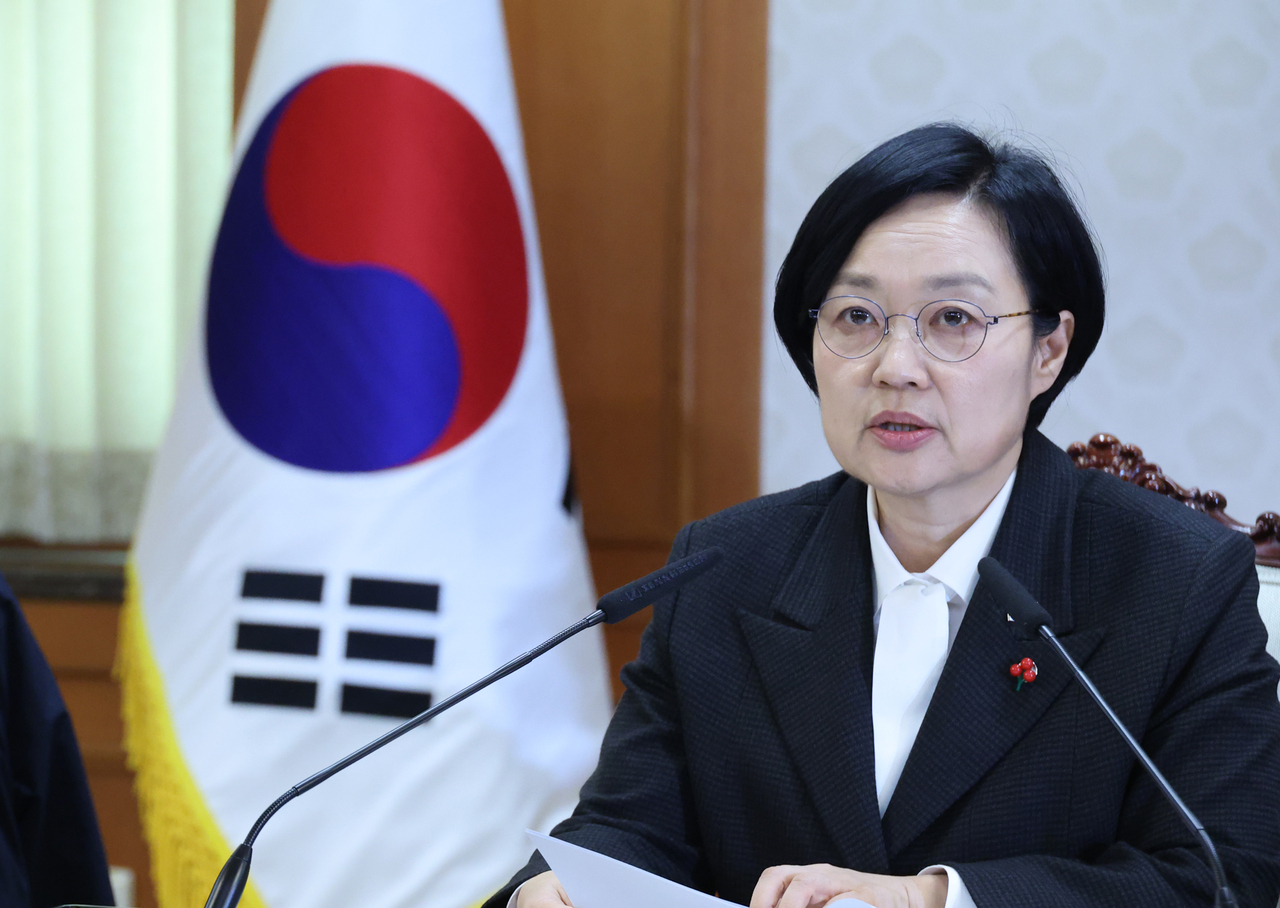
Prime Minister Han Seong-sook said Tuesday that the government will put public health protection first in its fine-dust response while sparing no effort to minimize inconvenience for citizens and reduce the burden on businesses.
Han made the remarks while chairing the 20th meeting of the Special Committee on Fine Dust Countermeasures at Government Complex Seoul, announcing that the government will implement the eighth seasonal management program from next month through March next year to actively combat high concentrations of fine dust.
Han said the government's efforts, including previous seasonal management programs, combined with active participation from the public and businesses, had achieved more than a 30 percent improvement in average ultrafine dust concentrations.
"This is by no means a situation where we can afford to be complacent," Han said. "Even earlier this year, we failed to meet the targets set under the seventh seasonal management program due to external factors such as the influx of dust from abroad and deteriorating weather conditions." Han added that the possibility of worsening air quality remains, given this winter's weather outlook and the potential effects of El Niño.
In response, Han said the government will continue to reduce and manage key emission sources by sector and industry — including restrictions on power plant operations and the use of older diesel vehicles — while also pressing ahead with a ban on the illegal burning of agricultural waste and sustained management of fine dust around construction sites and roads.
Han also pledged to introduce new monitoring and management tools, including the establishment and operation of an integrated air quality control center, and to strengthen public information services through a trial run of monthly ultrafine dust forecasts and automatic high-concentration alerts via a mobile app.
Co-chair Lee Kang-ung said the seventh seasonal management program was the first to set a target concentration, but that the goal was not met due to weather conditions and other factors. "This clearly showed that more meticulous preparation and stronger implementation management are needed," Lee said.
Lee also expressed gratitude to the Ministry of Climate, Environment and Energy and the Fine Dust Improvement Planning Group for setting an ambitious target concentration of 19 micrograms per cubic meter despite unfavorable conditions this winter, including a potential super El Niño.
oskymoon@heraldcorp.com




