
William Frederick Yeames,
'And When Did You Last See Your Father?'
"A painting no different from a well-written novel"
Editor's note
We tell stories through paintings — examining the issues embedded in images, the histories soaked into masterworks, and the human anxieties and desires that art carries within it. We begin with a single canvas, then step out beyond the frame into the wider world.
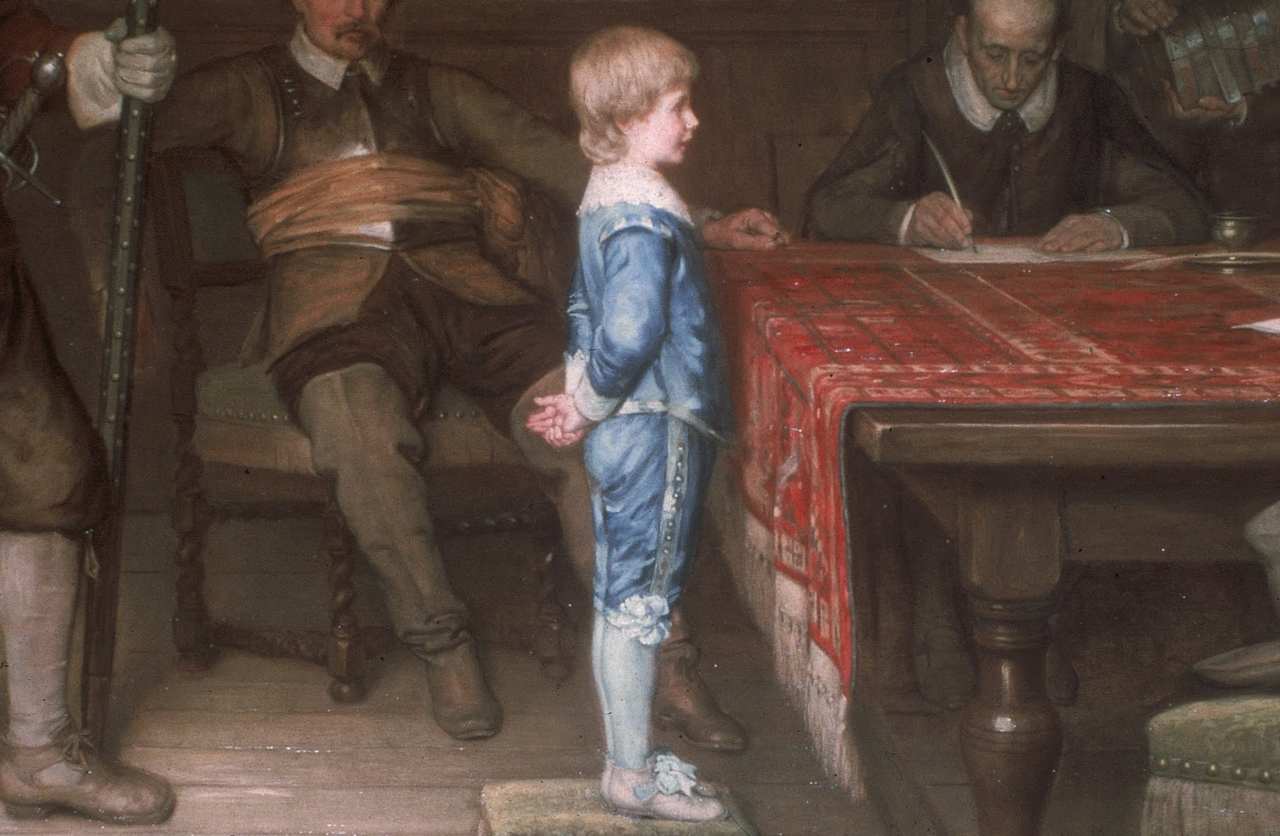
And when did you last see your father?
A man rests his chin in both hands and asks the question. "Can you tell me?" The tone is gentle, yet unmistakably pressing. He is an interrogator — more precisely, a senior officer of the Parliamentarians, the faction locked in opposition to the Royalists.
For nine years beginning in 1642, the Kingdom of England groaned under the weight of civil war. On one side stood the Royalists, loyal to King Charles I; on the other, the Parliamentarians, who rallied behind Oliver Cromwell. The Parliamentarians ultimately prevailed. The conflict claimed more than 80,000 lives and would later be known as the English Civil War, or the Great Rebellion.
It was during those years of killing and being killed that this scene unfolded.
A Parliamentarian raiding party stormed the manor of a known Royalist supporter — only to find the man of the house already gone, leaving behind only his family. They had arrived too late, but retreating empty-handed was not an option. The Parliamentarians believed that unless the Royalist cause was uprooted swiftly, they themselves might one day be the ones caught.
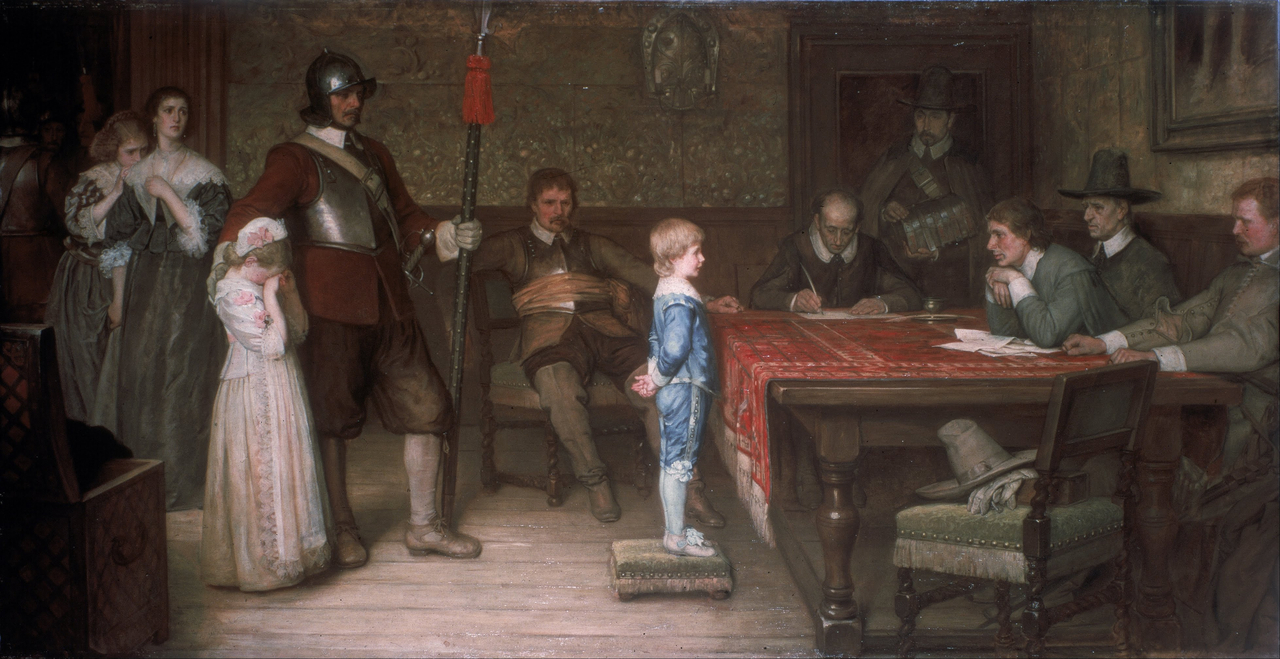
And so, right there in the house, they set up an interrogation room.
The fugitive's wife, son, daughter and a maidservant — everyone they could lay hands on — were summoned into a single room. The purpose: to find out where the man had fled.
The first target the Parliamentarians chose was the boy, dressed in a fine blue coat.
This was an age that held truth and honesty as its highest ideals. The child would have grown up hearing his parents say, again and again, never tell a lie.
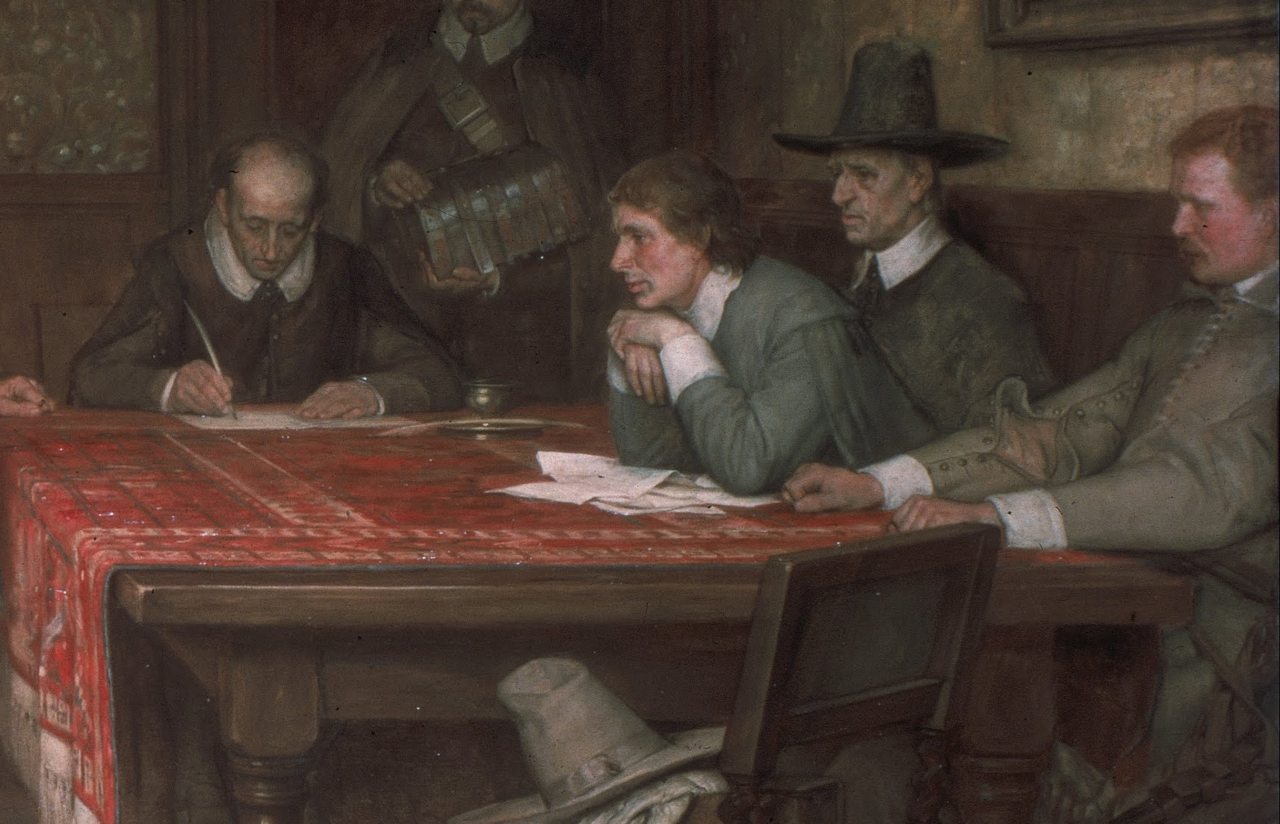
The interrogator, ready to begin, calls the boy forward.
He has the child stand on a footstool so their eyes can meet. Yet the interrogator himself seems weighed down by thought — there is something that looks like pity in his expression. Beside him, a man in a black hat with a white collar stares at the boy with cold severity. So does another figure, a yellow sash — the Parliamentarian emblem — tied over his military coat.
Near the door in the corner, a man cradles what appears to be a box, likely containing evidence that this household aided the Royalist cause. A clerk sits ready to record every word spoken in the room.
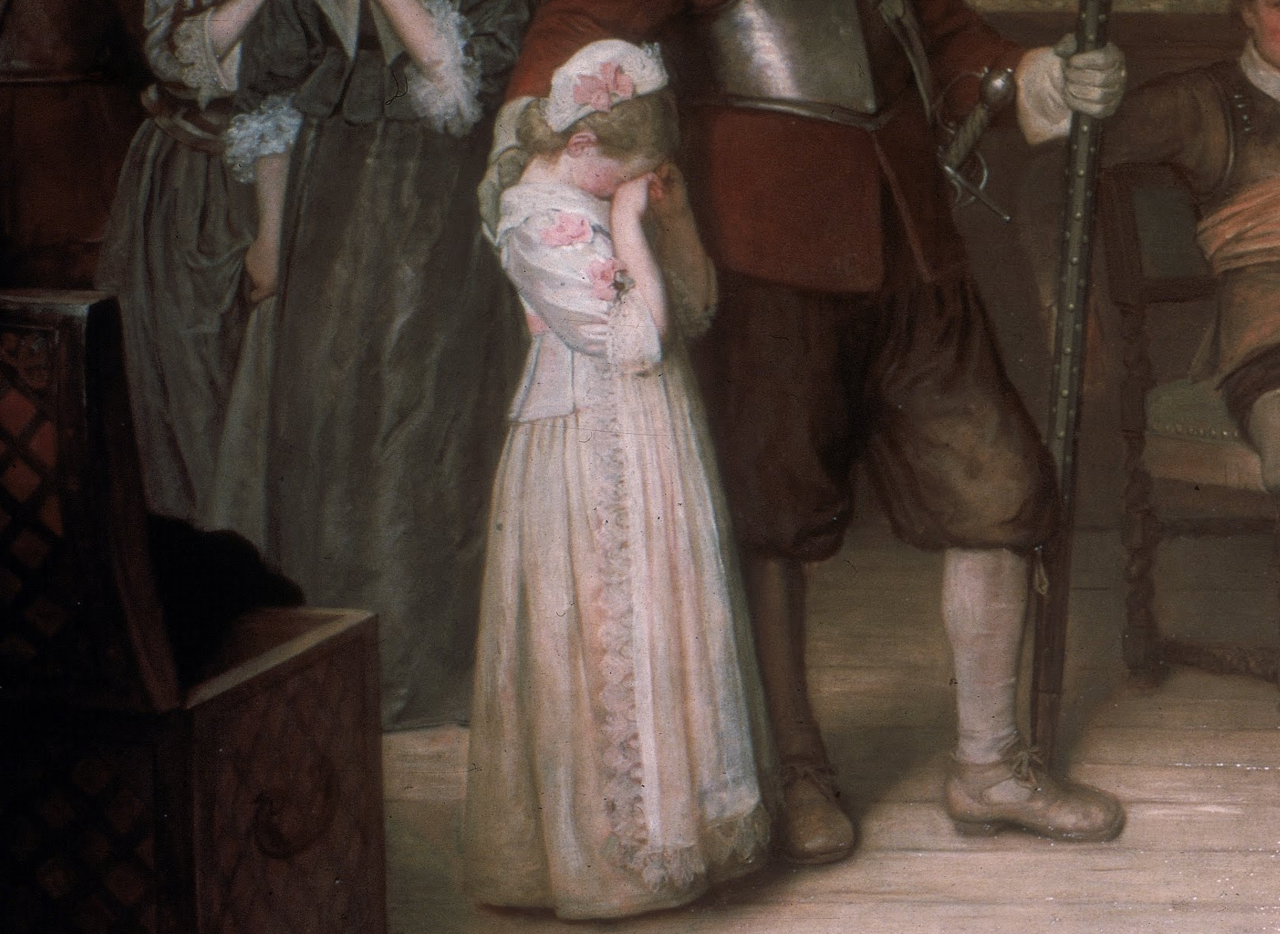
"… And when did you last see your father?" The interrogator asks again, reluctantly.
Just behind the boy stands a girl — taller than him, and likely his older sister — who is weeping. Wearing a pink-ribboned hat and dress, she is simply terrified. She knows she will face her own questioning the moment her brother's is done.
The non-commissioned officer holding a halberd also seems far from comfortable with what is unfolding before him.
His expression is openly downcast; he cannot bring himself to look straight ahead. His raised arm gently pats the girl on the back, as if to console her. He likely has a family of his own. He may well believe that interrogating children like prisoners is simply wrong.
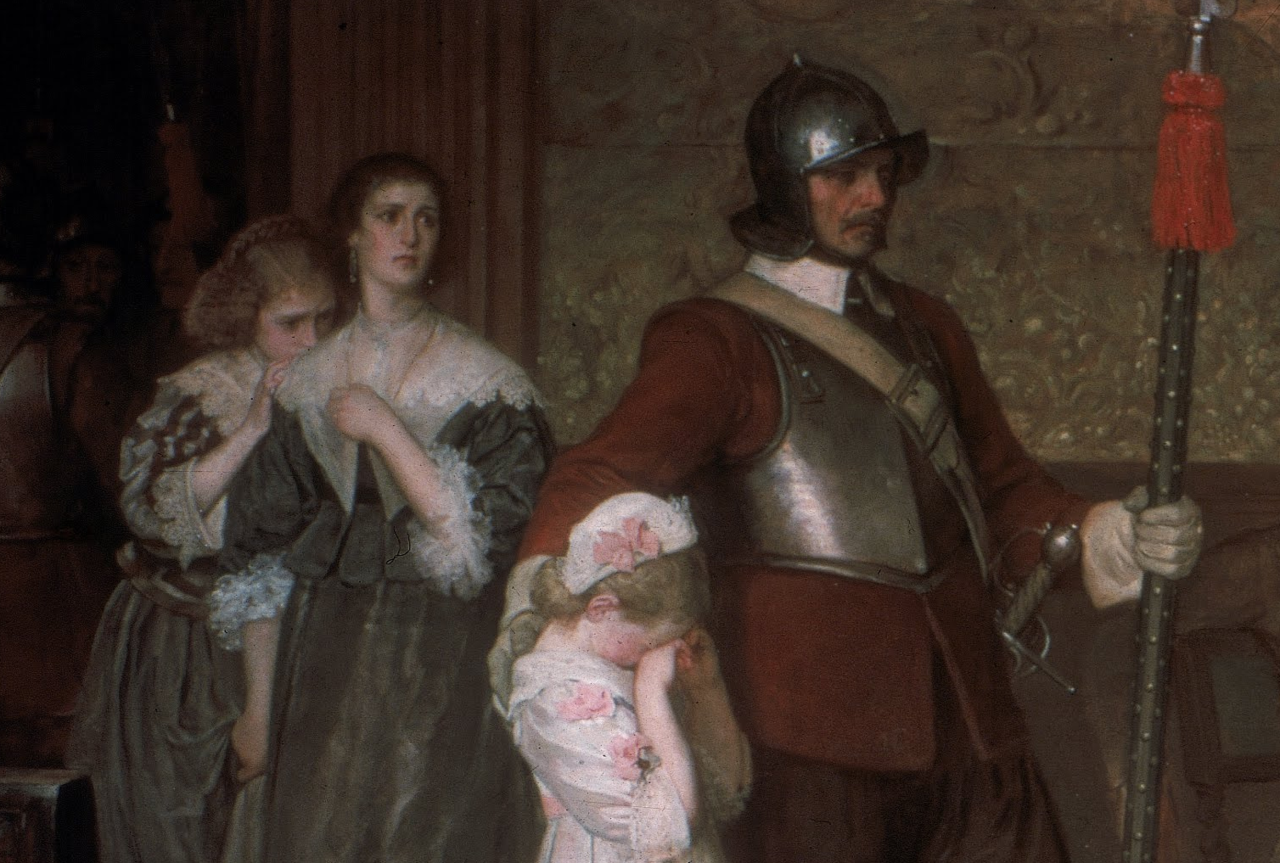
The two women on the left cannot hide their anxiety either.
The taller woman is likely the fugitive's wife and the children's mother. The one half-concealed behind her may be a maidservant — though some have speculated she could be the informant who set this whole ordeal in motion. Then again, she may simply be the household's timid eldest daughter.
What did the boy say? If he honored the lessons he had been taught and told the truth, his father would be in danger. If he broke those lessons and lied, the memory of that lie might shadow him for the rest of his life. The adults are cruel. The one who already knows the answer is crueler still.
'I wondered what would happen if a child's honesty led to tragedy … '
British painter William Frederick Yeames painted 'And When Did You Last See Your Father?' during the Victorian era — well over two centuries after the English Civil War had been fought.
His motivation for creating this imagined scene was deeply personal. "At the time I was painting it, a nephew of mine, of a very truthful and honourable disposition, was living in my house," Yeames recalled. "The idea occurred to me of representing the situation of a family of the Royalist period, when the house would be searched, and the children of the family questioned as to the whereabouts of their father. The scene in a country house occupied by Puritans during the Rebellion suited my purpose exactly."
The boy in the painting was modeled on Yeames's nephew James Lamb Yeames. The girl weeping as she waits for her own interrogation was modeled on his niece Mary Yeames. The helmet and armor worn by the non-commissioned officer consoling her were reportedly from Yeames's own personal collection.
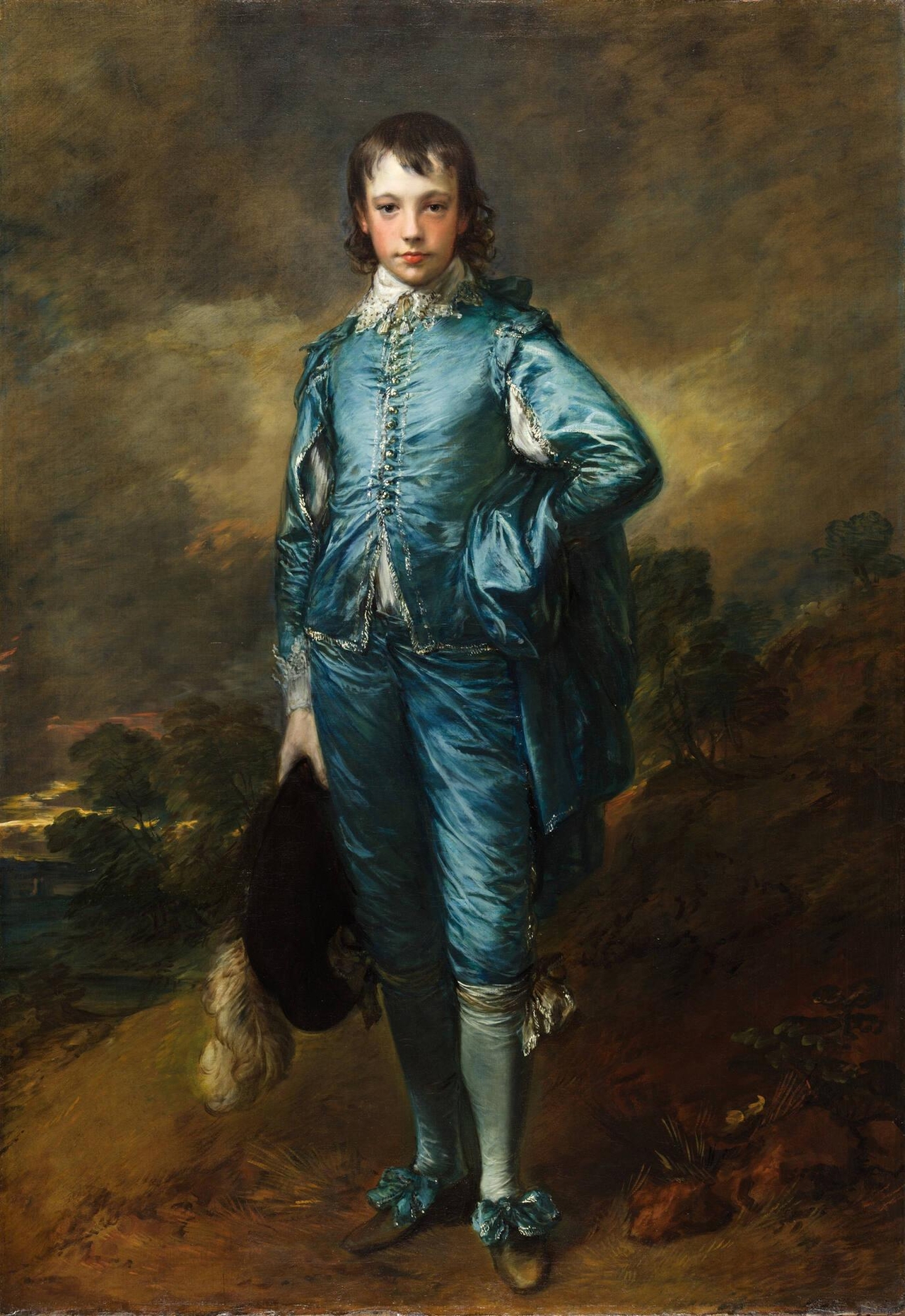
In addition, the blue coat worn by the boy was inspired by Thomas Gainsborough's 'The Blue Boy'.
The painting refuses to divide the world neatly into good and evil. The interrogator and the soldier both betray the conflict between conviction and conscience. The boy is caught in a dilemma where the very virtue of honesty could bring about his father's death. It is a single canvas, yet its density rivals that of a full-length novel — which is precisely why the work commands such attention.
When the painting was submitted to the Royal Academy in 1878, it was an immediate success.
"A brave little fellow of six or seven years old stands before the table," The Times wrote in its review. "( … ) Unaffected, unartificial, and with consummate skill telling its story clearly, this picture is a thoroughly honest example of illustrating by painting a period of English history. ( … ) It is a work that may help us to realize vividly the life of the past through painting no different from a well-written novel."
yul@heraldcorp.com




