
Ryu Eun-hae, North Korea's vice minister of external economic affairs, visits Chinese Embassy in Pyongyang
Meeting follows leaders' reciprocal visits and opening of new Yalu River bridge
Trade from January to October reaches $2.53 billion, up 17.9% from a year earlier
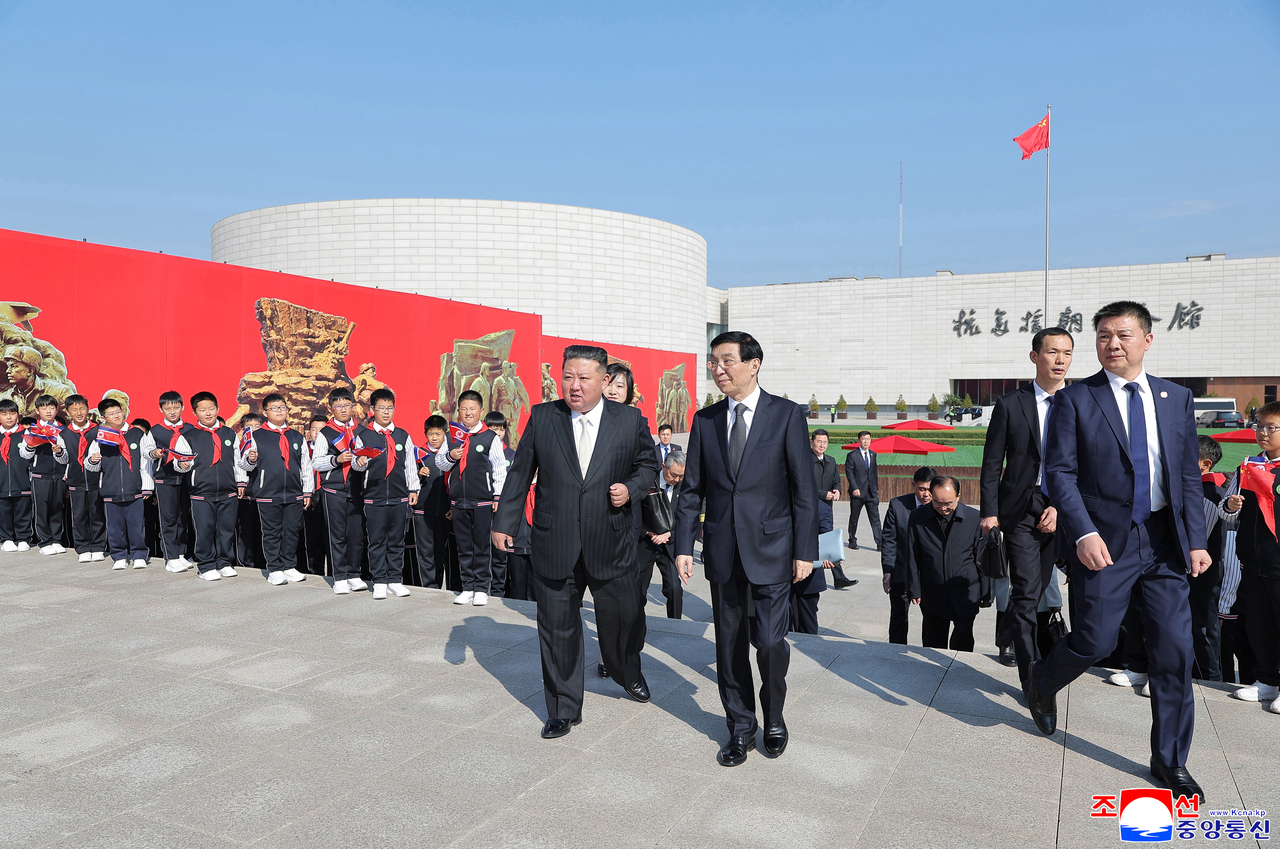
North Korea and China are accelerating economic cooperation as bilateral trade reaches its highest level in nine years — since international sanctions against Pyongyang began tightening in earnest in 2017. Following a series of reciprocal leadership visits and the opening of a new bridge over the Yalu River, a senior North Korean official overseeing foreign trade visited the Chinese Embassy in Pyongyang to signal intent to deepen economic and trade cooperation.
According to the Chinese Embassy in Pyongyang, Ryu Eun-hae, vice minister of North Korea's Ministry of External Economic Affairs, visited the embassy Monday and met with Chinese Ambassador Wang Yajun. The Ministry of External Economic Affairs handles foreign trade, foreign investment attraction and special economic zones.
At the meeting, Ryu noted that this year marks both the first year of the new five-year plan put forward at the ninth congress of the Korean Workers' Party and the start of China's 15th five-year plan, and said both countries had achieved satisfactory results in their socialist development.
Ryu cited Kim Jong-un's visit to China in September last year, Kim's trip to Dandong in Liaoning Province in October this year, and Chinese President Xi Jinping's visit to Pyongyang in June this year as evidence that bilateral relations had entered a new phase.
"Under the attention and strategic guidance of the top leaders of the two parties and two countries, North Korea-China relations centered on socialism have risen to a new level, and cooperation in various fields between the two countries has achieved positive progress," Ryu said.
Ryu went on to say that the Ministry of External Economic Affairs was prepared to strengthen exchanges and cooperation with the Chinese Embassy, China's Ministry of Commerce and other relevant agencies to make a greater contribution to the development of North Korea-China relations.
China also expressed its intention to expand practical cooperation in the economic and trade sphere.
Ambassador Wang noted that Xi and Kim had held two rounds of summit talks within less than a year, and said bilateral relations had entered a new phase.
"Maintaining and solidly developing the traditional friendly and cooperative relationship between North Korea and China is the unwavering policy of the Chinese party and government," Wang said.
Wang went on to say that the Chinese Embassy was prepared to work with North Korea's Ministry of External Economic Affairs to faithfully implement the key agreements reached by the two countries' top leaders and to advance practical cooperation in economic, trade and other fields in a deeper and more substantive way.
Ryu had accompanied North Korean Prime Minister Pak Thae-song to Beijing in July, when Pak attended events marking the 65th anniversary of the North Korea-China Treaty of Friendship, Cooperation and Mutual Assistance. Ri Myong-gon, director of the ministry's second bureau, and Ri Gum-chol, director of the protocol bureau, accompanied Ryu on the embassy visit.
North Korea-China economic exchanges, which had contracted during Pyongyang's pandemic-era border closure and the subsequent period of closer North Korea-Russia ties, have been recovering as high-level contacts between the two countries' leaders have picked up.
Particularly notable was last month's formal opening of the new Yalu River bridge linking Sinuiju in North Korea with Dandong in China — 12 years after its completion. Kim crossed the bridge by land to visit Dandong, signaling intent to expand economic cooperation with China.
Bilateral trade volumes are also growing rapidly. According to China's General Administration of Customs, North Korea-China trade from January to October totaled $2.53 billion, up 17.9% from the same period last year.
That is the highest figure for the same period since 2017, when trade reached $4.36 billion before international sanctions against North Korea were tightened.
sjy@heraldcorp.com




