
Ministry of Land, Infrastructure and Transport holds roundtable with Samsung Electronics, SK hynix and construction industry
Participants flag workforce shortages for housing supply as well
Public-private task force to be formed; plan to recruit retired military personnel
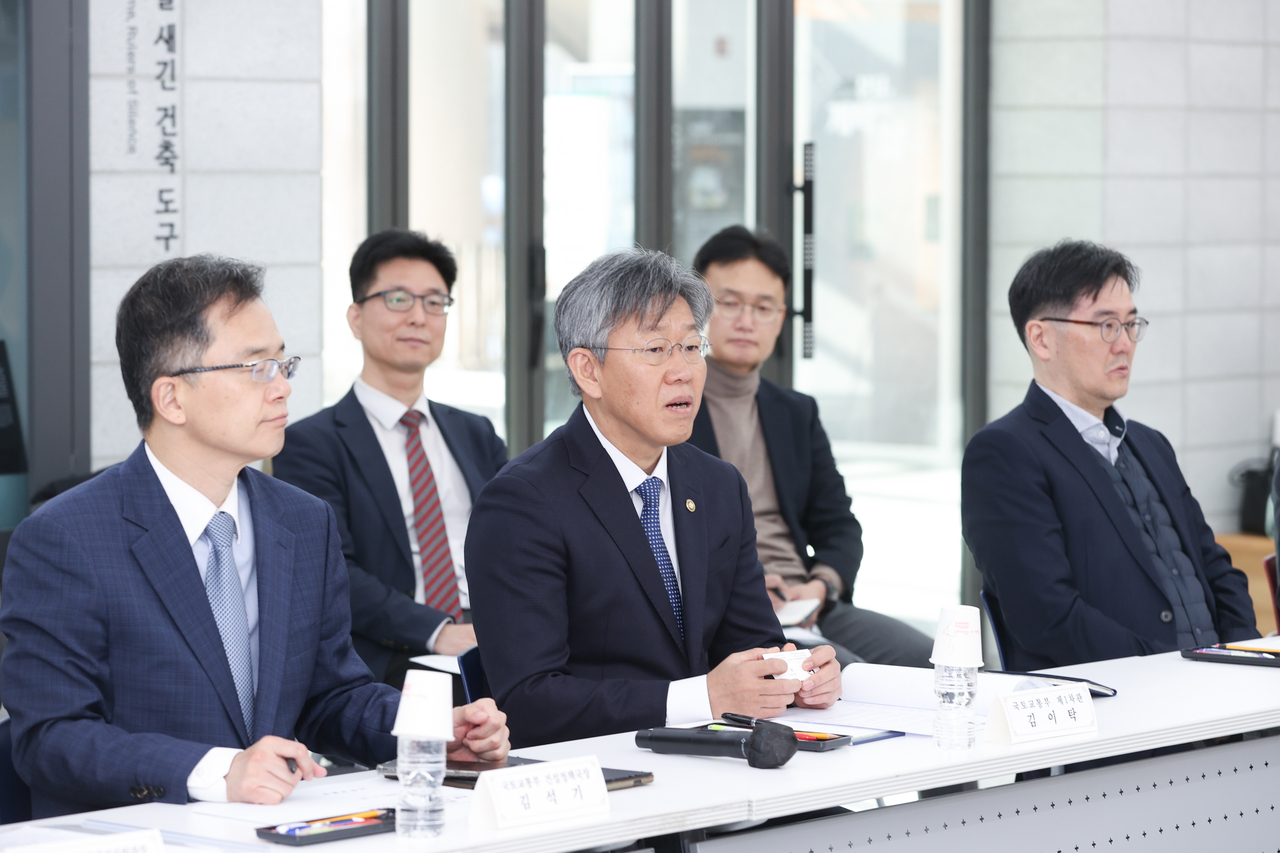
South Korea's Ministry of Land, Infrastructure and Transport said Tuesday it will push measures to address a severe shortage of skilled construction workers needed to support the semiconductor industry, as surging demand from the Lee Jae Myung administration's mega-projects has outpaced the available workforce. The ministry plans to form a public-private consultative body to boost the supply of construction labor.
First Vice Minister Kim I-tak convened a roundtable at the Korea Land Development Exhibition Hall in Seoul, gathering representatives from the Korea Land and Housing Corporation, Samsung C&T, SK Ecoplant, Samsung Electronics, SK hynix, major subcontractors, the Korea Federation of Construction Contractors, the Korea Specialty Contractors Association and the Korea Mechanical Construction Contractors Association to hear about conditions on the ground and discuss support measures.
Discussions at the meeting centered on the acute labor shortage gripping the semiconductor construction sector. Demand for workers is projected to grow by more than 260,000 by 2030 as construction of semiconductor factories under the government's mega-project initiative accelerates, yet shortages are already intensifying at job sites. Participants noted that securing workers for key trades — including pipefitting, welding and ductwork — is expected to be particularly difficult.
Industry representatives urged the government to act quickly on workforce development, noting that semiconductor factory construction demands a higher level of expertise and skill than general construction work. Workers handling precision piping, for instance, typically require more than one to two years of on-site experience and training before they are ready to perform.
Participants also raised the problem of companies investing in worker training only to lose those workers to competitors — a dynamic that discourages individual firms from bearing the cost of education. Calls were made for government-led training programs, and the meeting also addressed the lack of job-matching infrastructure, insufficient settlement support for construction workers and the need to improve their living conditions.
Attendees also stressed the need to prepare for workforce demand tied to the government's housing supply goals. The administration is pursuing the groundbreaking of more than 1.5 million homes in the greater Seoul area over five years — the most ambitious supply target on record — and participants warned that labor gaps must be minimized as workers are drawn away from housing sites toward semiconductor construction projects.
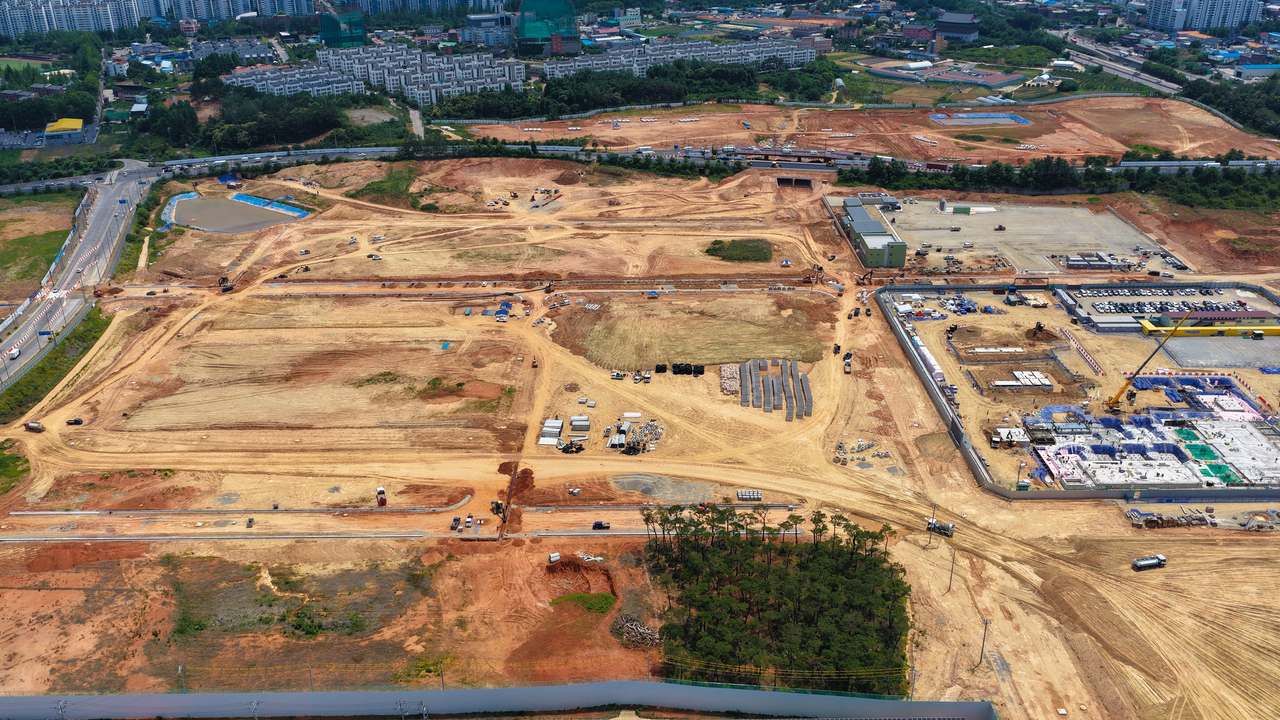
Housing construction sites do not require the same length of training as semiconductor projects, but supply conditions remain challenging: workers in their 50s and 60s account for 63 percent of the domestic construction workforce, and the influx of younger workers has been insufficient to offset attrition.
In response, the ministry said it will establish a public-private construction workforce consultative body chaired by the first vice minister to continuously identify and discuss concerns raised by construction companies, subcontractors and industry associations, and to develop solutions together.
Specifically, the ministry said it will work with the private sector to design joint education and training programs aimed at producing workers with specialized skills for semiconductor construction, ensuring that qualified personnel are available and ready to work when needed.
For housing construction, the ministry plans to work through construction associations and training institutions to develop intensive, tailored curricula for specific trades, and to create incentives to attract idle construction workers and retired military personnel back to the workforce. The ministry said it hopes these efforts will secure the labor needed for both mega-project construction and housing supply on schedule, expand job opportunities and help revitalize regional construction economies in ways that workers and the industry can feel directly.
"Because the public and private sectors engaged in such in-depth discussions on the construction workforce supply problem, a wide range of ideas emerged alongside the difficulties people raised," Kim said. "Going forward, we will work with relevant agencies to discuss the support measures the field needs, and ensure that concrete solutions are put forward through the public-private construction workforce consultative body." Kim added that the ministry would strive to ensure those solutions translate into jobs and work for regional construction firms, so that the revitalization of local economies is felt on the ground.
hss@heraldcorp.com




