
Songpa Hanyang 1st sets record at 112 days; four zones average 172 days
Parallel procedures — before zone designation — drive dramatic time savings
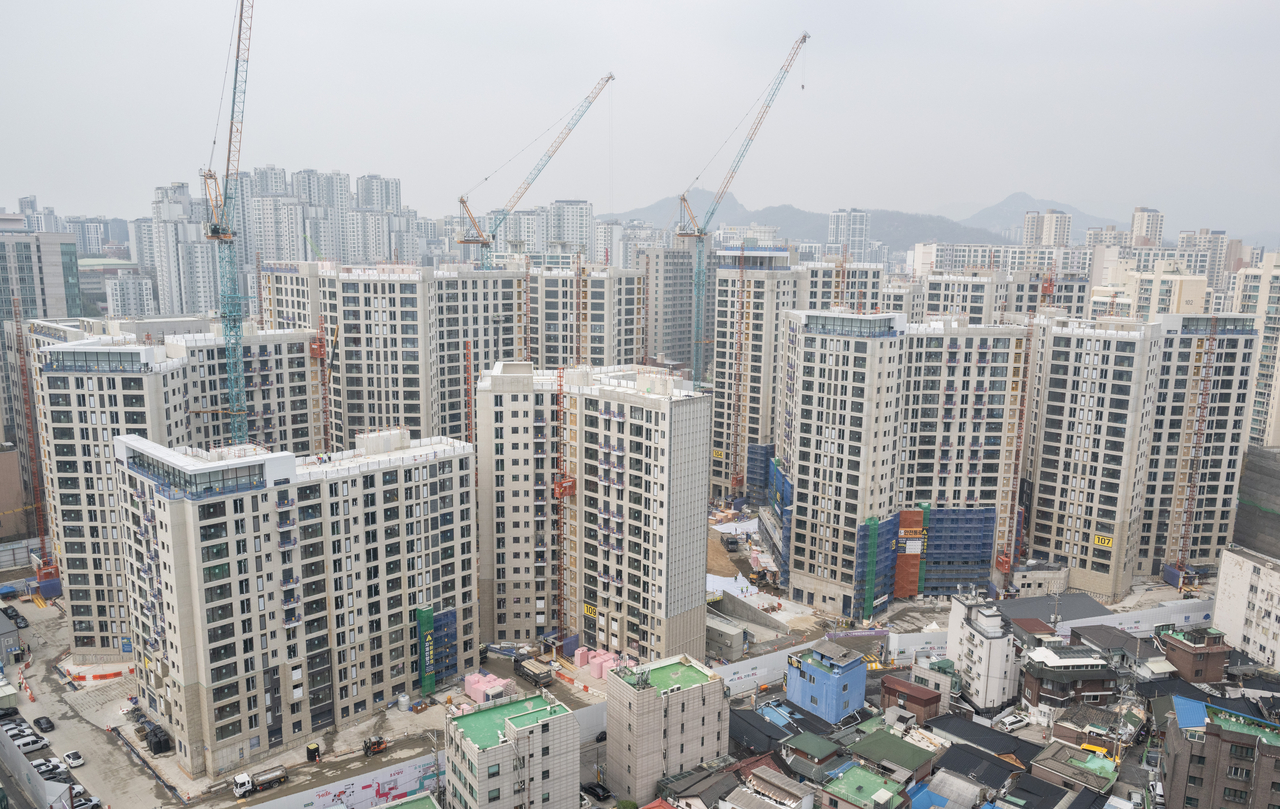
The Seoul Metropolitan Government has cut the time needed to form a redevelopment or reconstruction association by more than three years, the city said Tuesday, crediting a regulatory overhaul that allows residents to begin preparatory steps before a zone is officially designated.
Four zones covering a combined 6,132 households received association formation approval an average of 172 days after zone designation under the city's "project progress acceleration" policy — a sharp reduction from the previous average of three years and six months.
The fastest was Songpa Hanyang 1st Apartment in Songpa-gu, which secured approval just 112 days after zone designation, beating the city's standard processing deadline of 365 days by 253 days. Doksan Zone 2 followed at 141 days, Sadang Zone 17 at 211 days and Sillim Zone 8 at 223 days. All four zones finished between 142 and 253 days ahead of the standard deadline.
The city credited "parallel procedures" as the key to the faster timelines. Under the old system, residents had to sequentially form a promotion committee, collect consent forms, draft bylaws and select officers — all after zone designation. Last August, however, the city revised its rules through "Deregulation Measure No. 142," allowing residents to voluntarily form a promotion committee before zone designation at the discretion of the district mayor.
This past August, the city introduced an "association formation process improvement plan" permitting promotion committees that had already met the consent threshold to proceed with selecting a professional management firm, drafting bylaws and choosing officers — all before zone designation. The objection period for estimated cost assessments was also shortened from 60 days or more to 30 days, and founding general meetings may now be held concurrently during that window.
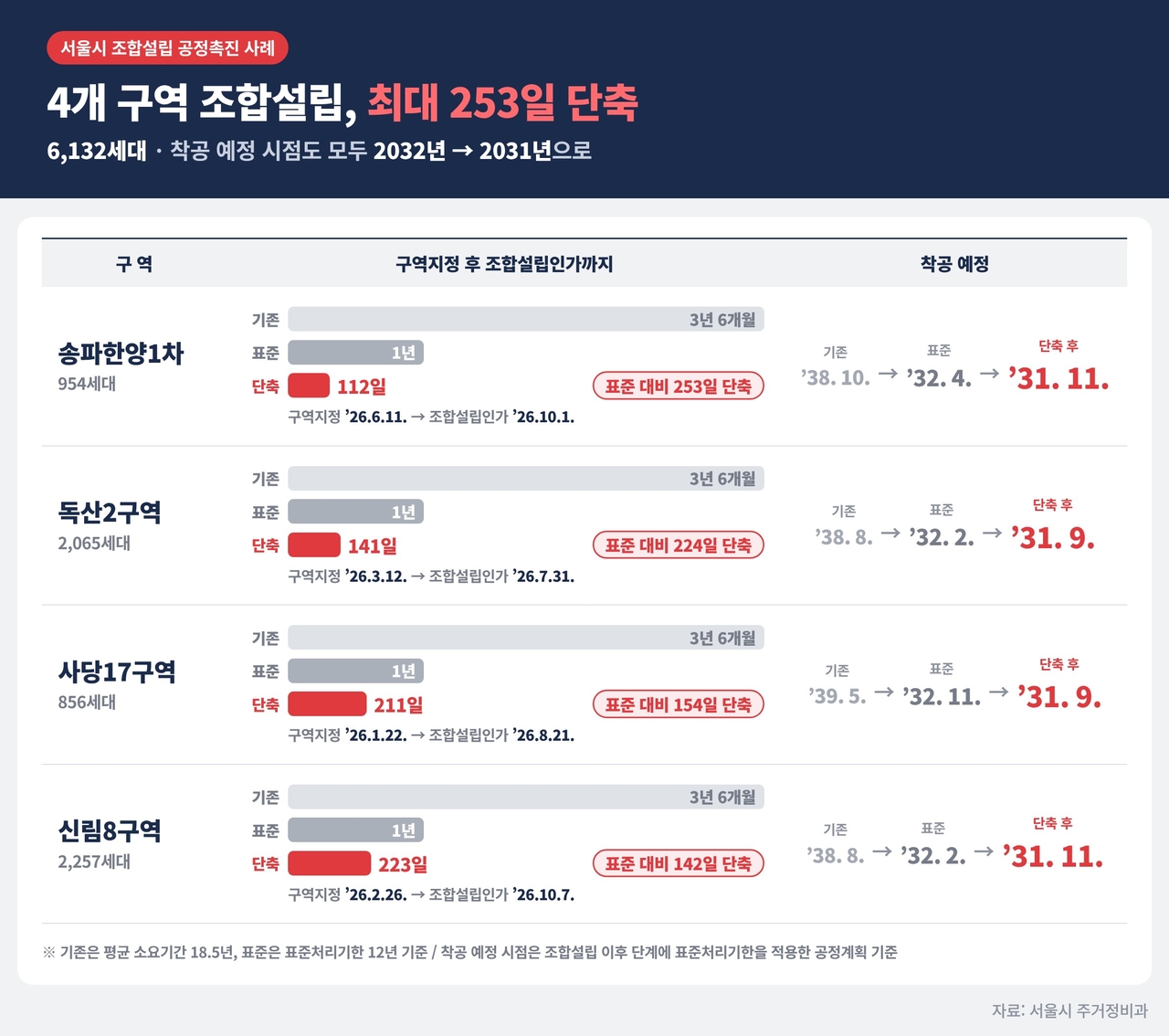
Songpa Hanyang 1st formed its promotion committee four months before zone designation, secured a consent rate of 78.5 percent, and completed the selection of a professional management firm and the drafting of bylaws in advance. After zone designation, the complex held its founding general meeting during the cost-assessment objection period and received association formation approval just three days after filing its application. The complex is slated to be rebuilt as a development of up to 29 stories with 954 units.
Doksan Zone 2 was the first project to apply Deregulation Measure No. 142. Residents formed a voluntary promotion committee three months before zone designation and completed the selection of a professional management firm and the drafting of bylaws ahead of time, enabling the zone to receive association formation approval 141 days after designation. The site, covering 86,184 square meters around 1072 Doksan-dong, is planned for a development of up to 40 stories with 2,065 units.
Sadang Zone 17 and Sillim Zone 8 likewise formed their promotion committees before zone designation and ran consent collection, officer selection and founding general meetings in parallel. Sadang Zone 17 is planned for up to 23 stories with 856 units, while Sillim Zone 8 will rise to up to 33 stories with 2,257 units.
The target ground-breaking date for all four zones has been moved up from 2032 to 2031. Songpa Hanyang 1st and Sillim Zone 8 are targeting November 2031, while Doksan Zone 2 and Sadang Zone 17 aim for September 2031.
The city said it is also preparing association formation procedures for 11 additional zones — including Myeongmok Zone 10, Mia-dong 130 and Beondong 148 — covering about 21,000 households, all of which have already received promotion committee approval before zone designation. The city added that it plans to support parallel advance procedures if legislation lowering the consent threshold for redevelopment association formation to 70 percent is enacted.
"The field has shown firsthand that, by easing regulations and changing procedures, an association formation that used to take three years and six months can be completed in four months," said Myeong No-jun, head of the Seoul Metropolitan Government's housing bureau. "Seoul will keep a close watch on project timelines to the very end and will make sure we hit our target of breaking ground on 310,000 units by 2031."
quq@heraldcorp.com




