
Cascade system cuts construction costs by 524 million won vs. individual heating — no extra charges for 798 households
20 boilers run in rotation to maintain water temperature, cutting estimated gas use by 16%
Summer inspection burden eased; LH plans to adopt system in new public rental housing
"If we had switched to individual heating, each household could have had to pay hundreds of thousands of won. But this time, residents paid nothing extra."
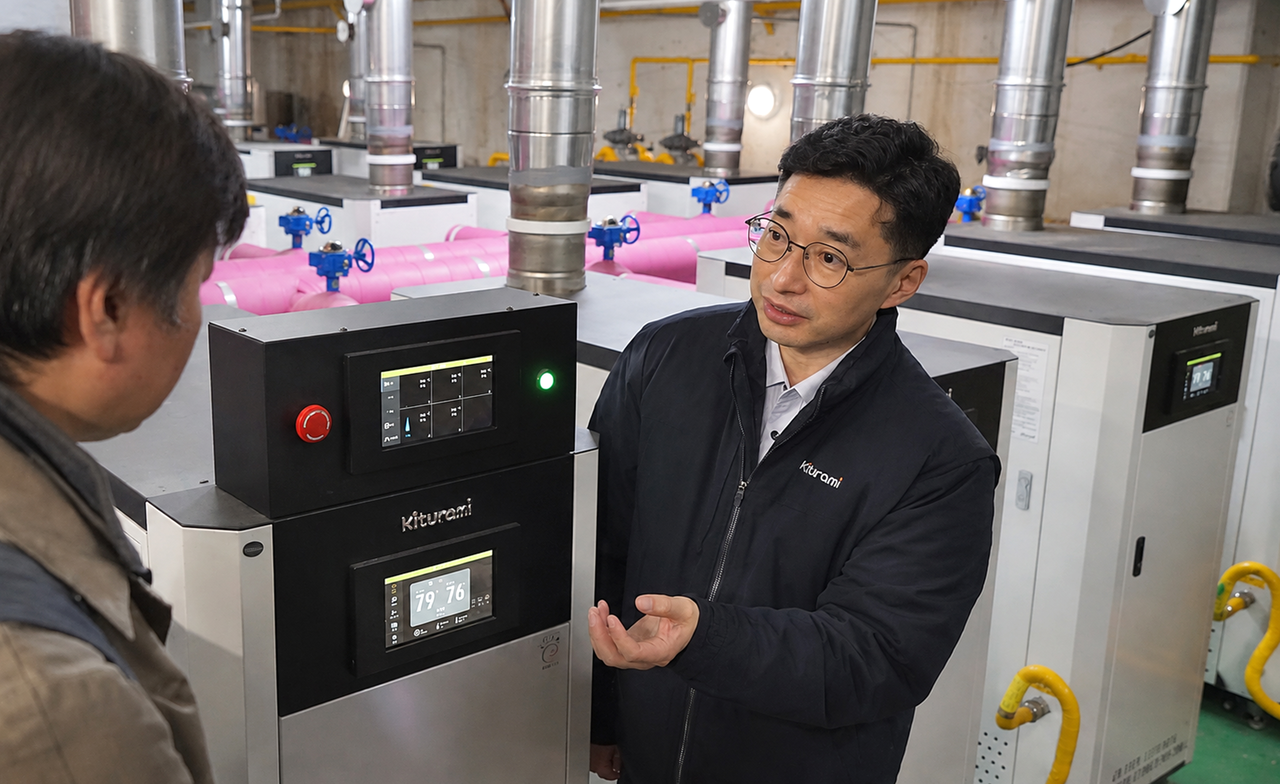
On Monday morning, questions flowed at the management office of Daebang Jugong Complex 2 in Dongjak-gu, Seoul. Jeong Nak-gi, chairman of the residents' representative council, the building manager, and Kim Kwan-young, senior team leader of Kiturami's technical sales team, fielded them one after another. It had been a year since the boilers were replaced. How much had the inconveniences of central heating improved, and what did it cost? Jeong said there had been no shortage of opposition at first, but that residents were now telling him the switch was the right call.
The complex, completed in April 1995, comprises 10 buildings and 798 households. Last November, the large high-temperature hot-water boiler was removed and replaced with a "cascade" system linking 20 Kiturami mid-size condensing boilers. The system adjusts the number of boilers in operation in stages to match heating demand, while keeping the existing central heating pipes in place and replacing only the heat source. It is the first case in South Korea of a legacy apartment complex's central heat source being converted to a mid-size condensing cascade system.
The first reason is construction cost. According to comparative data provided by Kiturami, converting to individual heating would have cost 2.39 billion won ($1.78 million), while the cascade replacement came to 1.87 billion won. The difference is 524 million won — a savings rate of 21.9 percent. The complex covered the cascade replacement cost through its long-term repair reserve fund, meaning no additional charges were levied on individual households.
Jeong said the residents had initially put considerable effort into switching to individual boilers, and that persuading building representatives who opposed the cascade approach took about six months. After comparing proposals from major domestic boiler manufacturers and weighing equipment capacity and the feasibility of reusing the existing chimney, the complex ultimately concluded the cascade model was the best fit.
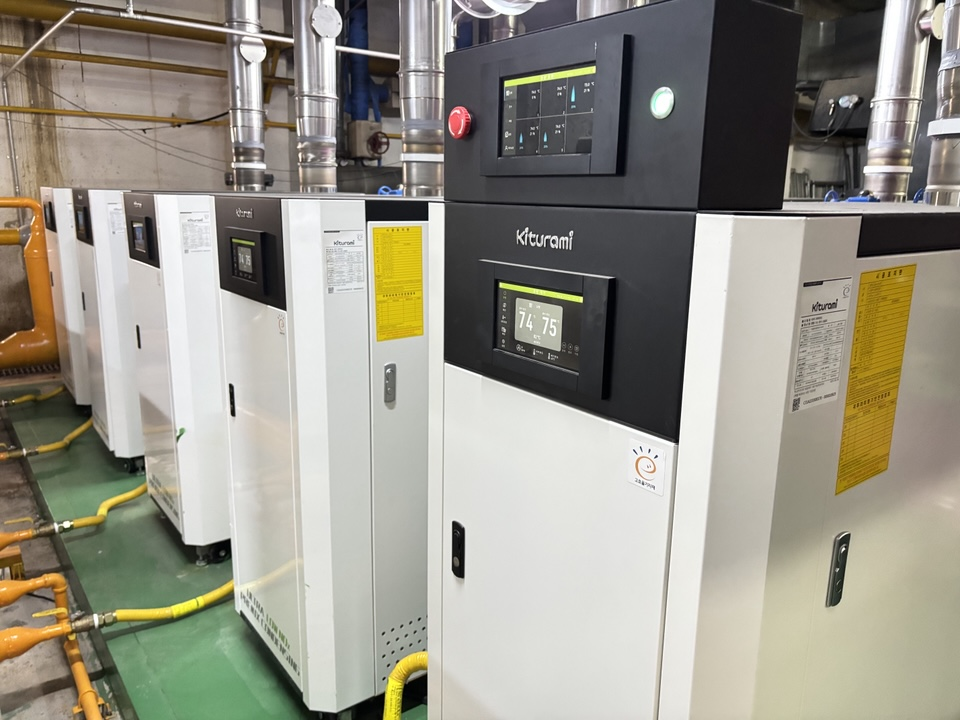
The second reason is the burden of construction itself. The below-ground mechanical room, visited after the briefing, was larger than expected. Where a single large boiler once stood, 20 refrigerator-sized mid-size boilers now lined the space in a row. The existing chimney was kept and connected as-is. The core construction period was about 15 days. Unlike individual heating conversions — which require installing a boiler in every unit and laying new gas pipes throughout — no interior demolition was needed.
Kim said dividing the load among multiple mid-size boilers, rather than replacing a large boiler with a single new unit of equivalent capacity, makes it easier to bring equipment into and install it within the existing mechanical room. He added that switching to individual heating would require roughly 1.65 square meters of boiler installation space per unit, and that the cascade approach eliminated that burden while keeping central heating in place.
The third reason is heating efficiency. Previously, the boiler ran for three hours and then shut off for three hours. Every time the heating water cooled, it had to be reheated from scratch, and complaints about units being too cold or too hot — often on different floors simultaneously — came in at the same time. Now, the system keeps the heating water at a steady temperature by running only as many boilers as needed.
Jeong said the complex is also developing operating guidelines to adjust supply temperatures based on outdoor temperature and time of day, giving the boiler room the ability to fine-tune heating water supply temperatures for each building. The management office estimates gas consumption has fallen by about 16 percent.
The fourth reason is hot water supply in summer. The old large boiler had to suspend hot water service during the summer for mandatory open inspections and pipe cleaning — one of the most common complaints about central heating. The cascade system is exempt from the statutory continuous-use inspection requirement. Those inspections and cleaning had cost around 5 million won per year, a cost the complex can now avoid.
Kim said the previous 3.5-ton boilers were subject to statutory installation and continuous-use inspections and required a separately certified equipment manager under the Energy Use Rationalization Act. "For a complex that was paying fixed labor and inspection costs every year, that was a very tangible burden," he said.
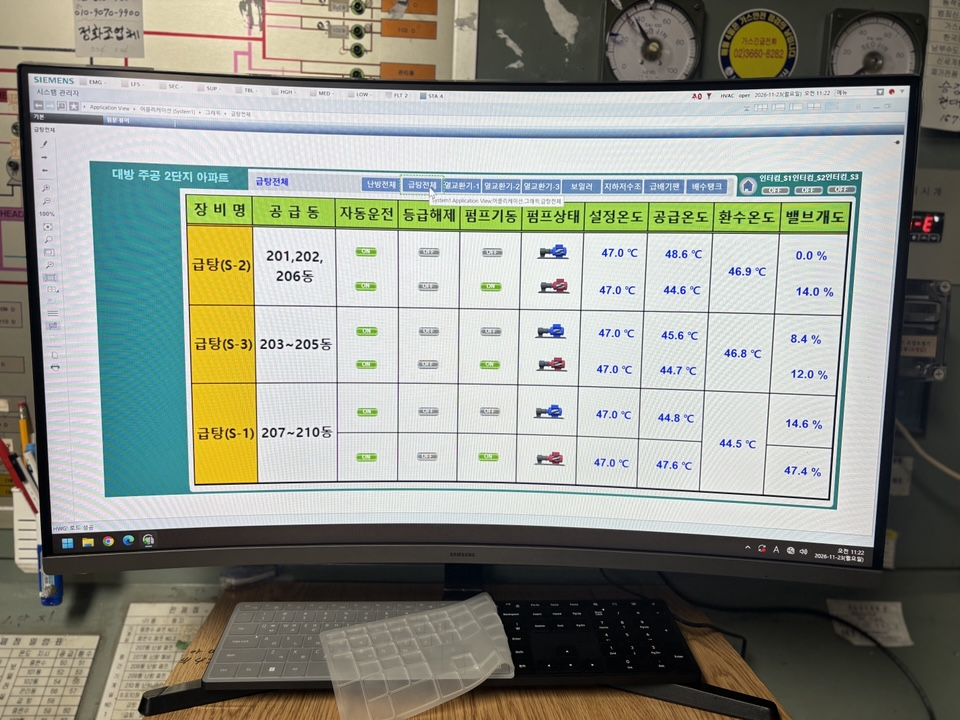
The fifth reason is management efficiency. The old boiler room operated around the clock in three eight-hour shifts, with four staff per shift — 12 in total. With the new control system reducing the operational burden, the complex is considering cutting that to two staff per shift and redeploying the rest to handle in-unit maintenance requests.
Jeong said 80 to 90 percent of what boiler room staff actually do is visit individual units to deal with problems that arise in an aging apartment complex. Given that the complex has a large proportion of elderly residents, strengthening facility management services is a priority, Jeong said.
Kim put it in plain terms: "Think of it like switching from one large truck hauling a single parcel to sending out just as many small cars as you need. On a cold morning, all 20 run. In the afternoon, only a few do. You burn less gas for nothing, so the same budget stretches further. And if one or two units need servicing, the rest keep running — no risk of heating going out in the dead of winter."
Korea Land and Housing Corp. last November announced plans to introduce cascade heating in new long-term public rental housing. The state housing developer expects the cascade system to cut energy consumption by about 20 percent compared with conventional individual boiler setups.
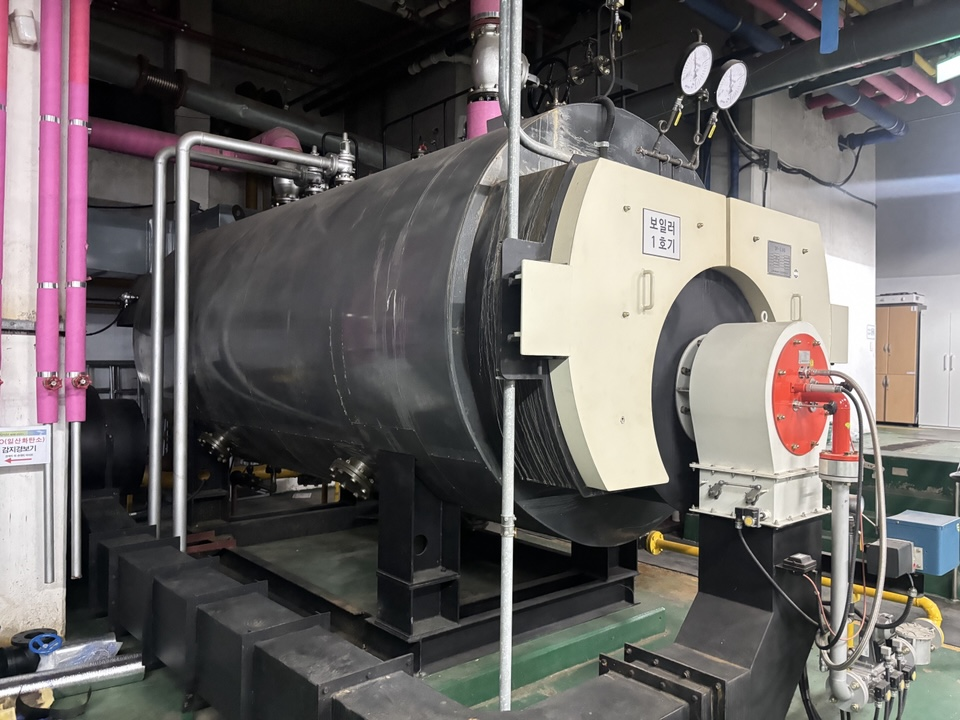
Terminology
Cascade heating — The term derives from the image of water flowing down in stages, like a waterfall. The system links multiple mid-size boilers into a single network and automatically adjusts the number of units in operation and their output to match demand. Daebang Jugong Complex 2 uses 20 Kiturami Gekkuro ECO Condensing Mid-Size Boilers. It is the first case in South Korea of a legacy apartment complex's central heat source being converted to a mid-size condensing cascade system.
hong@heraldcorp.com




