
95% of proctors say smart-device rules increased their burden
Guidelines revised until morning of test day, teachers say
Students changed glasses and clothing to avoid suspicion
Teachers union calls for shorter shifts and clear legal protection
"A teacher was told to personally explain the incident after a complaint was filed — just because the teacher had adjusted a scarf."
Kim Han-na, chairperson of the Busan Teachers Union, recounted a colleague's experience at a press conference held Tuesday morning in front of Government Complex Seoul. A student had asked for the heat to be turned off because the exam room was too warm, and when the teacher later felt cold and adjusted a scarf, the act drew a formal complaint.
Kim said fairness cannot be guaranteed by relying on teachers' eyes alone, and called for the state to deploy technology and systems to counter cheating involving advanced devices. The Teachers Union Federation made the remarks Tuesday as it released the results of a survey on supervision and operations at this year's College Scholastic Ability Test, known as the CSAT, for the 2027 academic year.
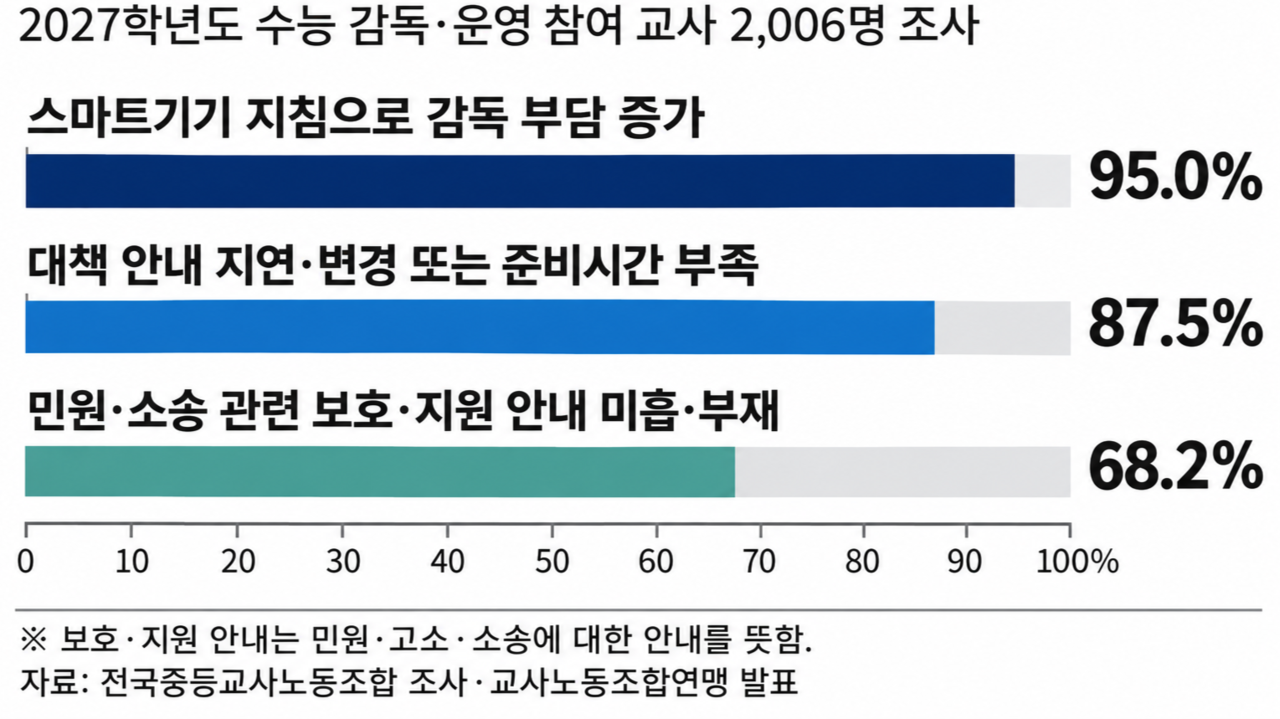
The survey, conducted by the National Secondary Teachers Union among 2,006 teachers who served as proctors or support staff at this year's CSAT, found that 95.0 percent said smart-device-related guidelines had increased their supervisory burden. Some 87.5 percent said they experienced confusion or had insufficient preparation time because additional guidance arrived late or changed multiple times. Another 68.2 percent said education authorities provided inadequate or no guidance on protection and support in the event of complaints, criminal accusations or lawsuits.
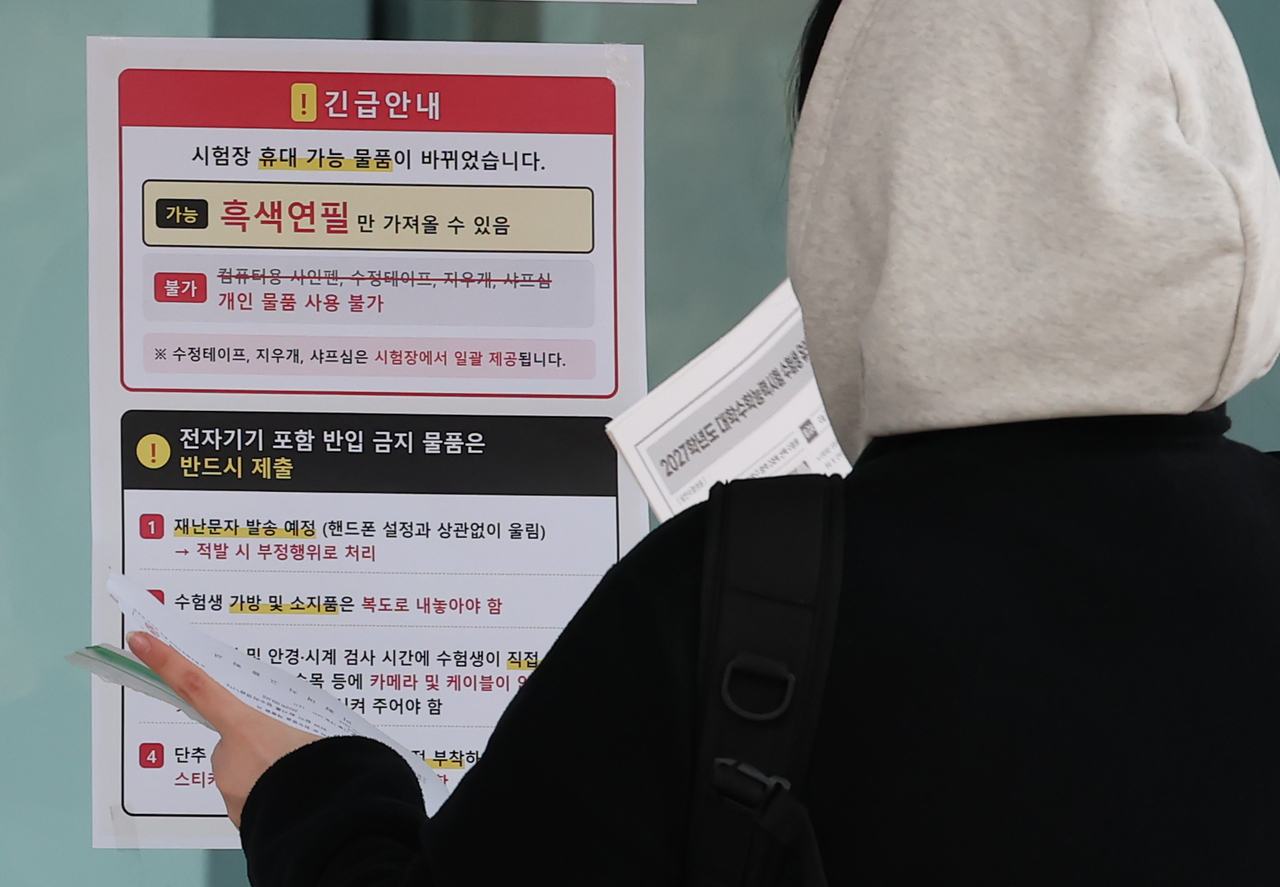
Guidelines revised until exam morning: 'We were just scrambling to keep up'
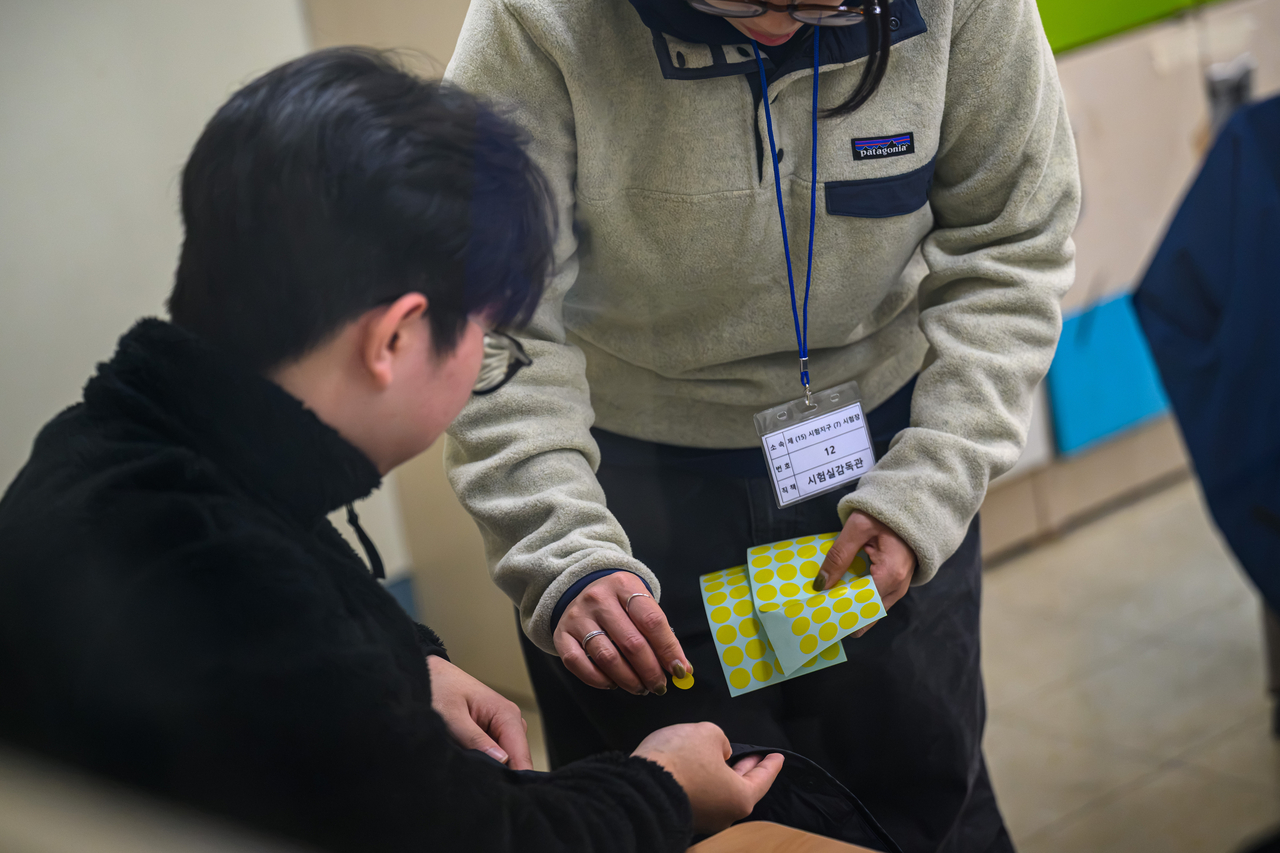
Teachers at exam sites said implementing last-minute guideline changes fell entirely on their shoulders. Kim Hui-jeong, chairperson of the National Secondary Teachers Union, said staff had to scramble to find stickers to cover buttons on students' clothing, while broadcast operators had to revise announcement scripts on the morning of the exam itself.
Schools also had to correct instructions already given to students. Kim Han-na said that after students were sent home on Monday — the day before the exam — authorities announced restrictions on personal writing instruments, forcing teachers to urgently relay the updated rules.
On exam day, device checks were added on top of existing supervisory duties. While collecting mobile phones and verifying students' identities against their admission cards, proctors also had to distribute stickers and inspect eyeglasses. Kim said teachers on the ground reported that time was too tight to thoroughly check whether stickers had been properly applied.
"Just because teachers have always found a way to get things done, the state must stop offloading onto them responsibilities that the state itself should be preparing for," Kim Hui-jeong said.
Test-takers said they had to worry not only about others cheating but also about being suspected themselves. Song Ji-min, a third-year student at Isango High School who sat this year's CSAT, described classmates who switched from thick-framed glasses to thin-framed ones or chose clothing without buttons to avoid drawing scrutiny.
"The responsibility for upholding exam fairness must not rest solely on students and teachers," Song said. "The state and education authorities must take responsibility and resolve this."
'Cap daily supervision at two periods — and clarify who handles complaints and lawsuits'
The Teachers Union Federation called for changes not only to smart-device procedures but also to longstanding operational practices, including excessively long supervision shifts and inadequate rest. It urged that daily proctoring assignments be capped at two exam periods and that the pool of eligible supervisors be expanded to include staff from education offices and universities, to end what it described as effectively compulsory conscription of teachers.
The federation also called for professional staff to handle exam-room cleaning and broadcast and facility management, and for fair compensation for preparation work. It said the government must follow through on its pledge to protect proctors, with clear rules specifying which agency responds when a complaint or lawsuit arises from legitimate supervision, and who bears the cost of legal support.
The federation also pushed back against a tip-off channel set up by the Democratic Party of Korea's national youth committee to report "lax supervision." Even after the channel was renamed, it said, the function of collecting reports on cases where cheating prevention or detection was deemed insufficient remained — and it demanded respect and an apology toward supervising teachers.
The federation warned that the same problems could recur in school-based internal assessments. It called for national-level standards — developed together with teachers — on how far generative AI may be used in assignments and performance evaluations, what constitutes cheating, and how disputes should be handled.
Song Su-yeon, chairperson of the Teachers Union Federation, said any introduction of new testing methods must take full account of conditions in schools. "Respect teachers' professional expertise and educational judgment, and guarantee the staffing and budget needed to put new measures into practice," Song said.
brunch@heraldcorp.com




