
District uses residential population, road and shelter data to compare evacuation routes and capacity under different disaster scenarios
Civil servant designs and prototypes program using generative AI, demonstrating potential for disaster drills
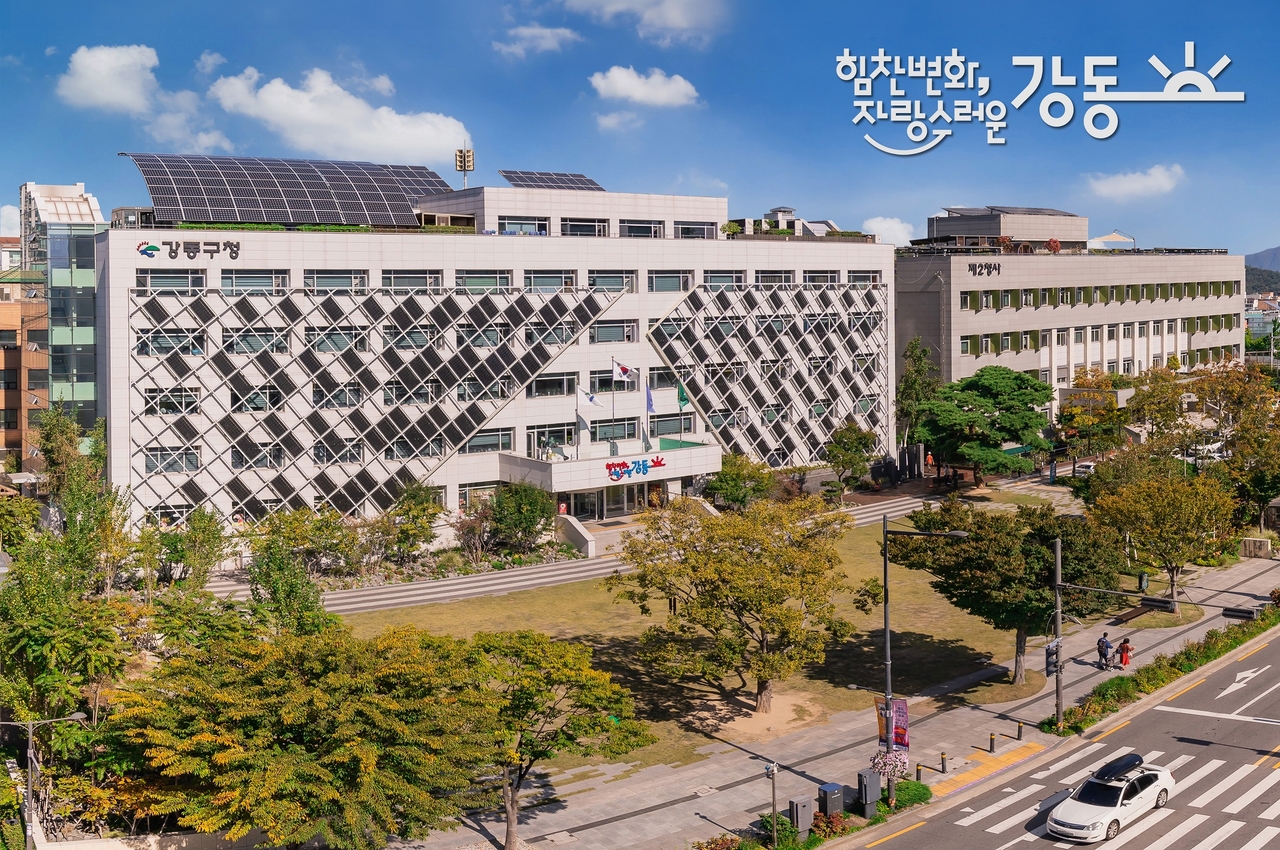
Gangdong-gu in Seoul has earned recognition at a city-wide data administration competition for a disaster-response concept combining public data and AI.
The district announced it won an excellence award in the ideas and planning category at the Seoul Metropolitan Government's fifth Data Analysis and Utilization Best Practices Competition, with an entry called "Seoul Safe Evacuation AI."
The program analyzes how evacuation routes and shelter assignments for residents would change when roads are blocked or certain facilities become unavailable during disasters such as earthquakes. It was designed to compare evacuation options across different disaster scenarios so that actual drill scripts can be made more concrete.
The entry drew particular attention because a district civil servant handled the entire process — from program planning to a prototype of its core functions — using public data and generative AI.
The prototype drew on data from 398 residential population grid cells, about 20,000 pedestrian road segments and 44 candidate evacuation shelters within Gangdong-gu. Assumed values for evacuation participation rates and shelter capacities were applied so that a range of disaster scenarios could be set and their outcomes compared.
The program works by having a dedicated analysis function calculate evacuation routes and shelter assignments, while AI reviews and organizes the input conditions and results. Findings can be saved as a PDF containing a comparison table by drill scenario and a written summary.
Officials said the tool could allow relevant departments to jointly review whether detour routes remain passable under road closures, how much capacity alternative shelters can absorb, and what support measures are available for residents with mobility difficulties.
However, the project is still at the ideas and planning stage, relying on publicly available data and hypothetical conditions. Applying it in the field would require linking operational data for each shelter and additional verification by relevant departments and experts.
Gangdong-gu District Mayor Lee Su-hee said the initiative showed that on-the-ground ideas connecting public data and AI to resident safety could produce meaningful results. "We will continue to support creative proposals from public officials and identify data-driven administrative services that residents can feel directly," Lee said.
seouldream01@heraldcorp.com




