The 32.9-kilometer Seobinggo–Dobongsan section is included, with a projected cost of 10.6 trillion won and a 19-year timeline. Seven Seoul districts' joint campaign and a meeting with the land minister helped secure the inclusion — above-ground rail sites are set for parks and transit-oriented mixed-use development.
Nowon-gu's long-pursued plan to put the Gyeongwon Line underground has been included in the Ministry of Land, Infrastructure and Transport's master plan for integrated underground rail development, raising hopes that the rail corridor dividing the district will be reconnected and its above-ground rail sites redeveloped.
The Ministry of Land, Infrastructure and Transport unveiled the master plan draft at a public hearing Thursday, listing the 32.9-kilometer stretch between Seobinggo Station and Dobongsan Station as a newly added project.
The inclusion reflects Nowon-gu's sustained campaign, carried out in cooperation with six other Seoul districts, to press the government on the need to put the line underground.
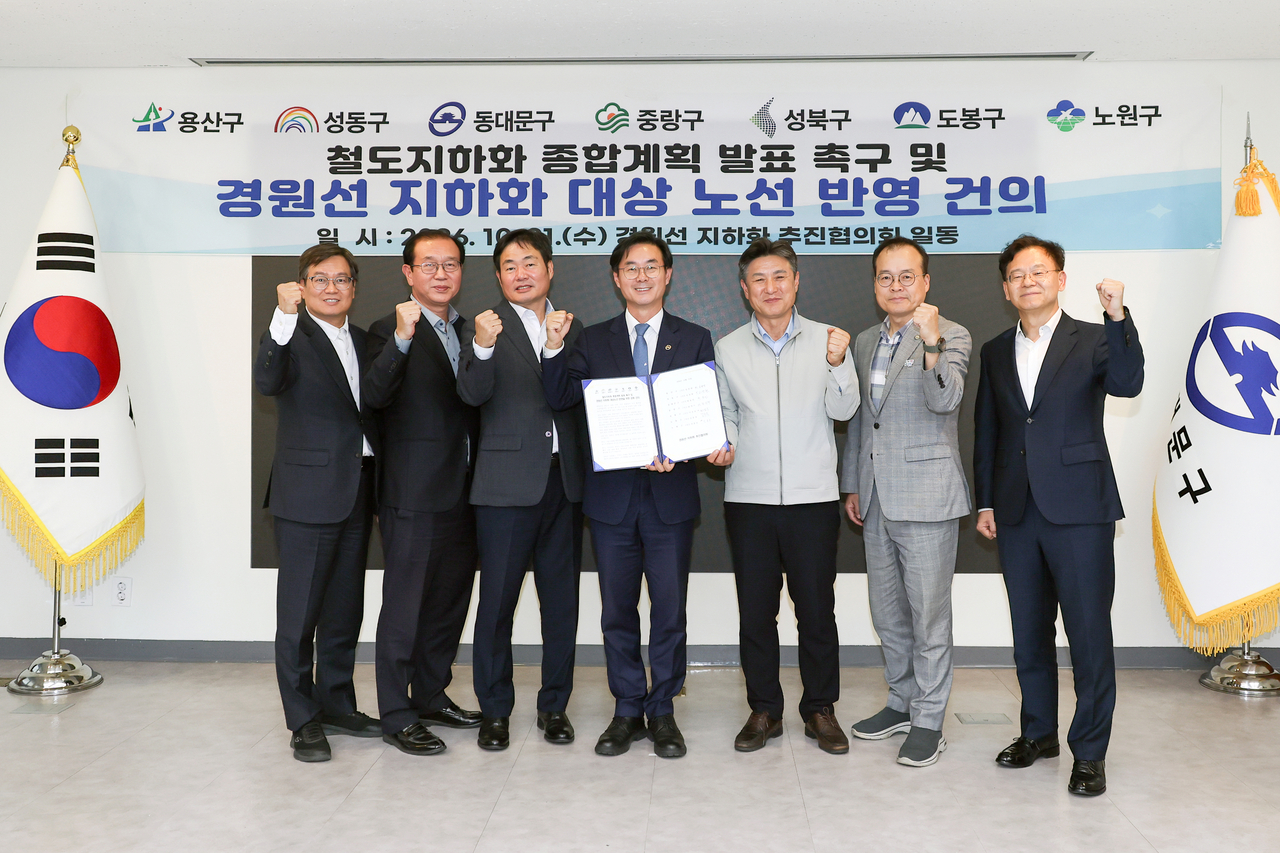
In November 2024, Nowon-gu joined Yongsan, Seongdong, Dongdaemun, Jungnang, Seongbuk and Dobong-gu to launch the Gyeongwon Line Underground Relocation Promotion Council and mount a coordinated push. Nowon-gu District Mayor Seo Jun-o also met with the land minister in August to make the case directly for burying the above-ground rail section.
Then, on Oct. 21, the seven districts issued a joint statement calling on the government to give top priority in the master plan to undergrounding the entire corridor from Yongsan Station to Dobongsan Station, including branch lines.
The master plan carries statutory force under the Special Act on Railway Underground Relocation and Integrated Development of Railway Sites. Its inclusion of the Gyeongwon Line project lays the groundwork for the initiative to move forward in earnest.
The draft plan covers the underground relocation of the 32.9-kilometer Gyeongwon Line section and sets out a development framework for the freed-up surface land. The total project cost is estimated at about 10.6 trillion won ($7.93 billion), with a projected timeline of 19 years. The above-ground sites would be divided into linear parks and station-area plots, with development approaches tailored to each transit-oriented area's character — three urban and metropolitan-scale sites, eight district-level sites and 10 residential-type sites.
Within Nowon-gu, the underground section would run through Seokgye, Gwangwoon University, Wolgye and Nokcheon stations before reaching the area near Changdong Station. Once realized, the project is expected to improve connectivity between neighborhoods now cut off by the rail line and to reduce the noise, vibration and dust that have long troubled residents along the corridor.
The freed-up surface land could be transformed into parks, green spaces and pedestrian paths, while transit-oriented areas could accommodate mixed-use development combining office, commercial and residential functions — creating new opportunities to improve the urban environment and revitalize the local economy.
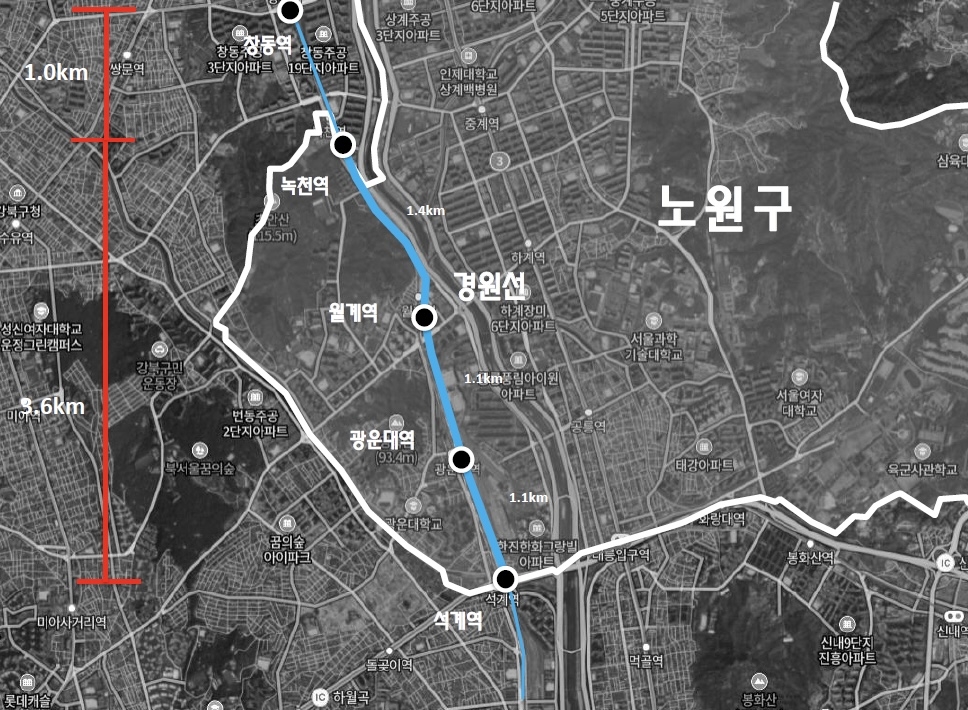
Nowon-gu plans to link the Gyeongwon Line underground project with major local development initiatives — including the Gwangwoon University Station transit-oriented development, the Changdong vehicle depot redevelopment and the Seokgye Station district unit plan — to strengthen urban connectivity and spur job creation and commercial revitalization in surrounding areas.
However, further review will be needed on several fronts as the project moves toward implementation: how to keep existing rail services running during construction, how to manage interference with connecting lines such as the GTX-B and GTX-C, and how to handle the relocation and operation of vehicle depots.
The district said it will work closely with the Ministry of Land, Infrastructure and Transport, the Seoul Metropolitan Government and the member districts of the promotion council to navigate follow-up steps, including the finalization and official announcement of the master plan and a preliminary feasibility review. As project details are worked out, the district said it will push to reflect Nowon-gu's local characteristics and residents' needs in plans for the rail sites, and will focus on minimizing disruption to residents during construction.
"It is deeply meaningful that the Gyeongwon Line underground relocation, which we have waited so long for, has been included in the master plan, and I am grateful to the government for its support in advancing the project," Nowon-gu District Mayor Seo Jun-o said. "We will work to reconnect the neighborhoods divided by the rail line, transform the above-ground rail sites into green linear parks and transit-oriented mixed-use spaces, and in doing so raise the quality of life for residents and bring new vitality to the local economy."
seouldream01@heraldcorp.com