Governor Woo Sang-ho calls for unified strategy linking climate action, tech innovation and growth
Gangwon Province held the country's largest carbon neutrality event in central Seoul on Monday, focusing on how artificial intelligence can help overcome the climate crisis.
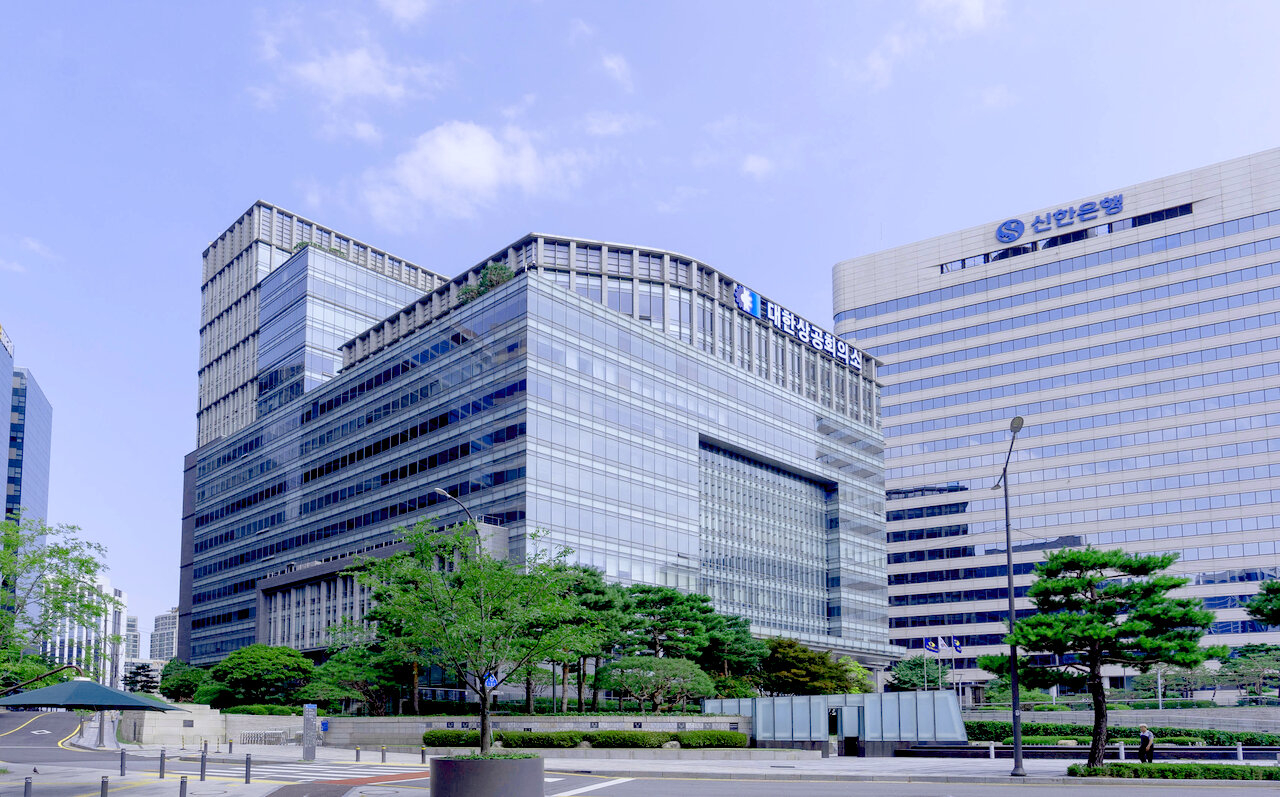
Gangwon Special Self-Governing Province co-hosted "Korea Carbon Forum 2026" at the Korea Chamber of Commerce and Industry in Seoul, alongside the Korea Institute on Climate Change, the National Climate Crisis Response Committee and the Korea Climate and Environment Institute.
Held under the theme "Climate Crisis Response and the Future of Energy and Industry in the AI Era," the forum aimed to highlight the severity of climate disasters and the urgency of action, while exploring a national transition strategy that harmonizes carbon neutrality with economic growth through advanced technologies including AI.
Gangwon Special Self-Governing Province Governor Woo Sang-ho said climate action, technological innovation and economic growth "can never be pursued separately," adding that carbon reduction and the development of advanced industries must be bound together into "one powerful national growth strategy." Woo pledged that the province would "take the lead in finding answers on the ground and putting them into practice" as a partner in Korea's green growth, drawing on Gangwon's assets of clean nature, industry and peace.
The event, the largest of its kind in the domestic climate change sector, drew about 1,500 participants including government and local officials, business leaders, academics and experts.
The keynote lineup features Kim Sang-hyup, secretary-general of the Global Green Growth Institute, speaking on "Korea's Green Great Transformation and Global Momentum," and Lee Chang-hoon, chairman of the National Climate Crisis Response Committee, presenting national climate policy directions for AI and a sustainable society. Oh Il-young, director general for climate and energy policy at the Ministry of Climate, Environment and Energy, will address the government's climate policy achievements and the direction of the Korean Green Transformation (K-GX). Gyeon Jong-ho, climate change ambassador at the Ministry of Foreign Affairs, will speak on the outcomes and key implications of the 31st Conference of the Parties to the UN Framework Convention on Climate Change (COP31).
A special panel discussion chaired by Jeon Eui-chan, distinguished professor at Sejong University, will bring together representatives and experts from business, research, civil society and youth groups to debate pathways for climate crisis response and the future of energy and industry in the AI era.
Alongside the main program, 15 specialized and thematic seminars will run concurrently, covering key climate agenda items such as the Korean Green Transformation (K-GX), power supply planning, mandatory climate disclosure, the Carbon Border Adjustment Mechanism (CBAM) and international emissions reductions, with the aim of developing actionable policy alternatives.
Gangwon Special Self-Governing Province has been pursuing future growth engines by leveraging its abundant clean energy resources, in line with the provincial administration's guiding vision of "Clean, Youth and Peace Gangwon."
The province plans to expand renewable energy deployment to 7.8 gigawatts by 2030 and attract AI data centers and related companies by linking its ample power and water resources, with the goal of creating jobs for young people.
The province also intends to spread a resident profit-sharing energy model — including a "clean energy highway" using idle land in border areas and the creation of 300 solar-income villages — to promote regional coexistence and advance the Korean Green Transformation (K-GX).
abc@heraldcorp.com