Forum on night delivery regulations held at National Assembly
'The right to work must not be infringed upon'
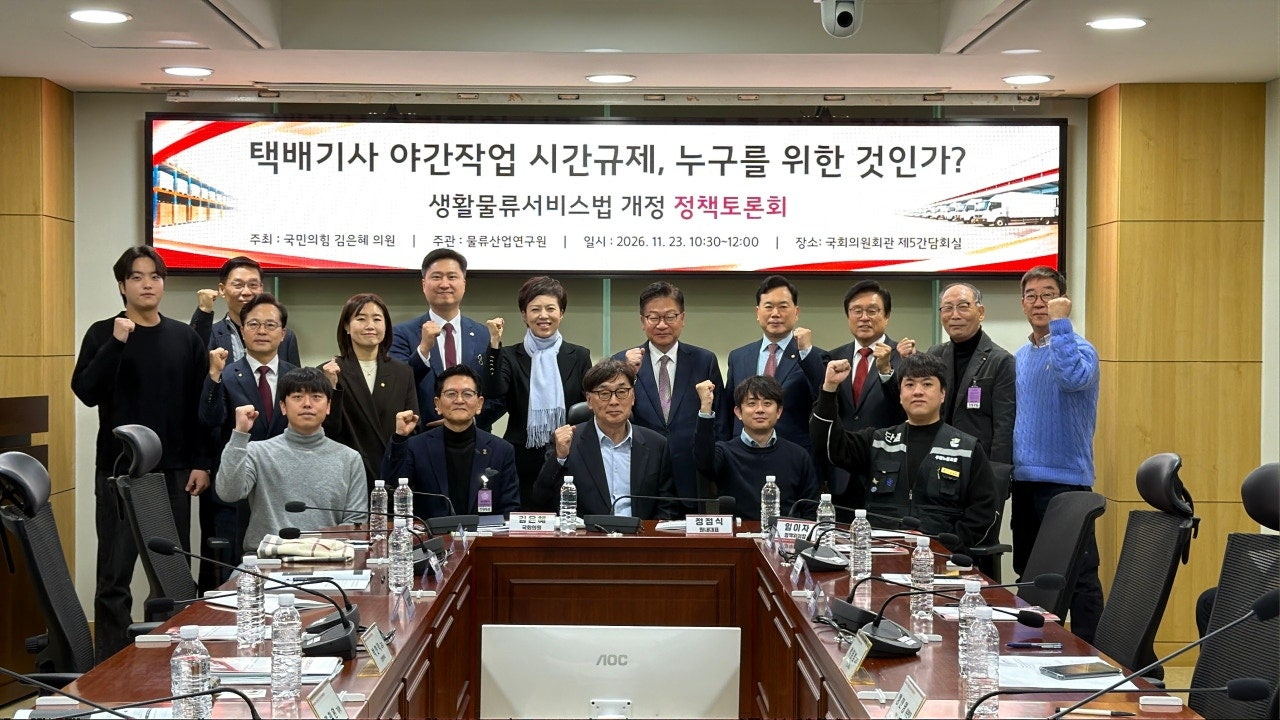
People Power Party lawmaker Kim Eun-hye on Monday cited survey results showing strong opposition among delivery workers to proposed night-shift restrictions, saying the intent is not to leave overwork unaddressed. "Rather than a blanket ban, we must first look at the health conditions and wishes of the workers themselves," Kim said.
Kim made the remarks at a policy forum she hosted at the National Assembly titled "Night-shift regulations for delivery workers: Who are they really for?"
The forum, organized by Kim and hosted by the Logistics Industry Research Institute, was convened to examine — through field surveys and empirical data — how proposed restrictions on nighttime working hours and frequency under pending amendments to the Living Logistics Service Industry Development Act would affect delivery workers' income, employment, health rights and the broader delivery service for consumers.
The forum opened with a presentation by Park Chan-ik, a professor at Chung-Ang University, and was moderated by Park Young-bum, a professor at Hansung University. Panelists included Jeong Jin-young, chair of the Coupang Inc. labor union; Kim Seul-gi, head of the Non-Union Delivery Workers' Alliance; Lee Woo-ram, CEO of Maruwell; Jeong Hee-won, a night-shift delivery worker; and Son Jeong-woo, editor-in-chief of Logistics Newspaper.
A survey of 1,412 delivery workers released at the forum found that 79.0 percent opposed capping nighttime deliveries at 12 times per month, while only 9.0 percent were in favor. Opposition to a limit of three consecutive nights of delivery reached 78.8 percent, and 70.8 percent opposed an eight-hour daily cap averaged over a week.
If the regulations were enacted, 78.1 percent said they would have a significant negative impact on their work and income. Asked who should determine nighttime delivery hours and days, 86.9 percent said workers should decide for themselves, while only 8.4 percent said the matter should be set by law. When asked which policy would best protect their health rights, 69.3 percent chose "guaranteeing workers' right to choose and on-site autonomy," while "limiting nighttime working hours" was selected by just 6.8 percent.
Similar concerns emerged among 151 managers and operators of delivery franchise outlets. When asked about a cap of 12 nights per month, 72.2 percent said they would be unable to maintain their current early-morning delivery operations, and 72.9 percent gave the same answer regarding an eight-hour daily average limit. Some 83.4 percent said working-hour regulations would have a significant negative impact on their outlets' staffing, costs and delivery services.
At the forum, Kim challenged the premise of the proposed rules. "If the state forces its citizens to work only between certain hours, or only a set number of times a month — is that protection, or is it control?" she said. "The constitutionally guaranteed freedom and right to choose to work must not be infringed upon."
mp1256@heraldcorp.com