Korea Institute of Civil Engineering and Building Technology develops adjustable-nozzle system to combat EV battery fires
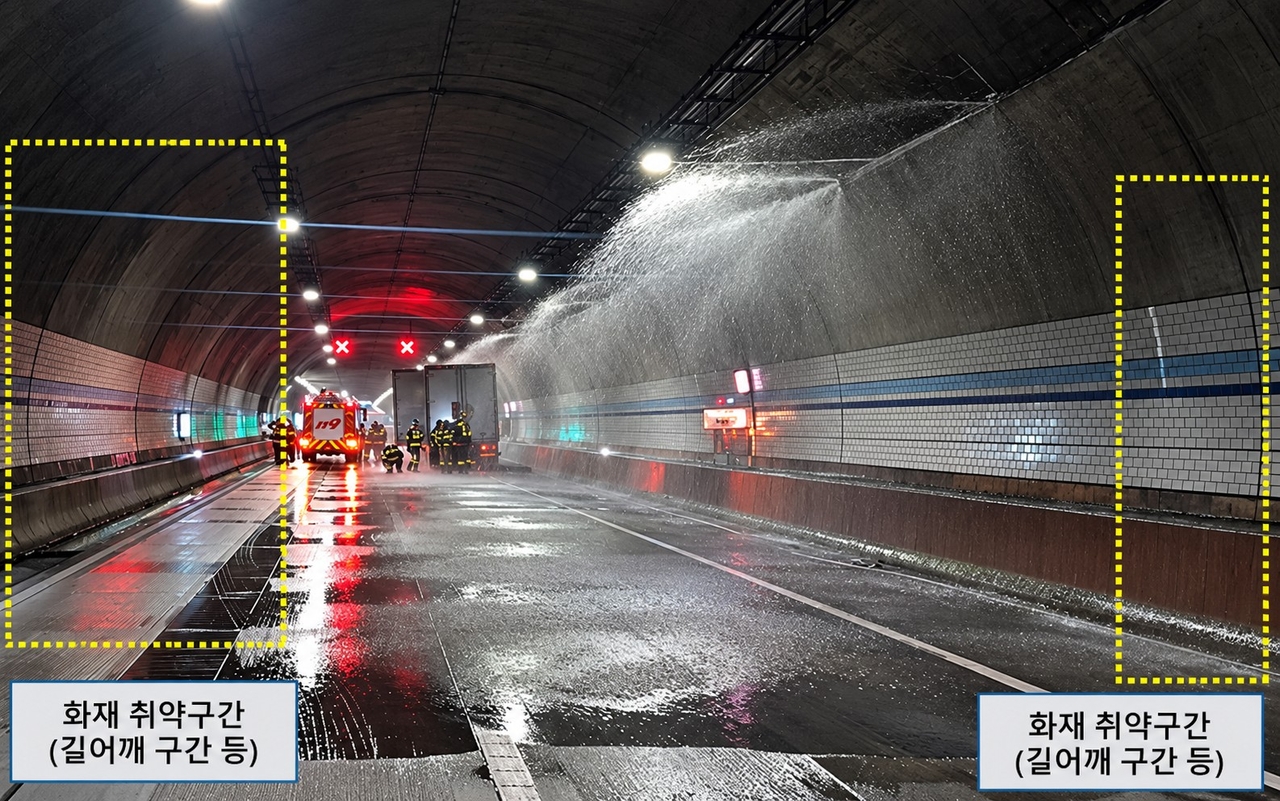
Researchers have developed a technology that concentrates water spray directly onto the source of a vehicle fire inside a tunnel. The system increases water coverage in previously underserved zones by 129 percent compared with conventional suppression equipment, and is expected to help contain electric vehicle battery fires and reduce casualties in major accidents.
The Korea Institute of Civil Engineering and Building Technology announced Monday that it has developed a next-generation water-spray system capable of adjusting the direction of water discharge based on where a fire breaks out.
Concerns about tunnel fire risks have grown in recent years as electric vehicle adoption expands and underground road construction increases. Tunnels pose particular challenges for firefighting: their structural characteristics make it difficult for fire trucks to enter, and the use of foam suppressants or submersion tanks is limited, making early fire suppression critical.
Tunnels rated at disaster-prevention grade 1 or higher are currently required by law to install water-spray fire suppression systems. However, conventional systems spray water in a fixed direction, which can leave blind spots where water does not reach adequately depending on where a fire starts.
To address this, a research team led by Yoo Yong-ho, head of the institute's Fire Safety Research Division, developed a technology that rotates the pipes on which the water-spray nozzles are mounted.
The key innovation is the ability to freely adjust the spray direction based on the fire's location. The system can concentrate water on the point of ignition or rotate the pipes up and down in a reciprocating motion to distribute water evenly across the full width of the tunnel road.
By linking the system to closed-circuit television cameras and automatic fire detection equipment inside the tunnel, it can also automatically identify the fire's location and adjust the spray direction accordingly.
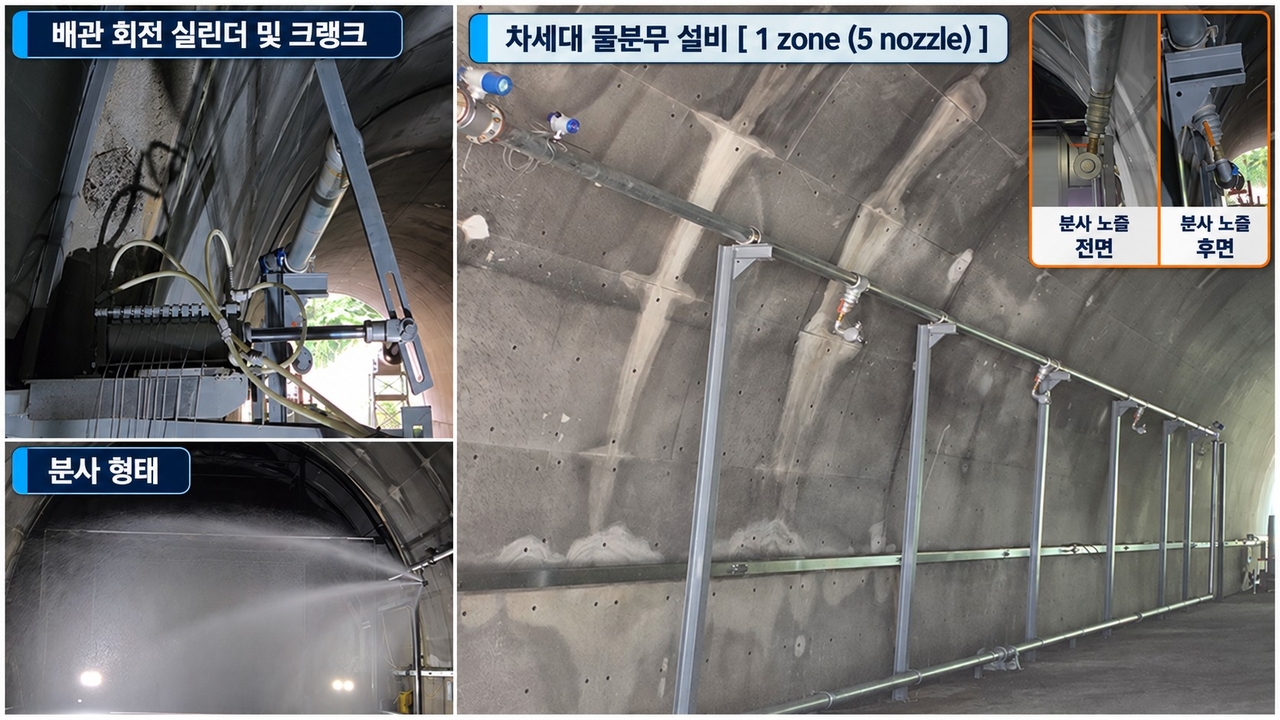
In comparative tests conducted at the institute's full-scale tunnel fire testing facility in Hwaseong, Gyeonggi Province, the research team found that water coverage in the most underserved zone increased by 129 percent over the conventional system.
The new system met water-spray density standards across all measured zones, and tests involving electric vehicle battery fires confirmed that it effectively suppressed fire spread.
Another advantage is that the technology can be retrofitted onto existing tunnel water-spray suppression systems. Because it improves fire response performance without requiring a full replacement of suppression equipment, it is expected to be well suited for deployment at existing tunnel sites.
The technology has been transferred to Dongil Technology Corporation.
nbgkoo@heraldcorp.com