Heukseok Myeongsu-dae Hyundai 124㎡ asking price drops 200 million won in two days
Acro RiverHeim 84㎡ asking price trimmed from 3.6 billion to 3.5 billion won
Listings pile up, transactions dry up as wait-and-see mood deepens along Han River belt
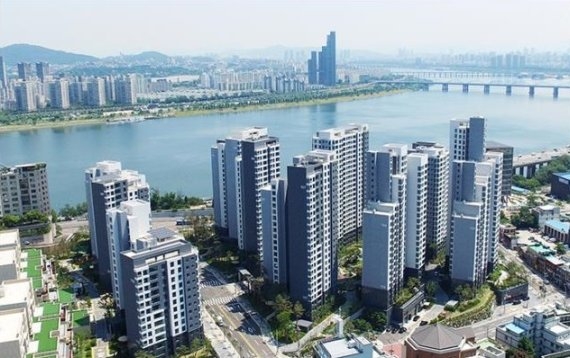
Apartment prices in Seoul's Yongsan-gu and Dongjak-gu fell this week, signaling that the price correction that began in Gangnam is spreading to the Han River belt. In Heukseok-dong — considered one of Dongjak-gu's most sought-after neighborhoods — listings have appeared with asking prices cut by as much as 200 million won ($150,000) in just two days, as loan and tax regulations push prospective buyers to the sidelines and force owners of major Han River belt complexes to lower their expectations.
According to real estate industry sources, listings with asking prices cut by tens of millions to as much as 200 million won have been appearing one after another at major complexes along the Han River belt, including in Dongjak-gu, Mapo-gu and Gwangjin-gu.
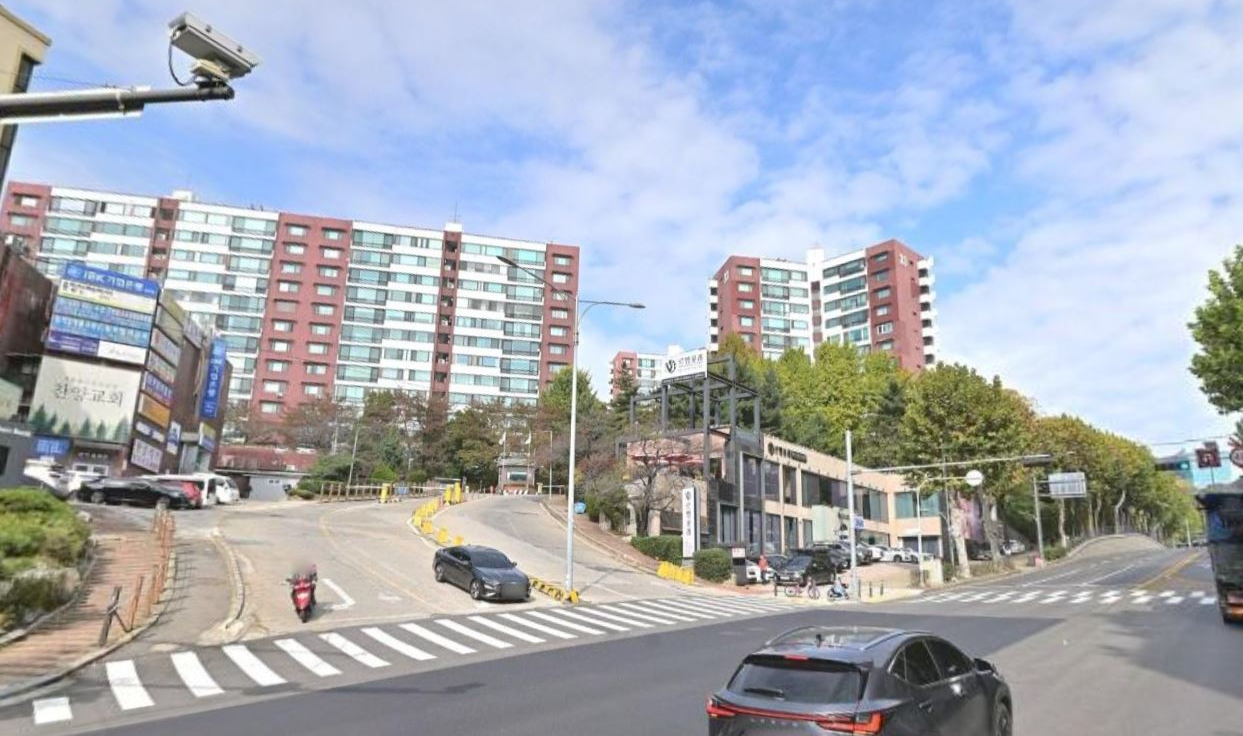
At Acro RiverHeim in Heukseok-dong — widely regarded as Dongjak-gu's flagship complex — the asking price on an 84-square-meter unit (exclusive use area; all figures below on the same basis) was trimmed from 3.6 billion won to 3.5 billion won, a reduction of 100 million won. Another 84-square-meter listing fell from 3.25 billion won to 3.2 billion won, a drop of 50 million won. Even so, the 3.5 billion won listing remains above the complex's all-time high transaction price of 3.46 billion won for that unit type.
The price cuts were steeper at the nearby Myeongsu-dae Hyundai complex. A 124-square-meter unit listed at 3.2 billion won on Nov. 7 dropped to 3 billion won by Nov. 9 — a 200 million won decline in two days. A 78-square-meter unit in the same complex fell 50 million won, from 2.45 billion won on Wednesday to 2.4 billion won on Friday.
Asking price adjustments are also continuing in Mapo-gu. An 84-square-meter unit at Mapo Prestige Xi in Yeomni-dong dropped from 2.85 billion won on Oct. 30 to 2.8 billion won on Thursday, a reduction of 50 million won. A 59-square-meter unit in the same complex fell 50 million won in four days, from 2.45 billion won on Monday to 2.4 billion won on Friday.
A 196-square-meter unit at Walker Hill Apartment in Gwangjang-dong, Gwangjin-gu, also saw its asking price fall 90 million won, from 3.79 billion won on Nov. 9 to 3.7 billion won on Monday.
Actual transaction prices are also coming in below previous highs. A 59-square-meter unit at Daelim Apartment in Sadang-dong, Dongjak-gu, sold for 1.46 billion won on Nov. 5 — 89 million won below the complex's all-time high of 1.549 billion won set in July. An 85-square-meter unit at Gangbyeon Station Central I'Park in Guui-dong, Gwangjin-gu, changed hands on Oct. 30 for 2.09 billion won, down 210 million won from its record high of 2.3 billion won set in February.
Analysts attribute the softening asking prices along the Han River belt to a buyer wait-and-see mood driven by tighter mortgage regulations and heavier tax burdens. Mortgage caps have been reduced — to 400 million won for homes priced between 1.5 billion and 2.5 billion won, and to 200 million won for homes above 2.5 billion won — while concerns over rising property holding taxes have compounded the hesitation, leading prospective buyers to monitor price trends rather than rush into contracts.
As buying interest weakens, listings are accumulating while transactions remain scarce — a dynamic the market calls a "transaction cliff." According to Asil, a real estate big data platform, the number of apartments listed for sale in Dongjak-gu stood at 2,521 as of Friday, up 10.8 percent from 2,274 a month earlier. Over the same period, listings in Seongdong-gu rose 8.6 percent, from 2,877 to 3,125, and in Gwangjin-gu 8.0 percent, from 1,363 to 1,473. Gangdong-gu (4,361 to 4,642) and Mapo-gu (2,535 to 2,644) also expanded by 6.4 percent and 4.2 percent, respectively. With more sellers entering the market and fewer buyers willing to commit, owners who need to sell quickly are beginning to lower their asking prices one by one.
Transaction volumes have also dropped sharply. Gangdong-gu recorded 191 apartment sales last month, according to Seoul Real Estate Information Plaza — a steep decline from 501 in May, the highest month of the year. Gwangjin-gu logged just 52 transactions last month, while Dongjak-gu (118), Mapo-gu (119) and Seongdong-gu (73) all fell to less than half their May levels, when transactions had surged.
A narrowing price gap with the three Gangnam districts is also cited as a factor dampening buyer sentiment in the Han River belt. While asking prices in the belt had been relatively stable and declines limited, the correction in Gangnam property values has closed the gap between the two areas, prompting buyers to adopt a wait-and-see stance.
Nam Hyeok-woo, a real estate researcher at Woori Bank, said the narrowing price differential with the three Gangnam districts has deepened buyer hesitation, which in turn has put downward pressure on asking prices. "It also appears that a steady stream of distressed listings from owners who bought Gangnam bargain properties first and are now trying to trade up is being reflected in prices," Nam said. He added that the inflow of trade-up demand from lower- and mid-tier Seoul neighborhoods — constrained by aggregate loan limits — remains limited, and that further price corrections in the Han River belt are possible.
Official data reflect the same trend. According to the Korea Real Estate Board's weekly apartment price survey, Yongsan-gu (minus 0.02 percent) and Dongjak-gu (minus 0.01 percent) both turned negative this week, bringing to seven the number of Seoul's 25 autonomous districts where apartment prices fell. Seongdong-gu (minus 0.04 percent) and Gangdong-gu (minus 0.01 percent) declined for a second consecutive week. Mapo-gu rose 0.04 percent, but that was 0.06 percentage points narrower than last week's 0.10 percent gain — the slowest pace of increase in the past six weeks — while Gwangjin-gu managed only a 0.04 percent rise.
hwshin@heraldcorp.com