MBK, Youngpoong raise allegations over 563.1 billion won fund
Korea Zinc says some investments already recovered with gains
Company cites Securities and Futures Commission ruling, market-manipulation acquittal
Points to Youngpoong losses, flags critical minerals push
Korea Zinc has directly rebuffed allegations from MBK Partners and Youngpoong that company funds were misappropriated through private equity fund contributions. The company said some of the investments in question have already been recovered or have generated confirmed returns, and that a significant number have yet to reach maturity — making it misleading to treat the entire amount as a loss.
Korea Zinc issued a statement Friday expressing regret over what it described as MBK Partners and Youngpoong's attempt to link unrelated investment transactions into a single allegation. "MBK and Youngpoong are repeatedly forcing transactions that differ in nature, timing and investment terms into a predetermined conclusion," the company said.
MBK Partners and Youngpoong said Friday that Korea Zinc had contributed a total of 563.1 billion won ($423 million) to eight funds managed by One Asia Partners. They claimed that 576.5 billion won deployed across 14 companies — including capital from other investors — was entirely connected to Chairman Choi Yun-beom, his acquaintances or allied parties, and that none of the investments were directly tied to Korea Zinc's core business.
Korea Zinc said the figures cited by MBK and Youngpoong must first be properly distinguished. "The investment cases MBK and Youngpoong mentioned represent only cumulative committed amounts," the company said. "Some have already returned principal with confirmed profits, and among the rest, a significant number have not yet reached maturity." Korea Zinc said treating cumulative committed amounts across multiple investments as equivalent to actual losses was wrong.
Korea Zinc also said the roles of fund contributors and fund managers must be kept separate. The company said it participates in the funds as a limited partner providing capital, while the general partner — the fund management firm — is responsible for selecting investment targets, conducting due diligence, reviewing investments and disbursing funds.
Korea Zinc said MBK and Youngpoong were ignoring this investment structure and portraying the company as having directly chosen investment targets and allocated funds itself. It added that bundling transactions with different timing, purposes and terms into a single allegation was far removed from any reasonable assessment of investment appropriateness. "This distorts the facts by failing to distinguish between the fund management structure and the respective roles of each investing party," the company said.
Korea Zinc also cited prior rulings by financial regulators and courts as grounds for its rebuttal. "Among the allegations MBK and Youngpoong repeatedly raise, some have already been adjudicated," the company said, noting that MBK and Youngpoong continue to press issues on which the Financial Services Commission's Securities and Futures Commission has already issued a no-action decision regarding Chairman Choi.
Separately, an appeals court Friday acquitted Kim Beom-su, head of Kakao Future Initiatives Center, and Ji Chang-bae, chief executive of One Asia Partners, along with other defendants, of market manipulation charges in the SM Entertainment stock price manipulation case — upholding the first-instance verdict. A guilty finding against Ji on separate charges of embezzlement and breach of fiduciary duty involving fund assets was also upheld. Korea Zinc said the court in that case had identified the funds to which Korea Zinc contributed as the victims of the fund-related charges.
Korea Zinc also drew a line between financial investments and investments aimed at strengthening business competitiveness. The company said deploying available funds into financial products such as funds constitutes financial investment, while Project Crucible — a plan to build a critical minerals smelter in the United States — and its new business strategy Troika Drive represent business investments for medium- to long-term growth.
"Financial investment and core business investment are not interchangeable items," Korea Zinc said.
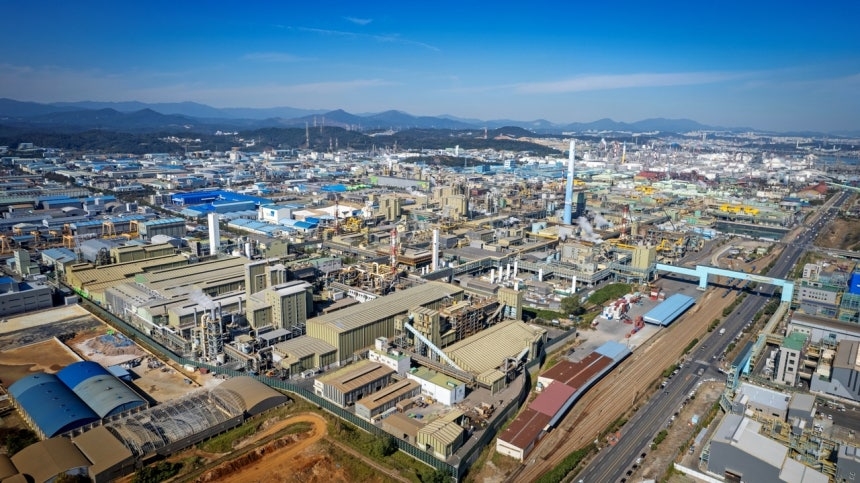
Korea Zinc is expanding production capacity at its Onsan smelter in Ulsan and upgrading safety and environmental facilities there. Construction of a research and development center requiring about 150 billion won is also under way. The company plans to strengthen its critical minerals business through germanium and gallium production, expanded sulfuric acid production capacity for semiconductors, and the development of rare earth recovery technology.
Investment in the United States is also progressing. Korea Zinc recently received approval from the Tennessee Valley Authority to use 230 megawatts of electricity for Project Crucible. The project requires about $7.4 billion in investment and is targeting a ground-breaking in 2027, with commercial production of some products set to begin in 2029.
Korea Zinc turned the criticism back on MBK and Youngpoong, saying both should first examine their own management track records and investment responsibilities. On MBK, the company said criticism has long been raised that the firm prioritizes recovering its investment over building long-term corporate competitiveness, citing the Homeplus corporate rehabilitation crisis as an example. Korea Zinc also noted that victims of the Homeplus situation have been calling for the indictment of MBK Chairman Kim Byung-joo.
Korea Zinc also pointed to Youngpoong's weak earnings and environmental record. Youngpoong posted an operating loss of 66.8 billion won on a consolidated basis in the third quarter of this year. Although the company recorded an operating profit of 44.8 billion won in the first half, the large third-quarter loss pushed its cumulative operating loss for the first nine months to 22 billion won. Given that Youngpoong posted annual operating losses for three consecutive years through last year, questions are being raised about whether it can avoid a loss this year as well.
The average operating rate at Youngpoong's Seokpo smelter in Bonghwa, North Gyeongsang Province, was limited to 52.96 percent in the first nine months of this year. Korea Zinc also noted that as of August last year, only 13.1 percent of contaminated soil remediation around the Seokpo smelter had been completed, saying Youngpoong must fulfill its responsibilities for its core business and environmental management.
"Turning a blind eye to problems surrounding their own core business investment and management responsibilities, while trying to cast Korea Zinc — which is actively investing to secure future competitiveness — in a negative light, does nothing to enhance corporate value or shareholder value," Korea Zinc said.
The management control dispute between the two sides is also playing out in separate litigation. The Seoul Central District Court ruled Nov. 12 in favor of Youngpoong and MBK in a lawsuit seeking to annul resolutions passed at Korea Zinc's regular shareholders meeting last year. Korea Zinc said the ruling conflicts with existing Supreme Court precedent and announced it would appeal.
Korea Zinc called on MBK and Youngpoong to "stop raising allegations without sufficient basis and engaging in wasteful public relations battles, and instead focus on fulfilling their role as responsible shareholders to support Korea Zinc's sustainable growth, future competitiveness and shareholder value enhancement."
kwater@heraldcorp.com