230. Gustave Doré
A boy acrobat, fatally injured mid-act
His mother weeps — and a sorrowful painting is born
Children were Doré's subject for life
Did he see himself in them?
Editor's note
Huam-dong Art Museum is the original home of long-form cultural storytelling suited to the boundless digital space. Subscribe to the reporter to receive a new art story every weekend. Articles are written as narrative storytelling grounded in historical fact, with some imaginative embellishment.
'The child is dying'
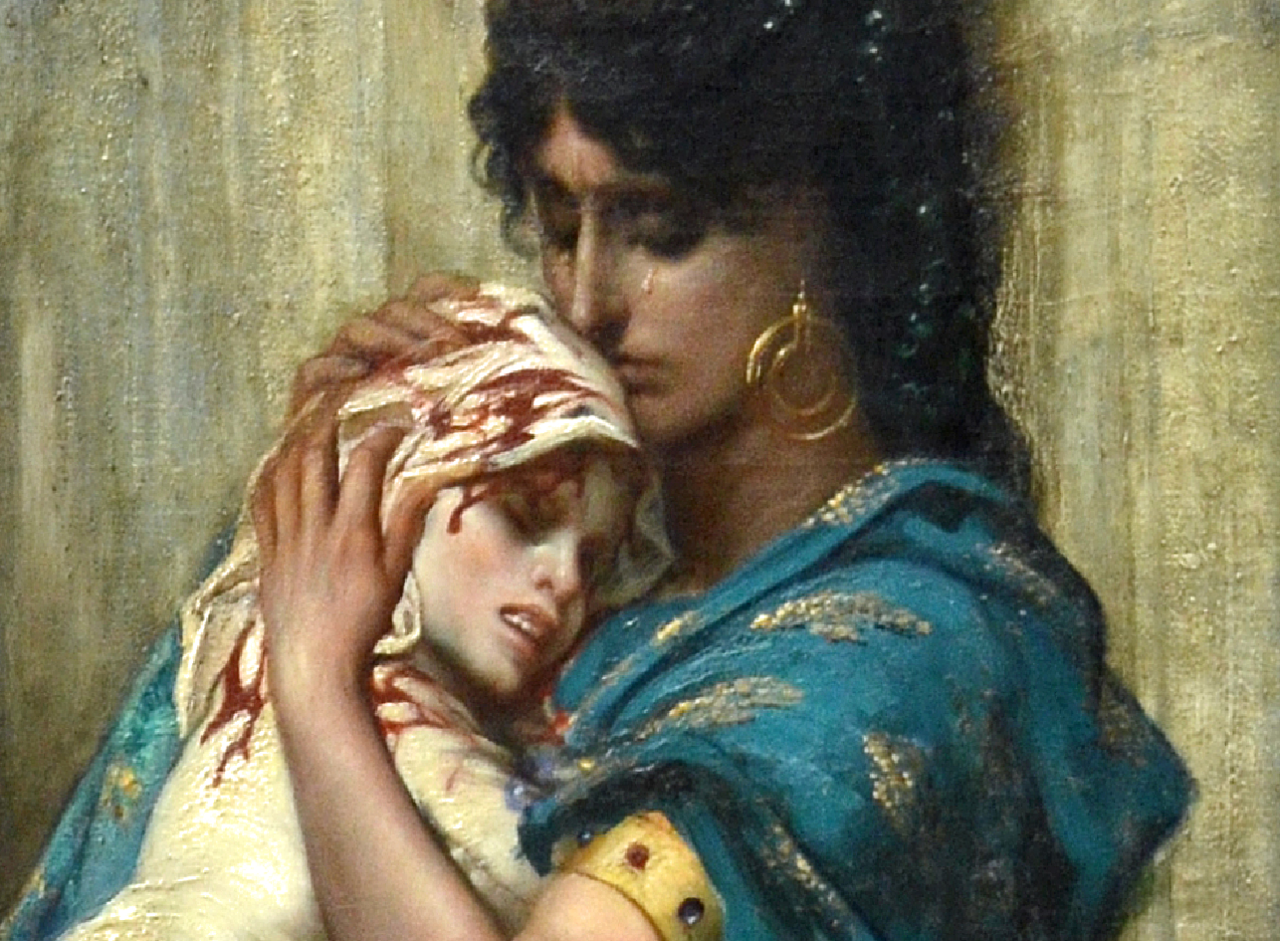
A small child has been hurt performing a stunt.
The mother gathers the child into her arms and wipes away the blood. The boy does not stop moaning. He lies with his eyes shut, convulsing. The mother weeps, pressing her lips to his forehead as tears roll down her face. She is an acrobat herself — dressed in a cheap crown and earrings, a damp blue cloth and incongruous ballet slippers, a costume designed only to catch the eye. She had been waiting for her turn in the act. The performance she had prepared, the costume, the practiced moves — all of it is now useless.
Beside her stands the father. His appearance is still absurd. His red hair is spiked to a point. A gold leotard strains across his body. This too must be a costume meant to draw laughter from the crowd. In his hands he holds a pair of circus shoes, limp and soaked with sweat.
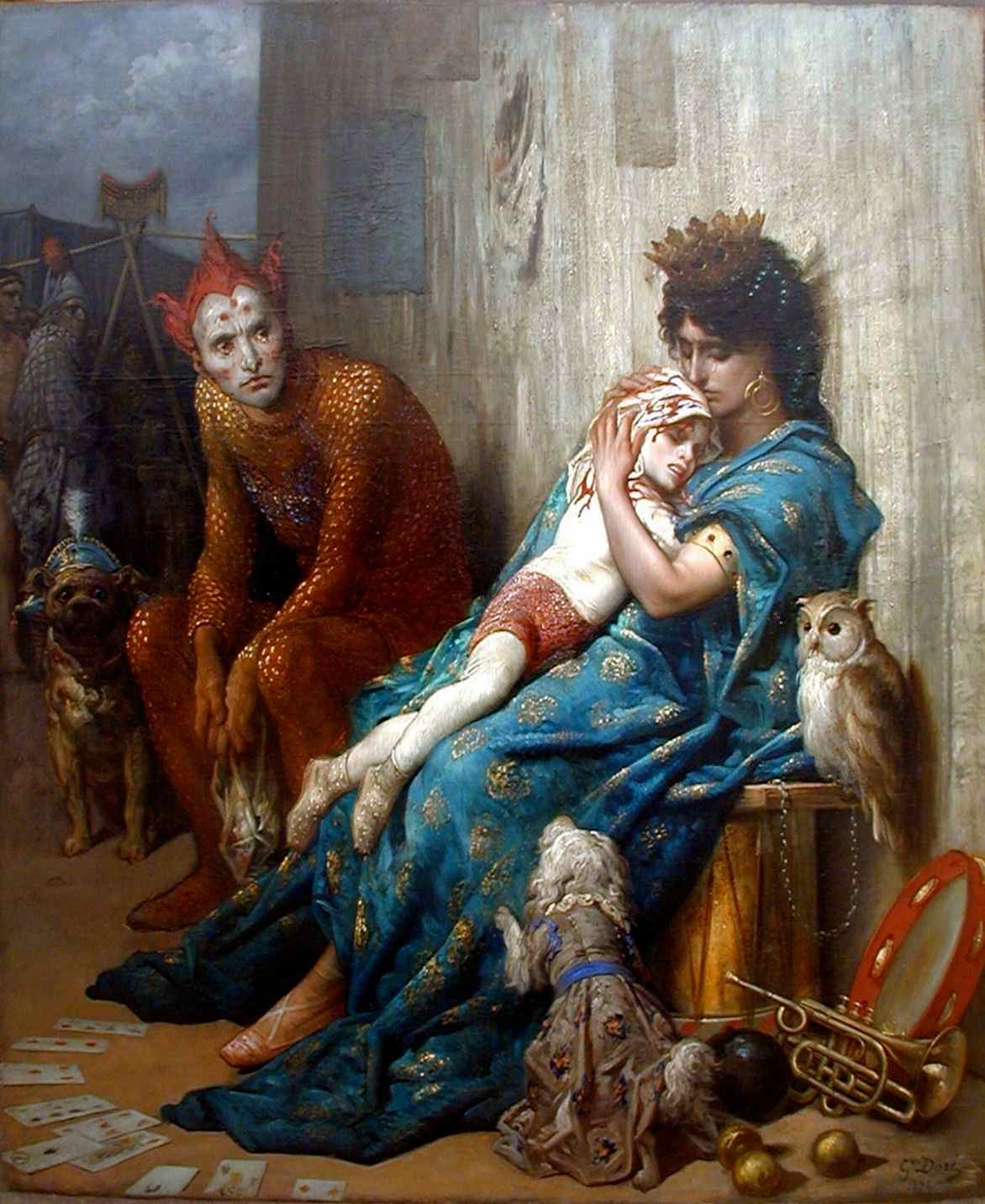
Could it be that, in the act just before this moment, he dropped the child?
Whether it was a flying trapeze or the climax of a tightrope walk, one wonders whether a missed cue became a missed grip. The painting does not show that instant. Yet the face shadowed with what looks like remorse, the tears welling drop by drop, the body that cannot bring itself to draw near — all of it seems to hint that he is consumed by exactly that guilt.
The child looks at most around ten years old. That is what makes the painting all the more heartbreaking.
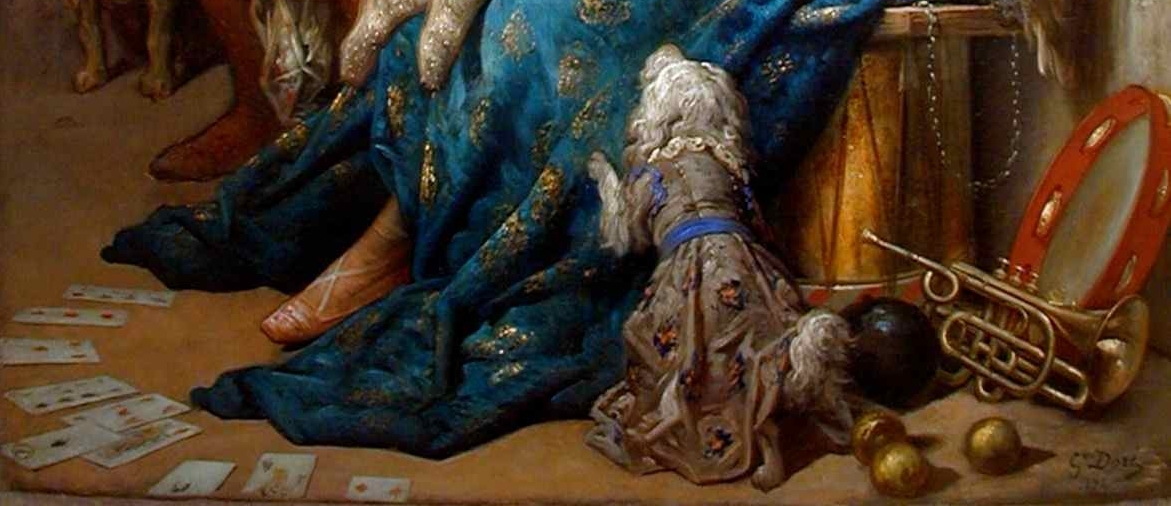
A Bichon in a little skirt clings close, staring at the child. A bulldog in a blue captain's hat refuses to leave their side. A drum, a tambourine and a trumpet — props meant to lift the mood — here only deepen the sorrow. An owl is also present. Since ancient Rome, the owl has often been regarded as a bird of ill omen; there was even a superstition that hearing one cry in the night meant a family member would die. That creature sits chained in place.
In front of the mother, playing cards lie spread in a fan. The one turned face-up is the ace of spades — also read at the time as a symbol of death. The people in the background cast only bitter glances; they offer no help at all. Which means, of course…
(The child) is dying.
Painter Gustave Doré declared this of his own work "The Acrobats" — that the child would soon be dead. With those words he closed off any room for interpretation.
"I wanted to paint the human nature awakening belatedly in the hearts of those two dried-out, almost brutalized beings," Doré said. He showed no sympathy for the couple with their dying child. "To earn money, they killed their child — and only after killing their child did they realize they had hearts." He went further, cutting to the bone with what sounds like fury. Doré had read a news report in a local paper about a young boy who performed with his acrobat parents and died in an accidental mishap during the show. The painting was based on that true story.
Why he could not look away from the article
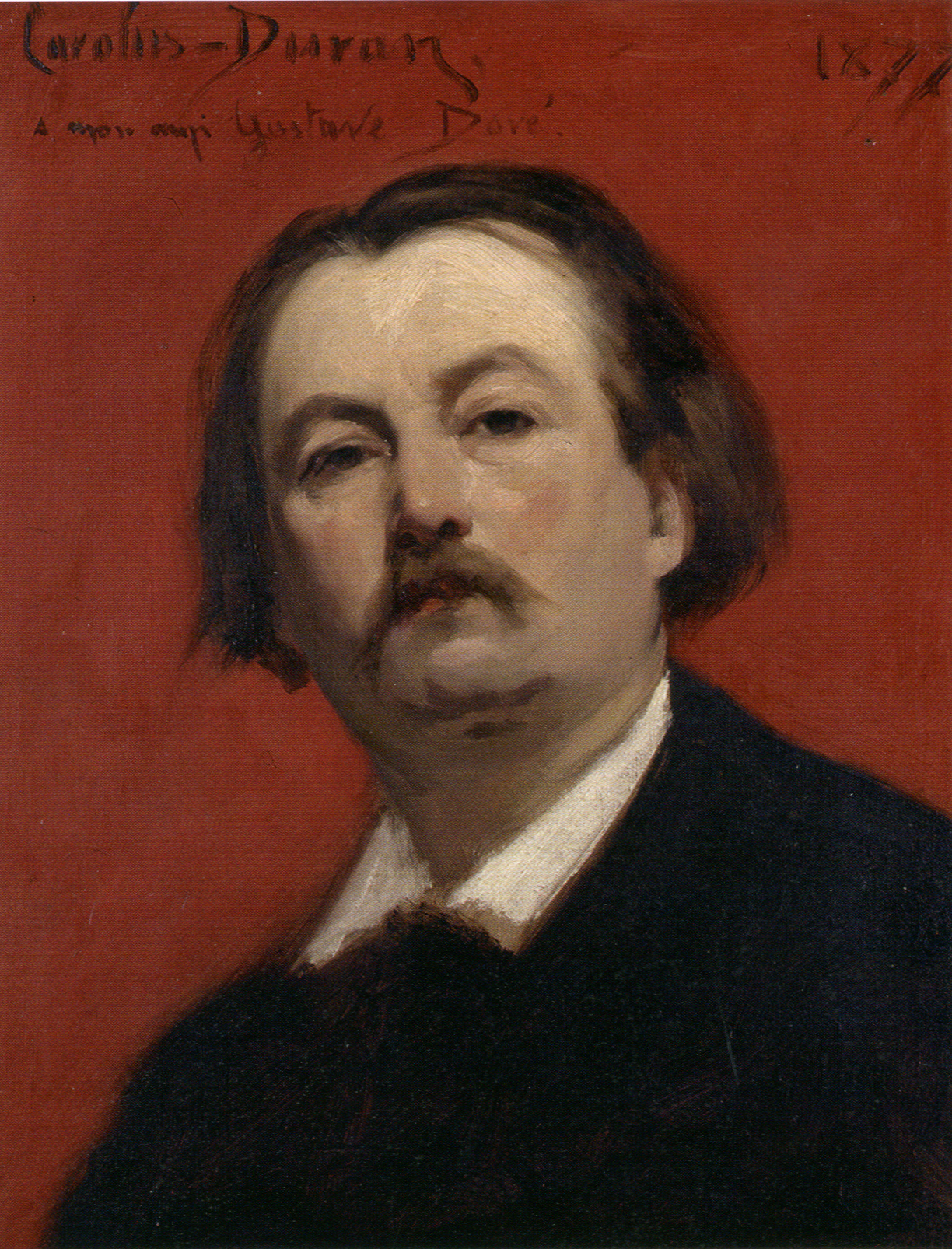
Why, among all the strange accidents and incidents that filled the newspapers every day, could Doré not look away from this one story?
And why did he direct such open hostility toward the child's parents — accusing them of killing their own child for money? Doré had his own story.
The world of the working child
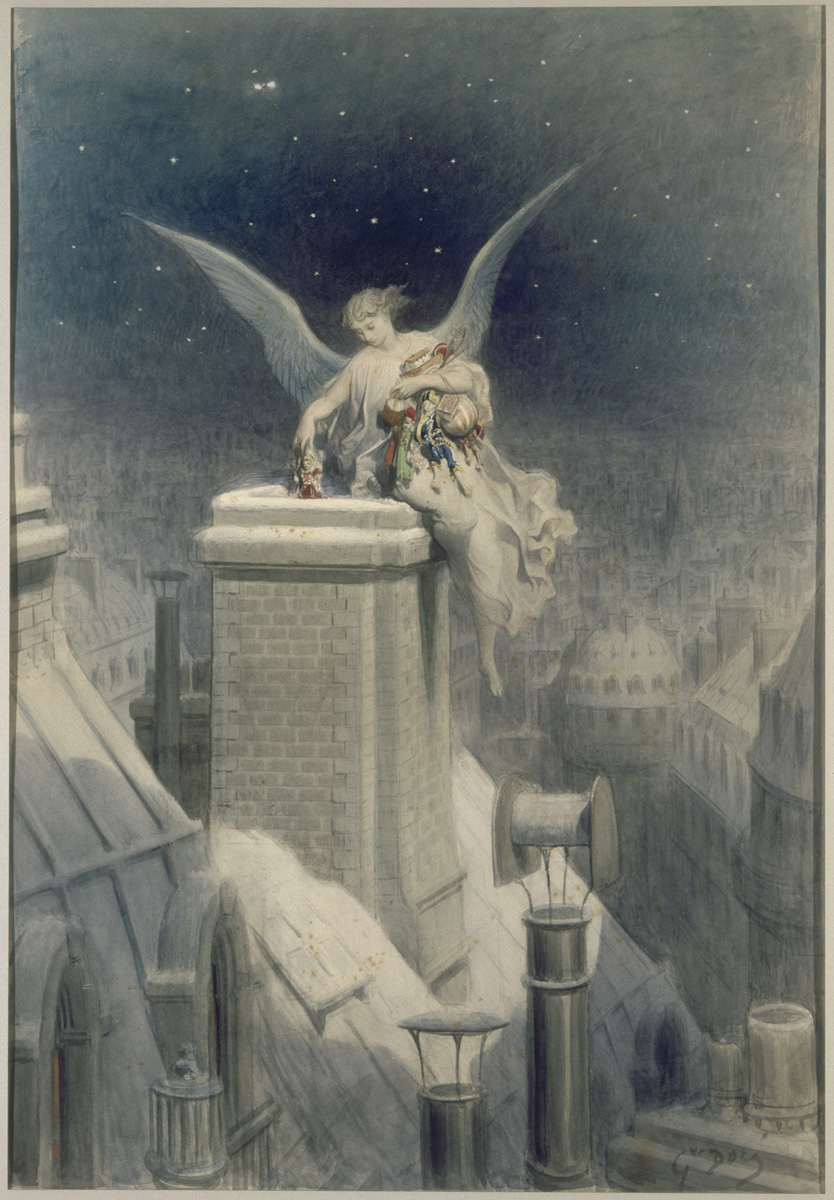
When examined closely, Doré himself had lived in the world of the working child.
From an early age he had to convert his talent into money and products. Having experienced that firsthand, he could look at children placed in labor with a perspective unlike most. Born in Strasbourg, France, in 1832, Doré showed a gift for drawing from around the age of five. By fifteen he had already signed his first contract — a weekly caricature for the newspaper "Le Journal pour rire." Over his lifetime he would produce more than 10,000 illustrations through commissions and other work, and that contract was in effect the starting point of it all.
One could see it as early recognition of his talent and ability. At the same time, it also meant that from such a young age he was living a life ruled by deadlines.
From that point on, Doré drew — and drew enormously. He produced illustrations for François Rabelais's "Gargantua and Pantagruel" and then for Honoré de Balzac's "Droll Stories," one after another, and was already famous. Commissions poured in. He had reached the point where he could think to himself, "I could produce a grand omnibus collection spanning epic, comedy and tragedy — all the great masterworks." He earned far more money than his age would suggest, reportedly bringing in more than painters a generation or two ahead of him who already had established names.
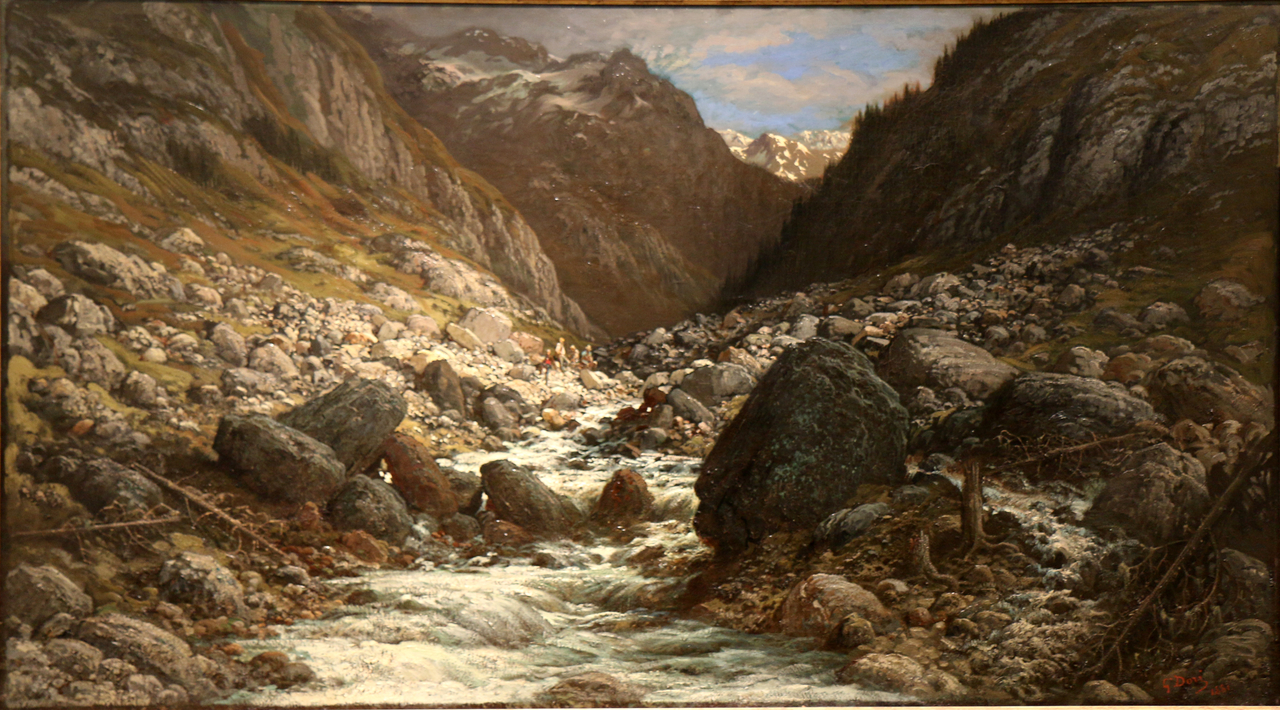
But there was a price.
From that time until his death, Doré was condemned to the life of a workaholic. In his later years he suffered serious depression and several seizures. Some scholars trace the roots of those afflictions to this very period — arguing that the habits and excessive labor that took hold before he had fully matured gradually wore down both his body and his mind.
Records of him complaining that work was wearing him out are hard to find. Perhaps he never had the chance to learn how to voice such feelings. A life in which so much was decided too early can become an obstacle to learning something else entirely.
Did he see himself as the acrobat boy?
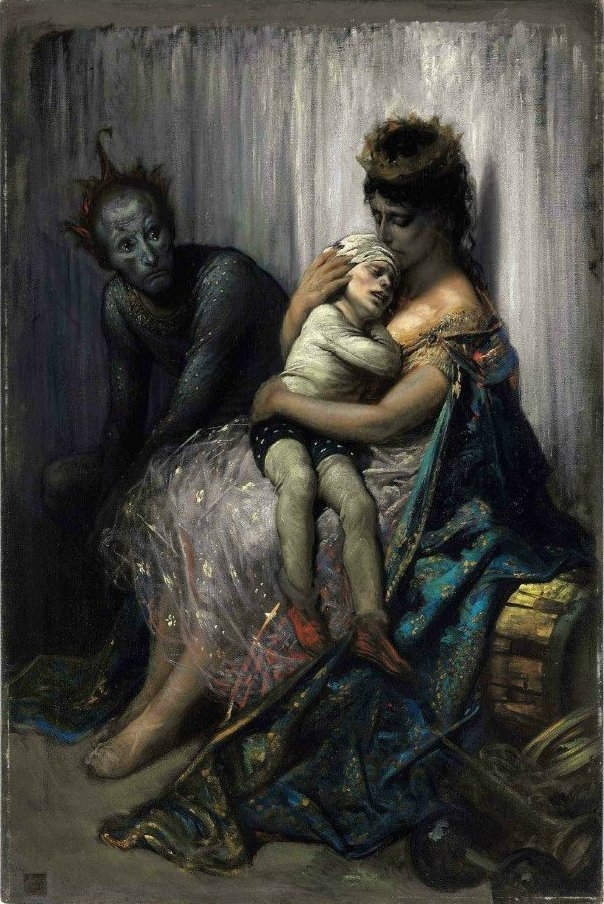
When Doré first painted "The Acrobats," he may have been projecting himself onto the dying child.
He had painted "Acrobat Family, Injured Child" first, in 1853 — just as he was turning twenty-one. He was constantly moving his hands to produce drawings when, at the same time, a commission arrived to illustrate the work of the poet George Gordon Byron. The excitement must have been real, but so, being human, must have been the accumulating fatigue and pressure. In that state, he may have been quietly nurturing, deep inside, a resentment toward adults — those who pushed him, young and still unsteady, purely for their own gain.
After "Acrobat Family, Injured Child," Doré returned to the subject of acrobats again and again over the nearly twenty years that followed, until "The Acrobats." In every painting, the figure bathed in the most light was always the boy. It is also telling that in the early work the child merely lies moaning in someone's arms, while in the later work blood drips freely. Resentment, by its nature, has no expiration date. Left unresolved, it tends only to grow.
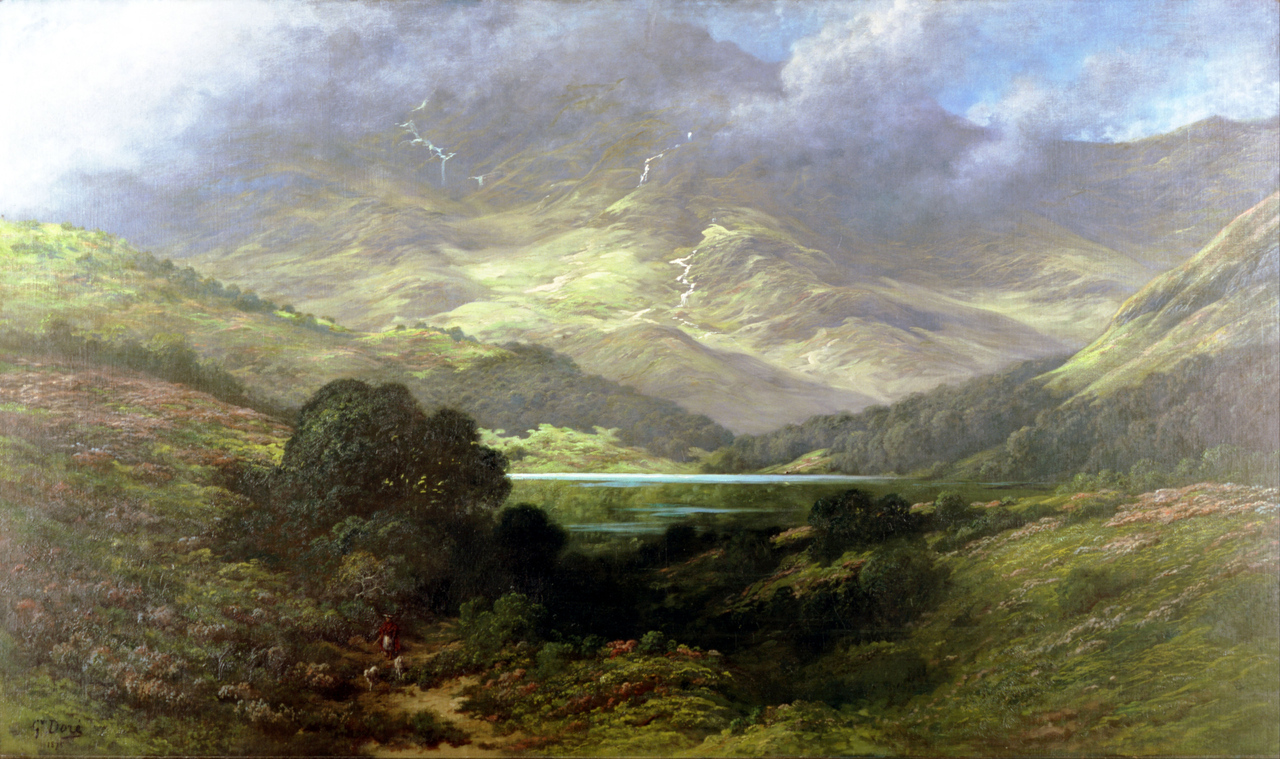
There are several other circumstances that suggest Doré identified with the acrobat boy.
According to art historian Gabriel P. Weisberg, Doré was himself skilled at acrobatics. The Musée d'Orsay also notes that he occasionally appeared in person at masquerade balls dressed as a pierrot.
Doré possessed many talents. He was dexterous and physically capable enough to put on a show before an audience. Beyond illustration and oil painting, he was also proficient in drawing, watercolor and even sculpture. His ability to complete commissions at speed made the work itself seem like a kind of feat. The fact that he took on illustration projects for texts as demanding as Dante Alighieri's "Divine Comedy" and John Milton's "Paradise Lost" suggests his intellectual range was considerable as well.
Yet having so many abilities was itself a problem. There were clearly those in the art world of the time who regarded him with suspicion — a misreading that he lacked the focus to commit to any single thing. There was also a tendency, regardless of his skill, to rank him several rungs lower simply because he had planted himself so deeply in commercial art — illustration. Doré dreamed of entering the mainstream, submitting to the Salon and others, but the results were generally unremarkable. He remained, for the most part, a peripheral figure — earning well, winning the Légion d'honneur before he was thirty, yet standing in the margins at many turns.
In that light, was the young acrobat not much the same? Extraordinary skill, and nothing more — everyone applauds, but there is nothing beyond the applause. Doré may have felt the two situations were not so different. That said, this remains interpretation rather than fact.
His feeling for boys and girls
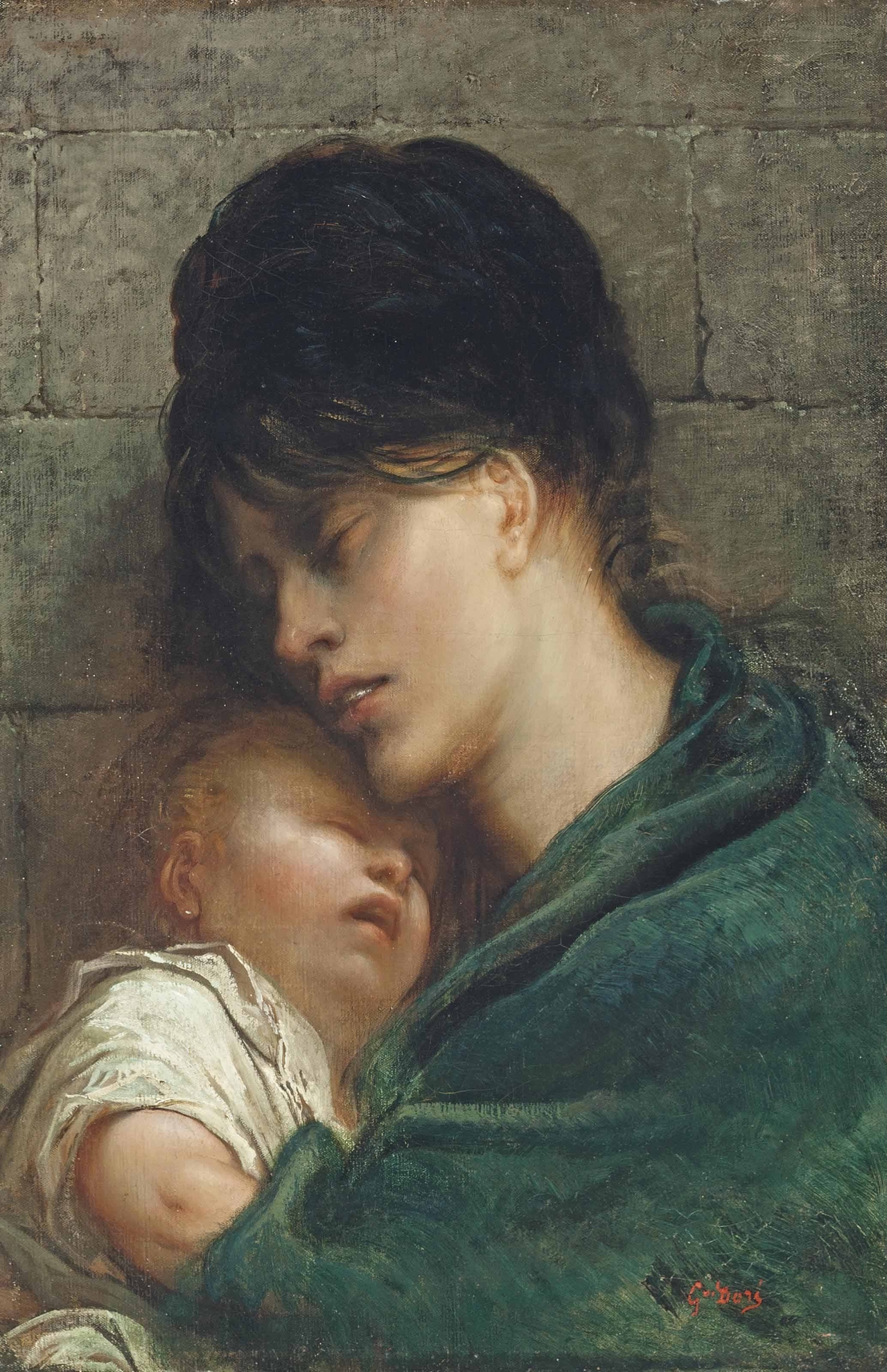
Doré had a subject that stayed with him for life.
Children — more precisely, boys and girls in sorrowful circumstances like the child in "The Acrobats." No matter how relentless the stream of commissions, no matter how many subjects he was asked to handle to satisfy his clients' tastes, he never let go of that thread.
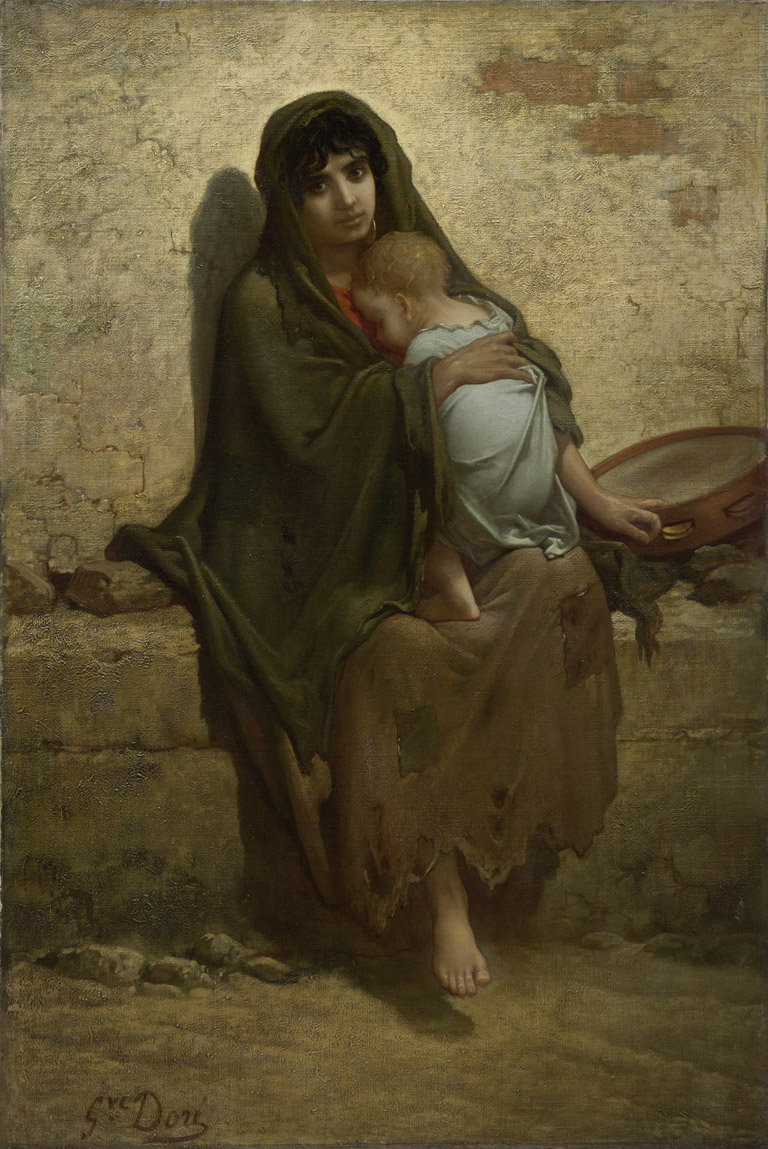
Did Doré feel compassion for those who were already meeting the world's indifference at such a young age?
Having himself approached drawing not as a hobby but as work from childhood — with money and contracts changing hands repeatedly — he must have encountered the harshness of society earlier than he would have wished. Doré was not poor in his youth, even if he entered the working world early. Yet in an era crowded with painters who had grown up in real estate dynasties, banking families and merchant households, who had followed a refined education and taken up the brush with a certain hauteur, few artists could have understood that sensibility as Doré could.
Painting a 'sorrowful beauty'
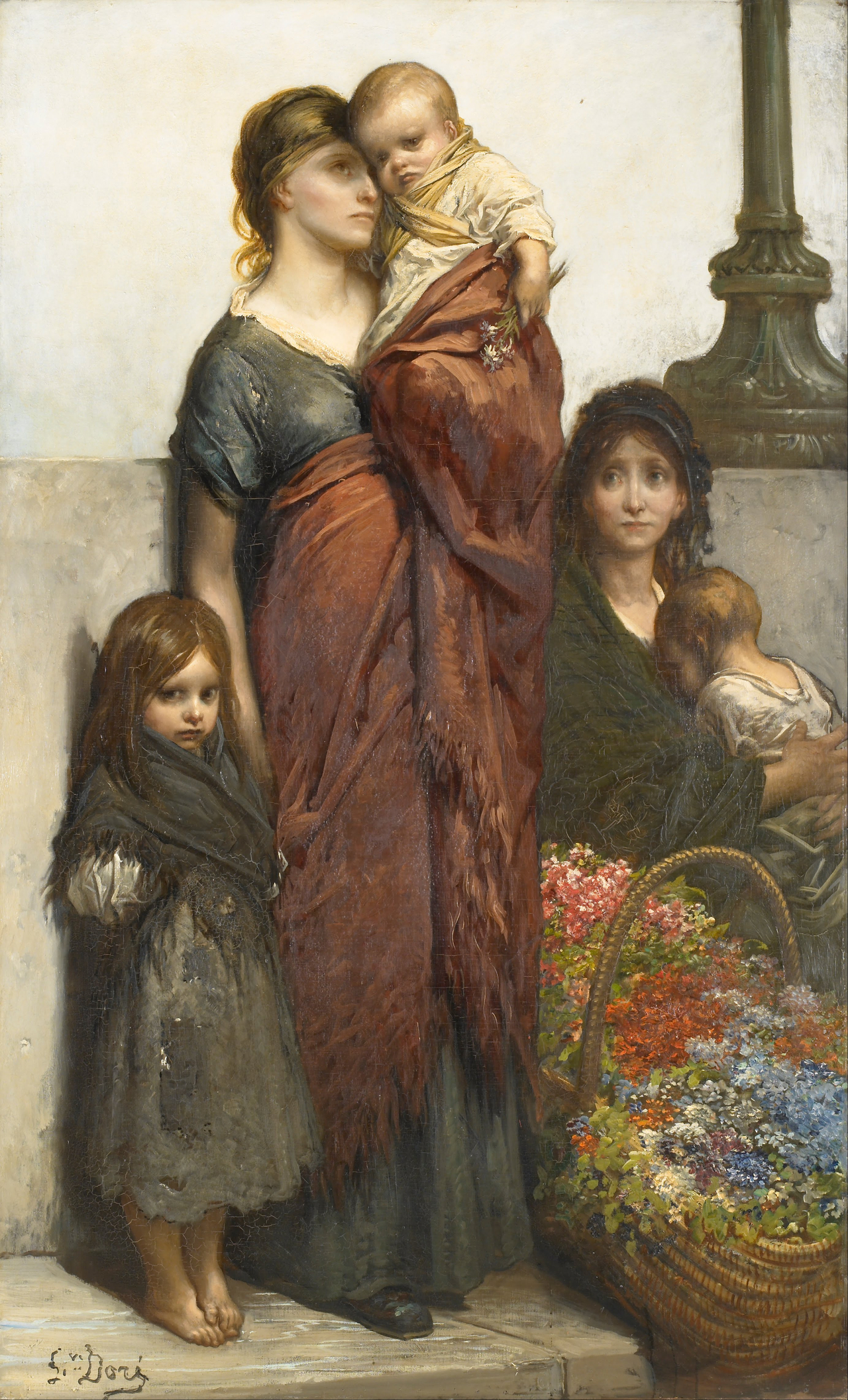
In that light, "London Flower Sellers" is another painting worth pausing over.
Two women stand in the street, each holding a child close. Their eyes are unfocused. They look worn down and in pain. In front of them sit flower baskets — clearly their means of earning a meal for the day.
Only the two children look out beyond the frame.
Their faces are set with effort. Cold and hunger twist their expressions. Yet they refuse to let the tears fall. In place of the adults, they hold the viewer's gaze with quiet resolve. The flowers in their small hands — they seem to have grown up fast, as if determined to sell even one more bloom. Among the worn scraps of cloth, only the flowers are full and vivid. That contrast makes the image all the more bitter. According to journalist Henry Mayhew's book "London Labour and the London Poor," written around 1861, the streets of London at the time were filled with flower sellers, many of them children who ran barefoot crying, "I am a poor little girl, sir, please buy my flowers" or "Lady, please pay for my violets." By all accounts, Doré saw in those scenes what he called a "sorrowful beauty."
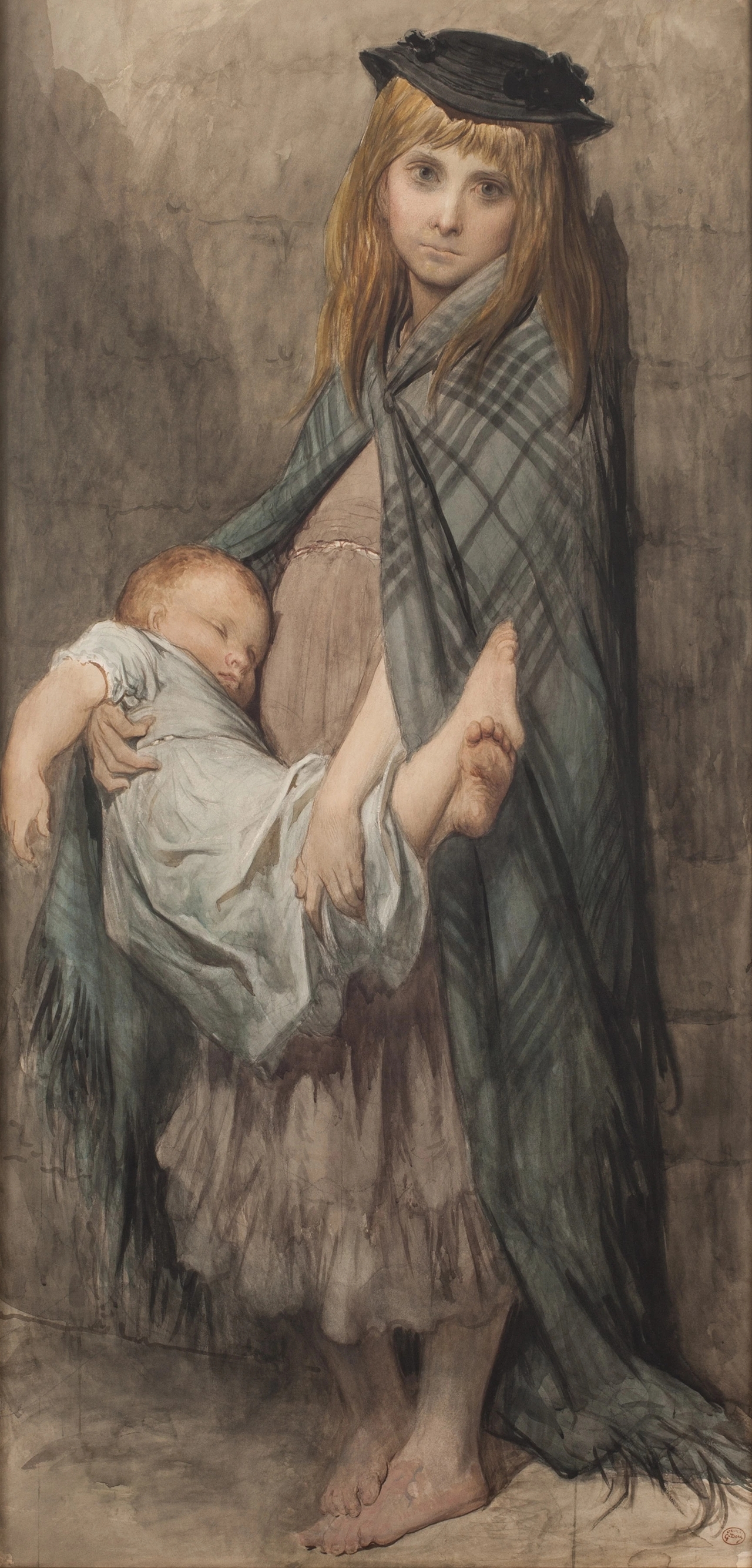
That Doré had a particular attachment to the image of the desolate child can also be sensed in "Poor Children of London."
A young girl holds an infant. Her hair is greasy, and the cloth draped over her shoulders looks as though it has been dragged through a dirt road. The girl's stomach — even accounting for the angle of her posture — protrudes noticeably, suggesting malnutrition, or perhaps another possibility altogether. The infant sleeps soundly despite an uncomfortable position that looks as though it might slip at any moment — deeply drowsy, or ill, or both at once. Yet the girl's eyes are wide open, looking out at the world beyond the canvas. What comes through is an unexpected, fierce vitality. She will survive. Or rather — this is how Doré painted her, perhaps out of a wish that she, too, would survive.
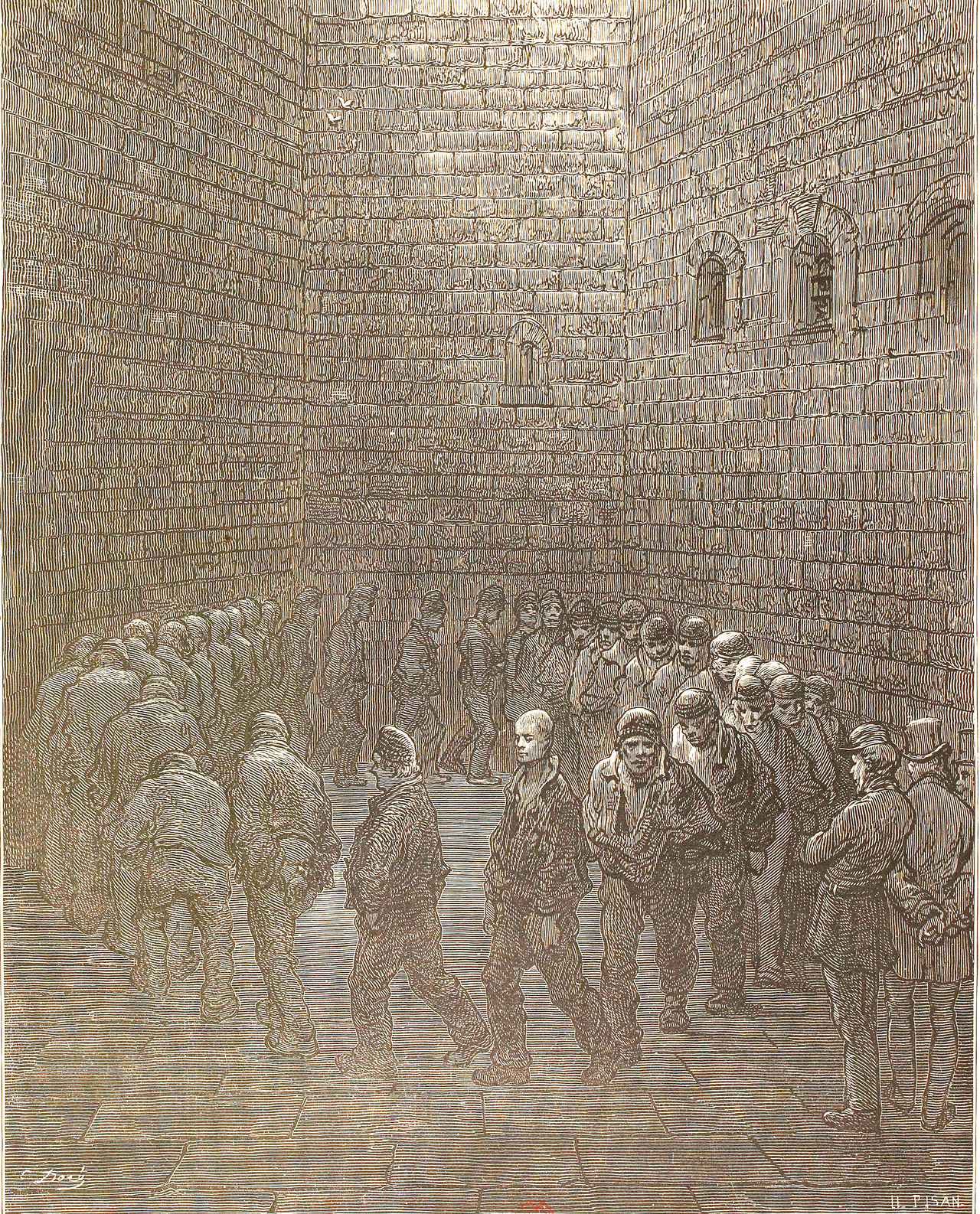
In 1869, before he painted either of those works, Doré received a proposal from writer and journalist Blanchard Jerrold.
Jerrold suggested they collaborate — "I will write and you will draw" — to produce a documentary record of scenes from across London. Doré spent at least three months a year in the city and toured its neighborhoods guided by plainclothes police officers. The result, published in 1872, was "London: A Pilgrimage," containing 180 of his engravings — the book that included "Exercise Yard at Newgate Prison," which would later become even more famous after Vincent van Gogh copied it.
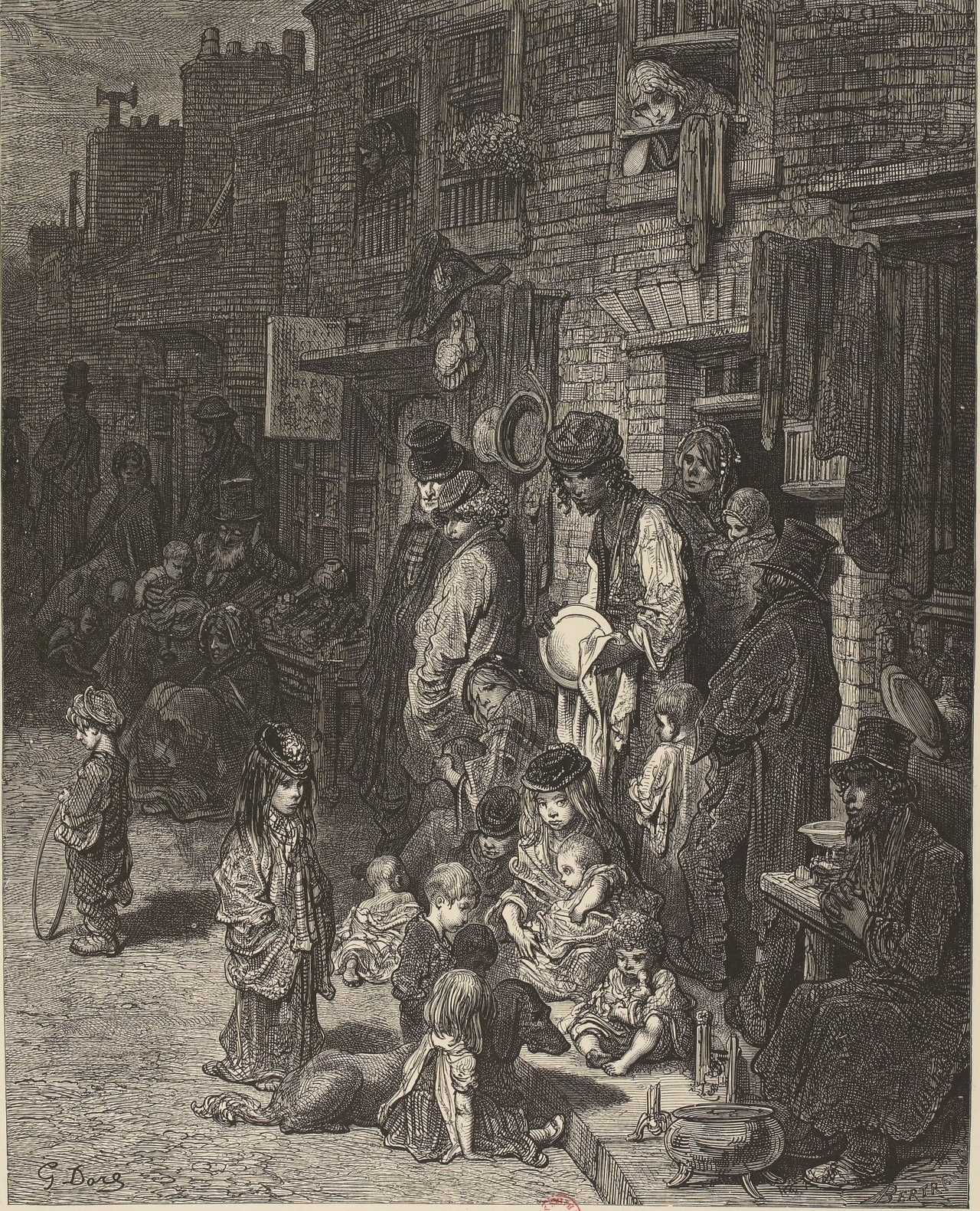
The book also included images depicting poverty in several parts of London.
Among them, Doré steadfastly included multiple scenes of children driven into the slums — works such as "Wentworth Street, Whitechapel." The canvases recorded with unflinching clarity the young lives exposed to society's cold winds. "Doré's pictures faithfully represent the most squalid and degraded aspects of the city," the influential journal "Westminster Review" wrote in an openly critical piece, suggesting he had deliberately included scenes that could have been passed over. The book was nonetheless a commercial success — selling beyond expectations despite a relatively high price. Doré continued to receive a steady stream of commissions from publishers and magazines in the years that followed.
Boundless art, boundless children
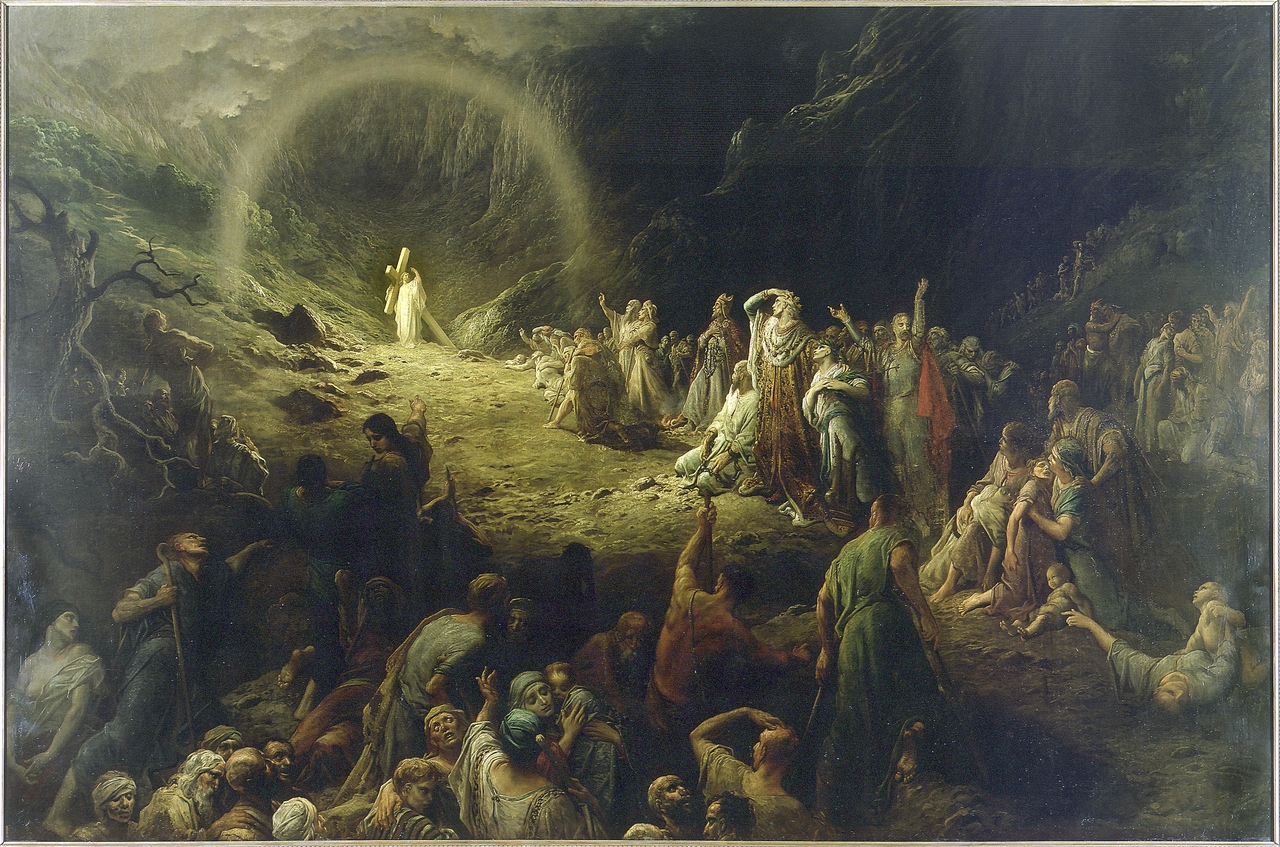
Come unto me, all ye that labour and are heavy laden.
— Matthew 11:28
People in wretched circumstances turn their faces toward Jesus Christ in the distance. On a steep hillside, along a parched dirt road, the crowd at last looks as though it can breathe. It is unusual for a religious painting to place the multitude so prominently in the foreground. And, as ever, they are there — infants. Cradled in arms, collapsed on the ground, yet pressing their palms to the earth and trying to rise, children appear throughout the front of the canvas. Amid the overwhelming task of rendering such a diverse assembly — men and women, royalty and beggars, knights and laborers — Doré did not leave them out.
This is the scene in which Christ, bearing the cross, beckons to those in their individual suffering: "I will give you rest."
Yes — children, too, carry their own burdens. Those who "labour and are heavy laden," those in need of rest — children belong in that company as a matter of course. Doré did not miss that. In 1883, Doré completed this painting, "The Valley of Tears," in the same year he died.
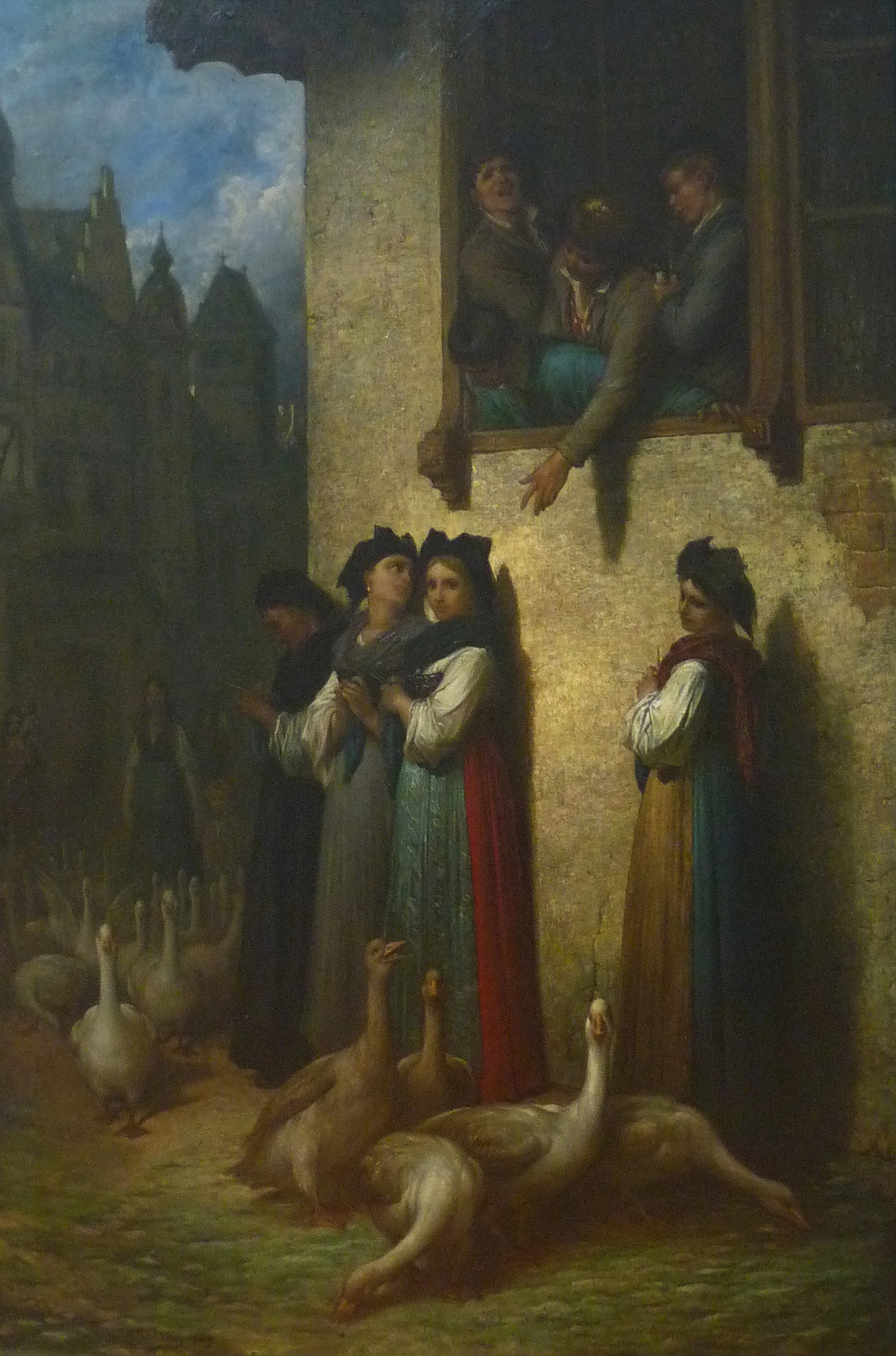
Doré lived the life of a painter beloved by the public.
He seems to have consistently hoped to achieve equal success as a fine artist beyond his commercial work, but he never managed results he could be satisfied with. On the commercial side there was no dispute; on the fine-art side, he was trailed by conflicting assessments — "a versatile genius" on one hand, "merely a fantasist" on the other. Many art critics of his own era were cold and unsparing toward him. He remained unmarried throughout his life. As noted earlier, in his final years he suffered seizures and depression, and after a brief illness he died of a heart attack at fifty-one. He was working right up to the end. The last project he had taken on was a series of illustrations for the complete works of William Shakespeare.
He was the art world's acrobat
Most people know Doré simply as the artist behind countless illustrations — for the "Divine Comedy" and "Paradise Lost," for "Don Quixote" and the Bible. This piece has tried to pull out and examine some of the threads that can slip past us when we think of him.
Doré was a painter who could handle enormous volume and exceptional quality across a vast range of subjects and techniques. In that sense, he was the art world's own acrobat — a man who spent his entire life performing feats, until he closed his eyes for the last time.
The world he laid out on paper is boundless.
And so are our children. Every child holds a boundless future in their hands — capable of anything, able to throw themselves at whatever they choose without restraint. In painting those children, Doré may have been hoping that they would hold on to something he himself had lost long ago. He never let children slip from his work, across so many subjects and so many styles. And in doing so, he kept something of the child alive in himself until the very end. That, too, is something wondrous — and worthy of admiration.
References
Doré, Gustave. "Doré's London: All 180 Illustrations from London, a Pilgrimage." Dover.
Afran, Eric. "Fantasy and Faith: The Art of Gustave Doré." Yale University Press.
Roosevelt, Blanche. "Life and Reminiscences of Gustave Doré." Cassell & Company.
yul@heraldcorp.com