Ministry of Science and ICT holds AI semiconductor industry forum
Cooperation with AMD, Nvidia and Intel reviewed
Government eyes proactive response to external uncertainties
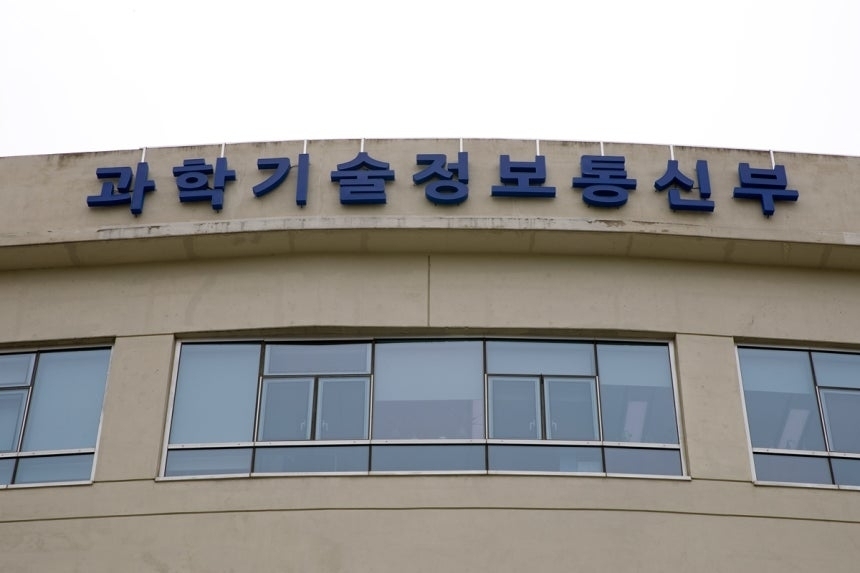
The South Korean government said Monday it will take preemptive steps to address external uncertainties — including the scandal surrounding former Nvidia CEO Jensen Huang, US data center regulations and a surge in semiconductor demand — aiming to minimize the impact on domestic industry by actively managing supply risks for key components and materials.
The Ministry of Science and ICT held an industry forum on domestic AI semiconductor issues Monday at SpaceShare Seoul Station 2 Center in Yongsan-gu, Seoul.
Twenty-four companies attended, including Korean units of AMD, Nvidia and Intel; NPU makers FuriosaAI, Rebellions, HyperAccel, DeepX and Mobilint; AI infrastructure firms Upstage, Padu, FriendliAI, Dinotisia and KTNF; and physical AI companies Realworld, XYZ and Sky Intelligence.
The forum was organized to review the results of recent cooperation between global big-tech firms and domestic AI chipmakers, as well as future plans, following a series of partnership announcements earlier this month. AMD signed MOUs with FuriosaAI and MangoBoost to build open heterogeneous AI infrastructure, while Nvidia signed MOUs with SK Telecom and Rebellions to develop NVLink Fusion-based AI infrastructure. Intel launched the "K-AI Full-Stack Alliance" with 23 domestic companies.
Participants also discussed government-level responses to shifts in the global AI industry environment, including supply instability for key components and materials such as memory chips and substrates, and policy changes in major countries.
The rapid expansion of AI data centers has driven a sharp rise in demand for HBM and low-power DRAM (LPDDR), fueling concerns over supply shortages and price increases. Startups and small fabless firms in particular are struggling to secure stable component supplies and manage costs. Changes in US AI and data center policy, along with shifting investment strategies among global tech giants, are also drawing attention as major variables that could affect domestic companies.
In response, participating companies shared the status and plans for cooperation across areas including physical AI, heterogeneous AI infrastructure, and open standards and software. They also raised the need for stronger inter-company collaboration and government support to generate concrete outcomes such as joint demonstrations and commercialization.
Specifically, participants called for closer ties between domestic memory and component makers and AI chipmakers to address supply instability for key parts and materials. There was broad agreement on the need to improve information sharing on supply and demand — particularly to help startups and small fabless firms with limited purchasing volumes secure stable component supplies — and to build a supply chain foundation that allows domestic companies to grow together.
Participants also raised the need to closely monitor AI and data center policies in the United States and other major countries, as well as investment trends among global tech giants. They called for information sharing and policy support to prepare for uncertainty stemming from shifts in the external policy and investment environment, while emphasizing the need for proactive measures to leverage those changes as opportunities to build domestic AI data centers and expand overseas sales of Korean-made AI chips.
"Domestic AI chipmakers face uncertainty both at home and abroad due to supply instability for key components and materials, as well as policy changes following the US midterm elections," said Lee Do-gyu, director general for information and communications policy at the Ministry of Science and ICT. "We need to closely examine how these changes will affect domestic AI chipmakers and respond proactively."
ko@heraldcorp.com