Founder cleared on appeal after first acquittal
Three and a half years of legal uncertainty hampered Kakao's AI push
Second acquittal fuels spinoff plans and hopes for renewed leadership
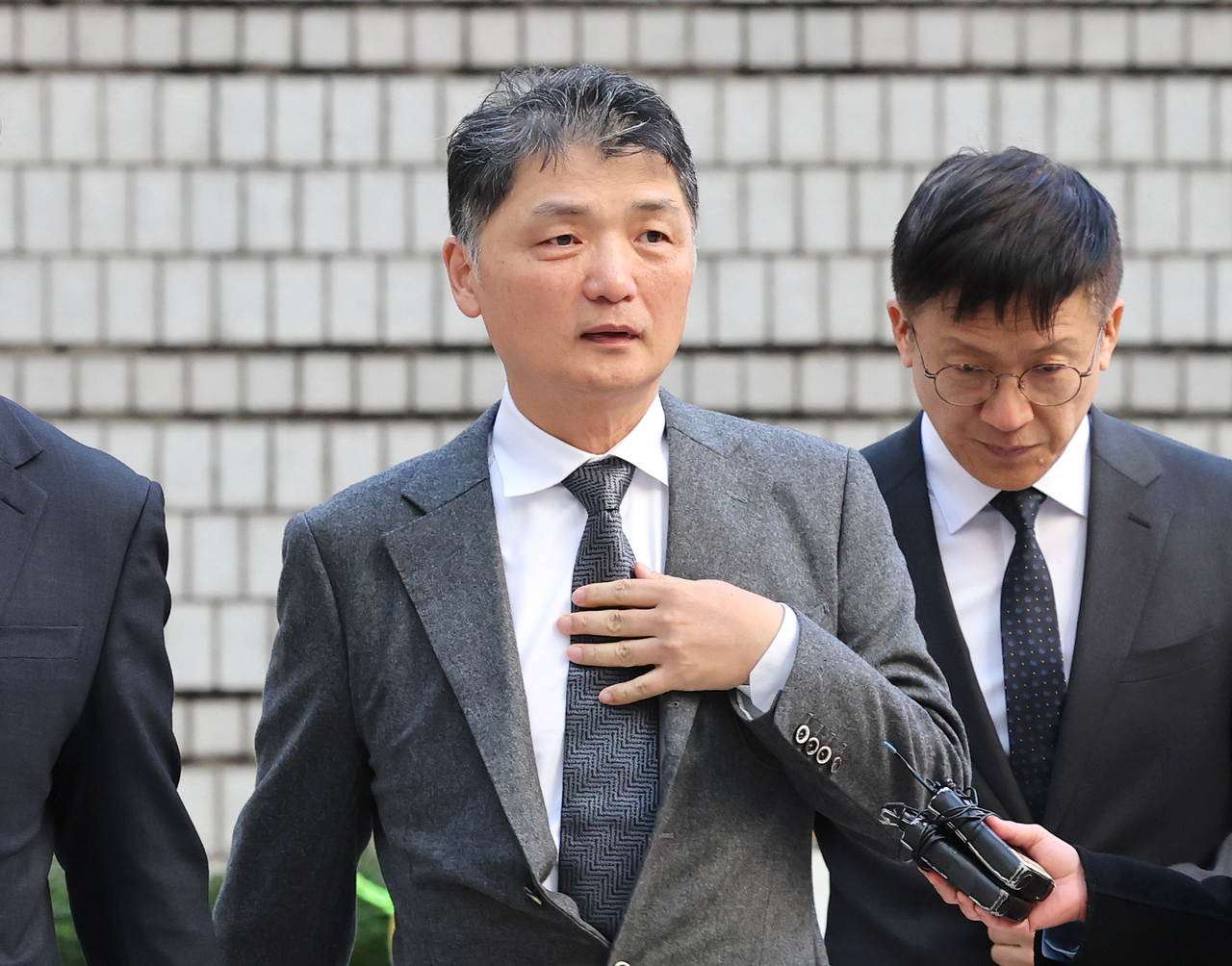
With Kakao founder and Future Initiative Center head Kim Beom-su acquitted for the second time — first at trial and now on appeal — calls are growing for the company to finally put more than three years of legal uncertainty behind it.
Industry observers say Kakao has spent what amounts to "three lost years" paralyzed by prolonged legal risk even as AI upended the global technology landscape. There is a growing sense of urgency that if the courtroom battles drag on despite two consecutive acquittals, Kakao risks not merely missing a critical window in the AI race but threatening its very survival.
Particularly with Kakao targeting February next year to complete a corporate spinoff it has likened to a second founding, restoring Kim's leadership has emerged as the most pressing task the company faces.
The consensus in the industry is that Kakao must now shed the drain of legal risk and focus its energy on recovering competitiveness through AI investment and new business expansion.
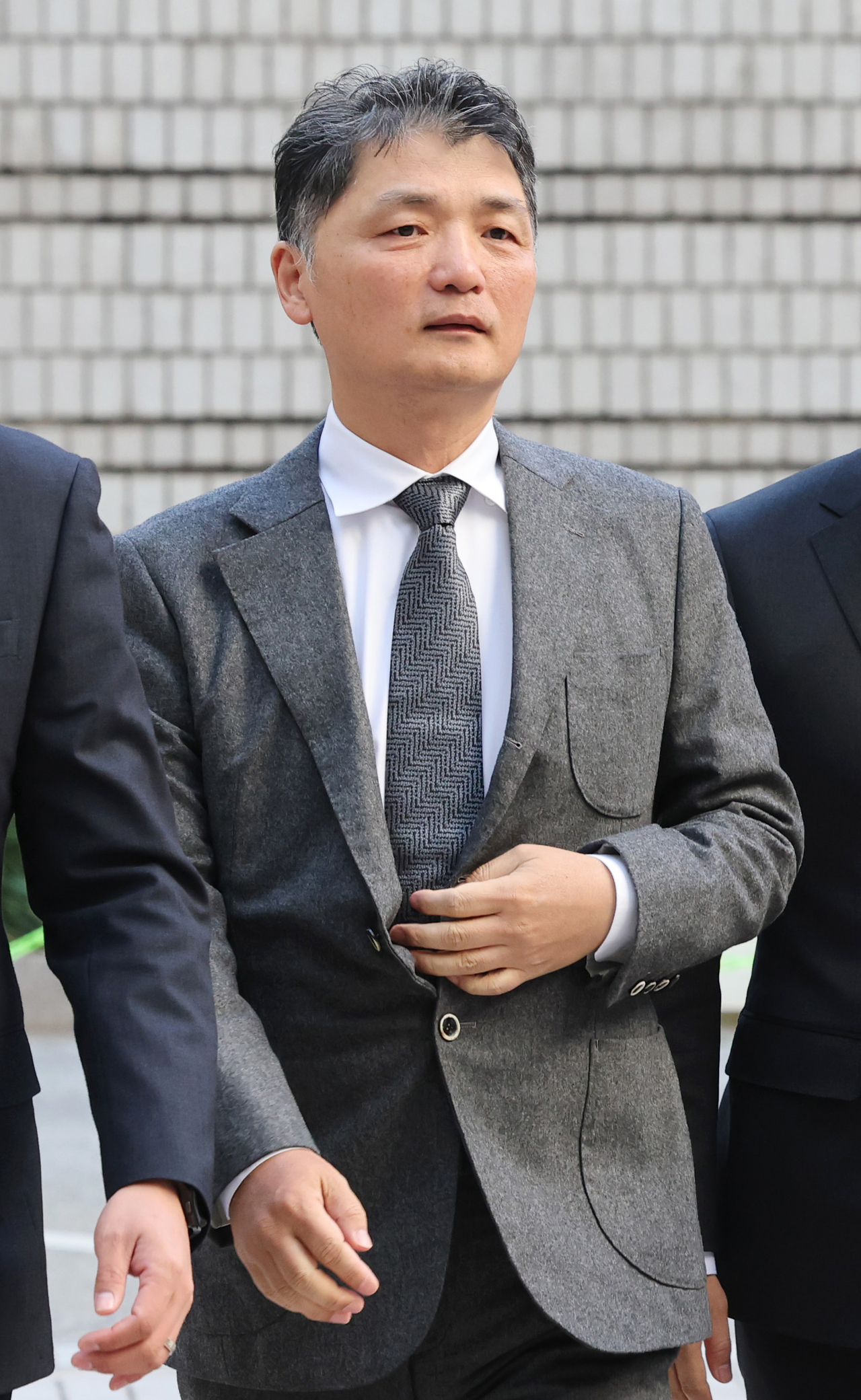
Kakao's legal troubles began in April 2023, when the Financial Supervisory Service and prosecutors launched an investigation into allegations that the company had manipulated SM Entertainment's share price to obstruct a rival tender offer.
Over the following three and a half years, Kakao and Kakao Entertainment, along with Kim and other senior executives, were subjected to searches and seizures, criminal investigations, indictments, detention and trials — leaving the company in a prolonged leadership vacuum.
During that period, an AI-driven upheaval swept through the global technology industry and the race for dominance intensified. While major global technology companies poured money into AI through large-scale investment and mergers and acquisitions, Kakao found itself unable to make bold bets on the future because of its founder's legal exposure. That is widely seen as the reason Kakao struggled to respond during what many consider a critical window in the AI competition.
"For the past three to four years, Kakao was effectively unable to do anything because of the legal risk," said Jeon Seong-min, a professor of business administration at Gachon University. "Kakao had been preparing AI projects and investments, but the absence of the founder made company-wide decision-making extremely difficult."
The sweeping restructuring Kakao is pursuing through its planned spinoff is seen as a direct response to that sense of crisis. The move reflects an urgent recognition that a single, sprawling corporate structure cannot keep pace with the speed of the AI era.
Kakao is working toward completing a spinoff into two entities — Kakao AI and Kakao X — by Feb. 1 next year. Kakao AI will handle AI, advertising and commerce centered on KakaoTalk, while Kakao X will oversee major subsidiaries and investment operations spanning content, mobility and tech finance.
Over the past two years, Kakao has already streamlined its portfolio by divesting control of non-core subsidiaries including Kakao Healthcare, Kakao Games and AXZ, formerly Daum. The spinoff is intended to redesign the group's structure for a new phase of growth.
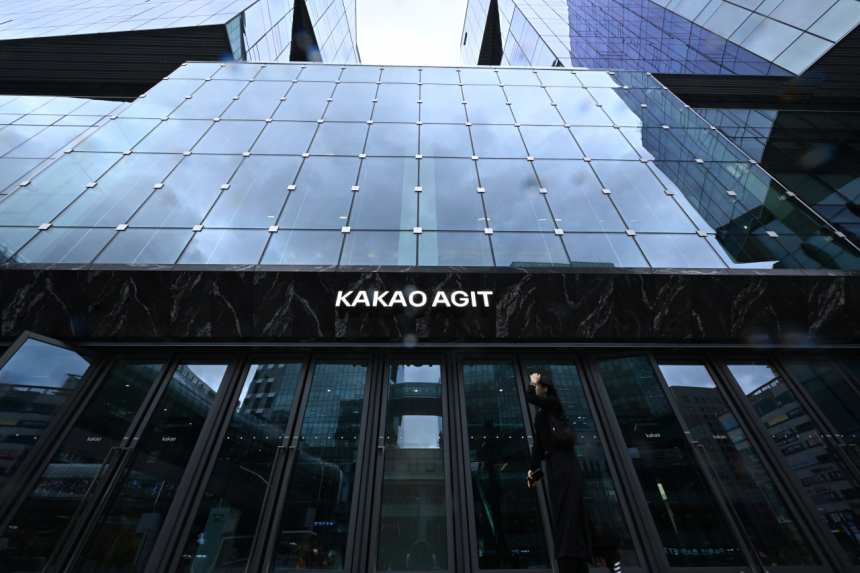
The appellate acquittal is seen as a watershed moment that could fully restart Kakao's stalled growth engine.
The immediate expectation is that the ruling will give fresh momentum to the spinoff. With an extraordinary shareholders' meeting set for Jan. 15 next year, industry observers say the verdict can dispel the market uncertainty and negative sentiment that had surrounded the governance overhaul.
Freed from legal constraints, Kim's instinct for innovation is also expected to reassert itself. With room to maneuver now significantly wider following acquittals at both levels of court, faster decision-making on large-scale AI investment and mergers and acquisitions is anticipated.
There is also a view that Kim's leadership in innovation and entrepreneurship will combine with the track records of the CEOs running Kakao's major subsidiaries to generate synergies across the group. Kim Do-young of Kakao X, Yoon Ho-young of Kakao Bank, Ryu Geung-seon of Kakao Mobility and Shin Won-geun of Kakao Pay are all regarded as executives who have chosen challenge over stability.
"With the founder's distinctive startup entrepreneurial spirit, he will contribute to renewing the group," an industry official said. "If that is combined with the challenger DNA of subsidiary CEOs who have proven their business models in the field, Kakao can achieve a genuine second leap forward."
A recovery in external credibility is also expected to give new businesses a boost. Analysts say uncertainty has lifted across a range of ventures — including stablecoins, virtual asset ecosystem development, physical AI and robotics — giving the company the strong momentum it needs to push ahead in regulation-sensitive areas.
"When the founder returns to management, the overall business will find its direction and future cash flows will grow," said Kang Hyung-gu, a professor in the business school at Hanyang University. "Corporate value is influenced by future cash flows and uncertainty, and with the legal risk easing, uncertainty falls — so an improvement in Kakao's corporate value is inevitable."
Gachon University's Jeon said the acquittal would give Kakao the opportunity to invest aggressively, expand its influence in the startup ecosystem and use the moment as a springboard for growth.
Lee Seong-yeop, a professor at Korea University's Graduate School of Technology Management, said Kim is expected to demonstrate the ability to articulate a future vision and bring coordination and integration to the group. "Rebuilding a governance structure like the CA Council would also give Kakao's growth a real boost," Lee said.
sjpark@heraldcorp.com
chami@heraldcorp.com