Waste treatment facilities moved underground; above-ground space transformed into community cultural complex
Biogas from food waste cuts energy costs by about 1 billion won a year; regional waste cooperation network established with 10 neighboring municipalities
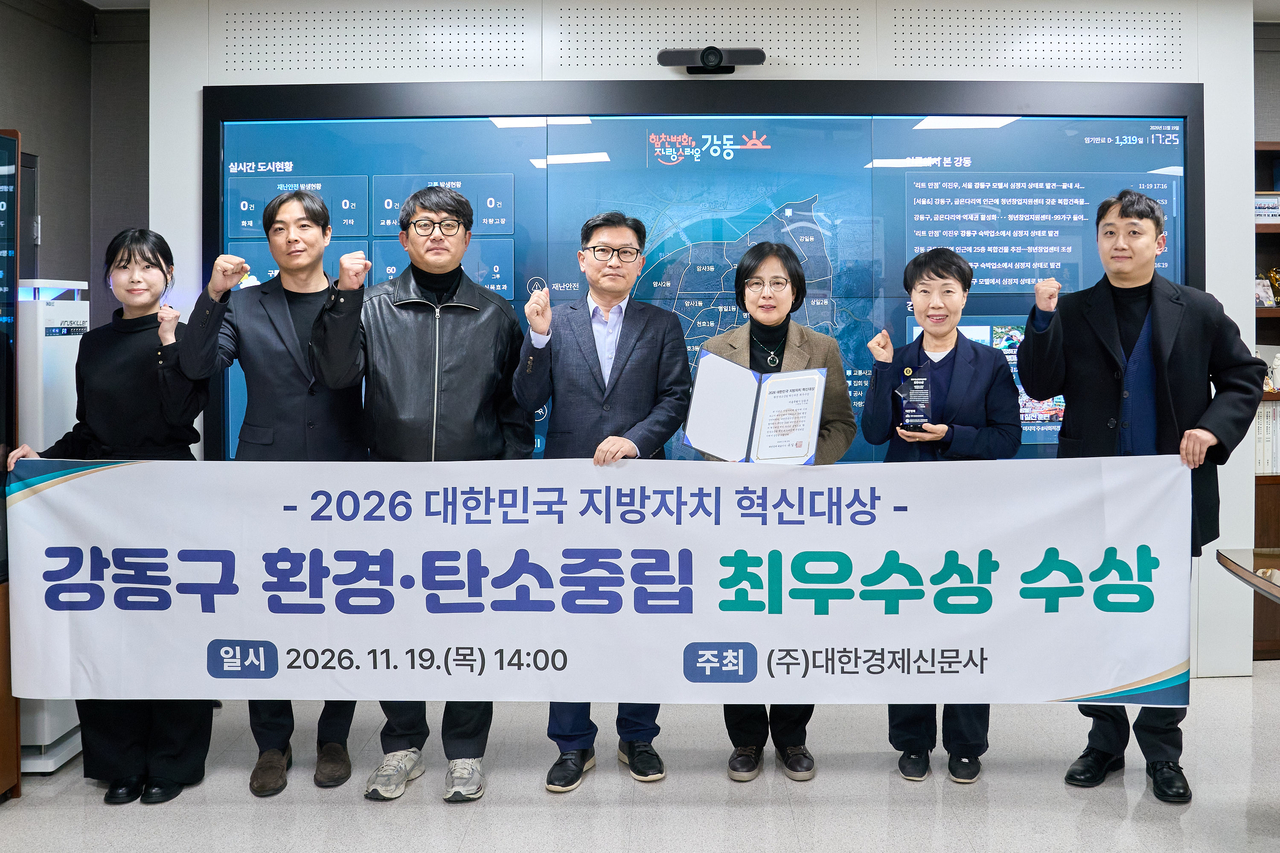
Seoul's Gangdong-gu has won the top prize in the environment and carbon neutrality category at the 2026 Korea Local Government Innovation Awards, in recognition of its management of the Gangdong Resource Circulation Center.
At the awards ceremony held Thursday, the district was honored for a series of administrative innovations: relocating waste treatment facilities underground, creating a resident-friendly cultural complex above ground, converting waste into energy, and building a regional cooperation network with neighboring municipalities. A total of 65 institutions from across the country took part in this year's awards.
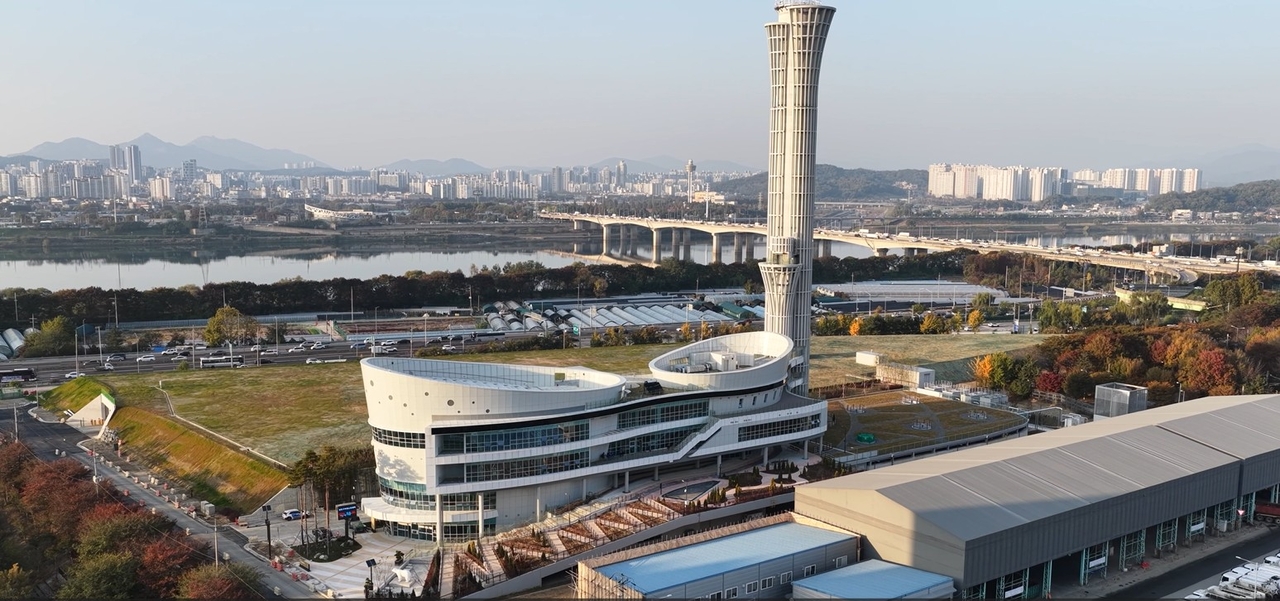
The Gangdong Resource Circulation Center integrates food waste processing, recyclables sorting, and household waste compaction and transfer facilities in a single underground complex. The center has introduced automated monitoring and control systems along with high-performance odor capture and deodorization equipment, significantly reducing the odor, noise and visual blight that have long plagued waste treatment facilities and improving the surrounding living environment.
The above-ground space has been transformed into a community cultural complex. A performance hall, rooftop garden, observation deck, children's playground and cafeteria have given the site a new identity as a place for rest and culture, shedding its image as a waste facility. A large-scale sports park is also under development, with completion targeted for the second half of 2027.
The center has also earned recognition for its eco-friendly design and accessibility, receiving the top Green Building Certification (Green Grade 1) and the highest rating under the Barrier-Free Living Environment standard.
The economic benefits are equally notable. Biogas generated during food waste processing is used as fuel for facility operations, cutting energy costs by about 1 billion won ($751,000) a year. The center also sells byproducts — including single-ingredient animal feed and waste cooking oil recovered from food waste — generating additional revenue and establishing a resource circulation system that converts waste into both energy and economic value.
Gangdong-gu has built a cooperation framework with 10 neighboring municipalities to secure a stable foundation for food waste processing. The district's success in resolving individual municipalities' waste management challenges through regional collaboration — creating a model of inter-local mutual benefit and sustainable resource circulation — was also cited as a key achievement behind the award.
"This award reflects our efforts to transform a facility that residents once shunned into a space they can share, and to realize resource circulation and regional cooperation," Gangdong-gu District Mayor Lee Su-hee said. "We will continue to operate the resource circulation center reliably and pursue environment and carbon neutrality policies that residents can feel in their daily lives."
seouldream01@heraldcorp.com