Park Hun-jung's Tristes Tropiques explores the cycle of violence
Kim Myung-min returns to the screen after seven years
Film opens Wednesday after pre-sales in 93 countries
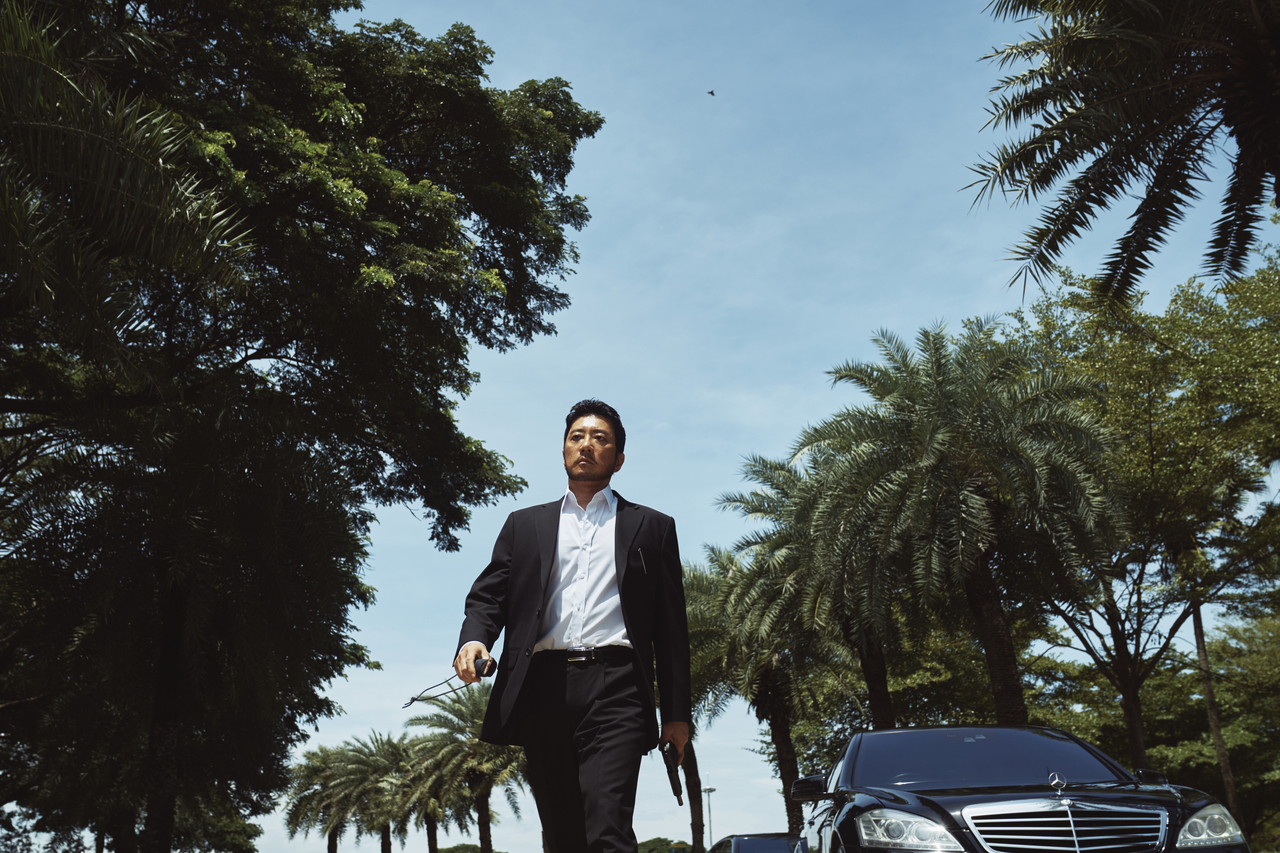
The elevator was hell. Blades flashed in an instant, blood and sweat mingling as the two men inside fought for their lives. They barely cut down their betrayers, offering their own flesh to do it — but the blood pooling around them made clear their end was near. When the doors finally opened, dozens of gun barrels trained on the two men who had just turned the elevator into a battlefield. That is the world of director Park Hun-jung's new film, Tristes Tropiques.
"I believe violence is human nature," Park said. "To suppress that nature, humans create education, make laws and build institutions."
Park, who has carved a reputation for brutality in Korean genre cinema — from the knife fights of "New World" (2013) to the blood-soaked girl of "The Witch" (2018) — turns this time to a tropical jungle where abandoned children are raised as killers. He has set aside the label of "Park Hun-jung-style action" that has long followed him, replacing it with a single, starker word: violence.
Speaking at a press preview held at CGV Yongsan iPark Mall in Yongsan-gu, Seoul, Park said violence in his films is "mostly the final destination of extreme conflict resolution." He added that for this film in particular, "I wanted it to read as violence rather than action, and I gave that direction on set as well."
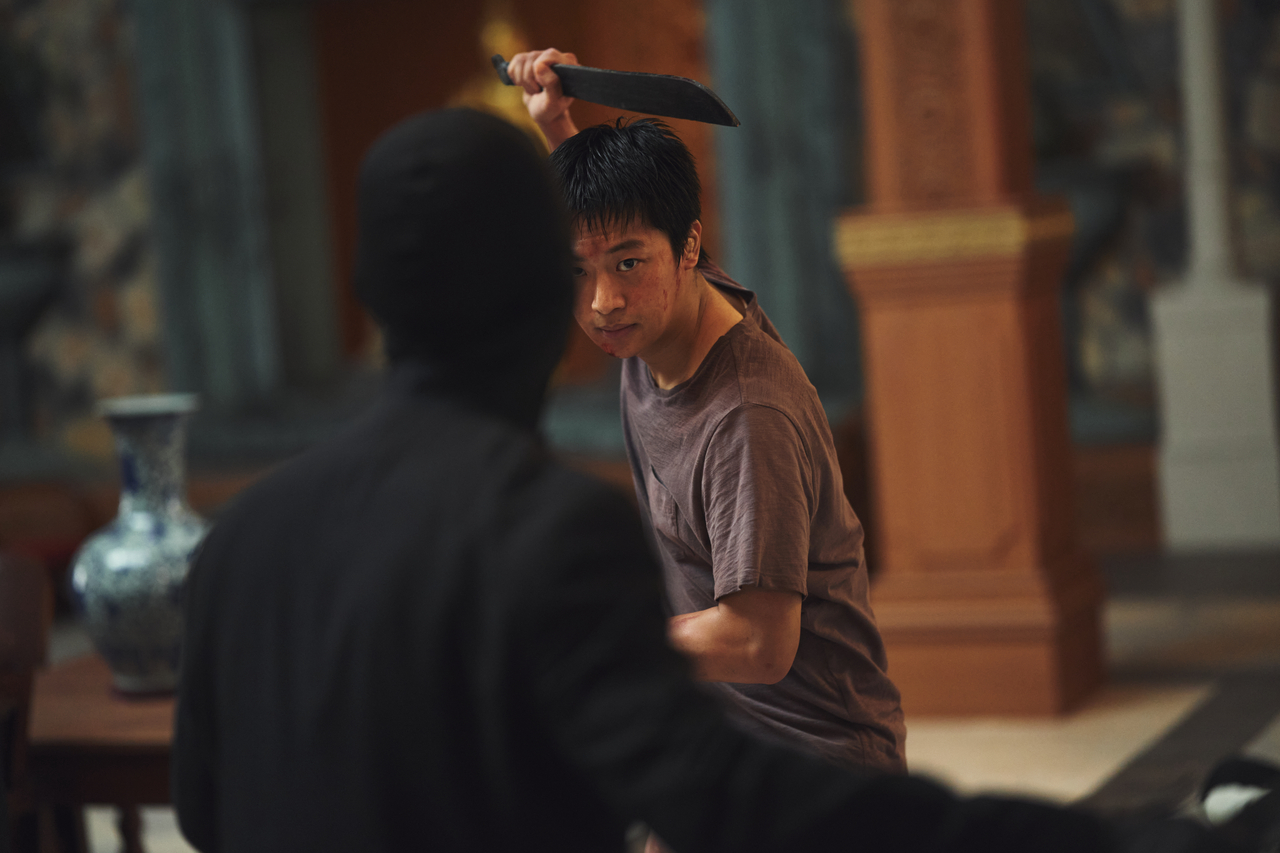
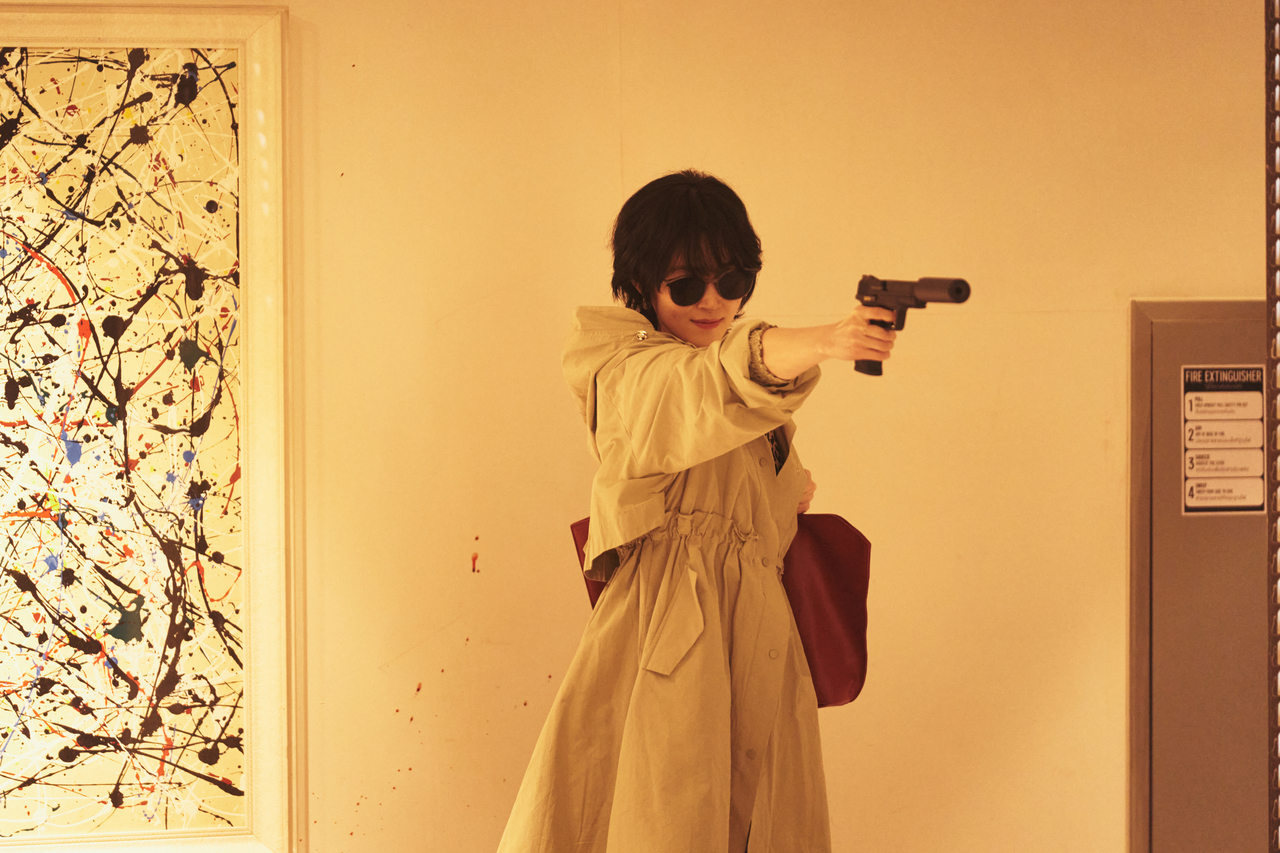
Tristes Tropiques, opening Wednesday, follows the members of a killer organization of the same name after the death of their master, Sabu (Kim Myung-min). Raised as brothers within the group, the members begin to suspect one another and embark on a bloody cycle of revenge. The story centers on Lu (Lee Shin-young), the youngest, who is deaf and mute; Jojo (Park Yu-rim), who follows Sabu with absolute loyalty; and Jang (Park Hae-su), the eldest of the group. Taiwanese actors Lin Bai-hong, Chen Yi-wen and Wang Bai-jie also join the cast. Director Park, Kim Myung-min and Park Yu-rim attended the press event; Lee Shin-young was absent, currently serving in the Marine Corps.
Tristes Tropiques had its world premiere in the Orbita section of the Sitges International Fantastic Film Festival in Spain in October last year. It went on to win the Silver Raven at the Brussels International Fantastic Film Festival in Belgium in April and the Nouveau Genre Grand Prix — the top prize in the international competition — at the Étrange Festival in France in September, building an international profile well before its domestic release. The film has also been pre-sold to 93 countries, including markets in North America, France, Germany and Taiwan.
Law and institutions as a check on human nature
"Throughout human history, the strongest person always rose to lead the group, and that process was always decided by violence."
Park's view of violence is rooted in the arc of human history. Stronger groups, he argues, have always sought to suppress or annihilate weaker ones through force. Violence, in his definition, is "an extreme method of resolving conflict." He sees diplomacy between nations, the establishment of laws within a country, and teaching children from an early age that certain things are wrong as all serving the same purpose — "devices to avoid going to extremes."
The actors who embody that violence shaped their performances around the visual aesthetic Park sought to create. Kim Myung-min, who plays Sabu, recalled that Park told him "Sabu's action had to be elegant, with clean lines, and at the same time expressionless — no emotion showing through." The hardest part of the action sequences, Kim said, was "having to pretend I wasn't tired at all, even when I was completely out of breath." Returning to the screen for the first time in seven years — reuniting with Park after "V.I.P." (2017) — Kim joined the shoot late and continued training with action director Kim Jeong-min at their Bangkok accommodation even on days without filming.
International critics have placed the film's violence within the lineage of Hong Kong noir. Christoph Petersen of the German film outlet Filmstarts titled his review "There Is No Room for Doves," describing the film as pushing the Hong Kong-style gunplay noir that director John Woo brought to the world with "A Better Tomorrow" and "The Killer" "to its logical conclusion." Petersen wrote that where loyalty, honor and brotherhood once stood, only "cold nihilism" remains, and that while the shootout sequences are meticulously staged, "there is nothing beautiful left." He gave the film four out of five stars.
A savagery worse than the jungle
Park described Tristes Tropiques as "a story I have carried for a long time." The title was originally attached to "The Gangster, the Cop, the Devil," which opened in 2023, during its development phase. At a production press conference for that film in May of that year, Park explained: "At first it was a heavy, sad film, so I called it Tristes Tropiques — but as we shot it, it stopped being sad, so I couldn't keep the title." The story started dark and heavy, but as filming and editing brought the characters vividly to life and the film brightened, it shed the name. Three years later, Park picked it back up.
What Park first envisioned was a simple jungle governed only by the law of the jungle. "From a human perspective, it's a world of savagery," he said, adding that he imagined "a story about people who survived there going to the city, only to be destroyed by a savagery even worse than the jungle." As the story took shape, he said, "the cycle of violence — the distrust between an older generation and a new one — layered itself on top."
For Kim Myung-min, that cycle of violence was written into Sabu's face. "When I first read the script I found it quiet," Kim said, "but the more I read it, the more I saw that every character had lived a cruel life from birth." Kim said he imagined that Sabu, "born in the jungle and raised knowing only the law of survival and the logic of power, must have seen himself reflected in the abandoned children he took in — children in exactly the same position he had once been in." Kim added: "I felt sad throughout the entire script."
Park calibrated the film's overall tone and action to what he called "modern wuxia." For Lu, the deaf-mute character, he borrowed the archetype of the blind swordsman from classic martial arts films. "Because Lu is different from ordinary people, the setting is that other senses developed to an extreme degree in order to survive in the jungle," Park explained. "Lu reads an opponent's intentions and movements in advance through the vibrations and tremors in the air." The script originally contained a passage spelling out this premise, but Park decided to cut it, judging that today's audiences — familiar with wuxia and superhero conventions — would not need the explanation.
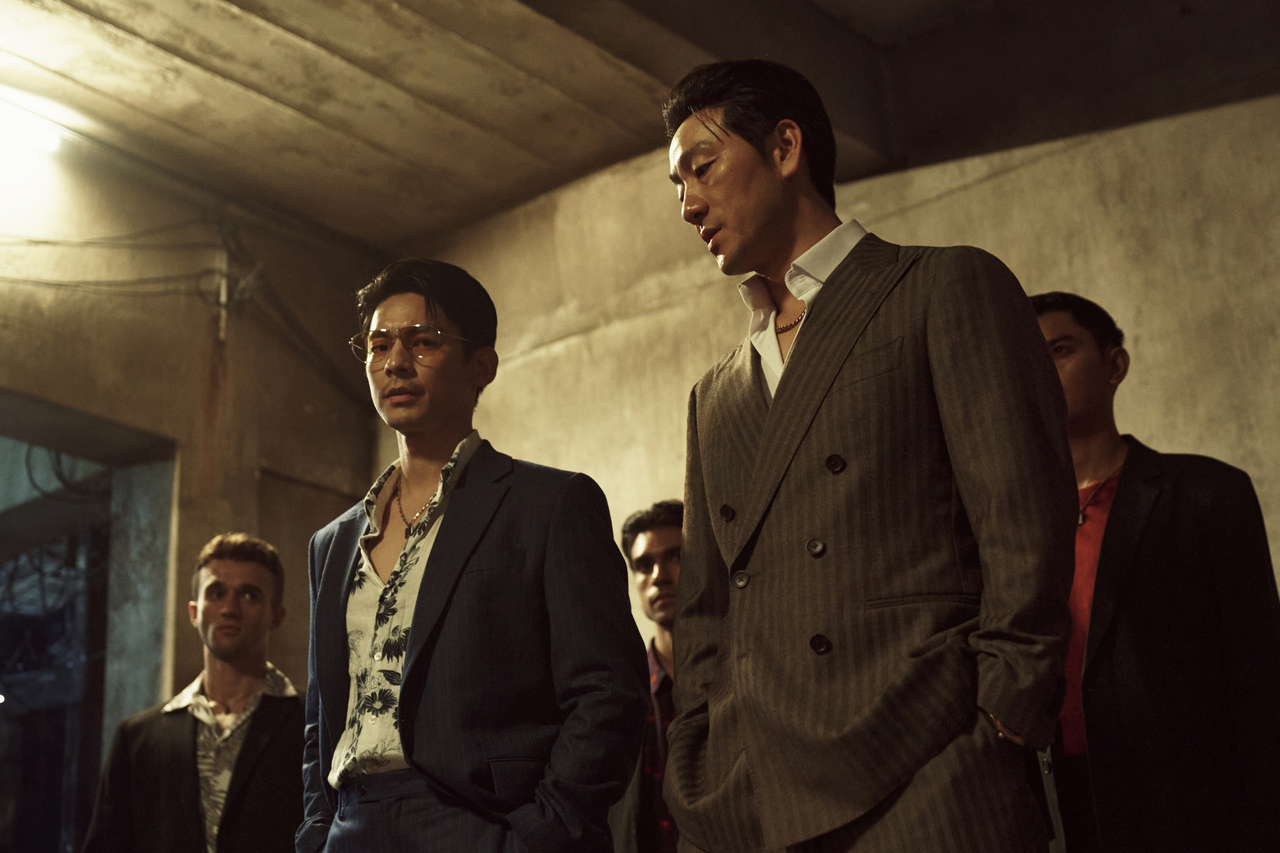
The film features a range of languages: characters speak Korean, Mandarin, English, Japanese, Thai and sign language. It is the first time Park has worked with multilingualism in a film. He set the story in a tropical city deliberately left unidentified — a multinational space belonging to no specific country. "Sabu is from an ethnic minority that cannot be pinned to any one identity, and he took in children of various nationalities," Park said. He added that while Korean, Chinese, Hong Kong and American cinema are all distinct, "film is ultimately the same thing," and that he had long wanted to make "a drama series told through different languages."
Stripped-back narrative, nourished by Hong Kong cinema
Much of the characters' backstories and childhood histories were cut during filming and editing. Park said the decision was not that the explanations were unnecessary, but that "after thinking it over objectively, I worried that including them would make the film drag and feel dull."
What fills the gaps left by those omitted backstories is emotion. Park wanted audiences to feel something in the places where narrative is thin. The film frequently uses frames that cut abruptly and images that bleed into afterimages. "I wanted to show chaotic situations and a character's inner state through rough, fragmented, disorienting visuals," Park said. "Hong Kong films of the past are what my films draw nourishment from, so a great deal of that will seep through without my even realizing it." The face he had in mind when conceiving Jojo was that of Hong Kong actor Brigitte Lin.
Étrange Festival programmer Marc Trounevent similarly noted that the film evokes "the golden age of Hong Kong cinema from the 1980s and '90s, with its stylized action, raw visceral energy and deep melancholy colliding violently." On the other side, Andrew Mack of the American film outlet Screen Anarchy, writing after a screening at Canada's Fantasia International Film Festival in July, titled his review "Lots of Blood, Little Reward," arguing that the film's extreme stylistic choices overwhelm its characters and story.
Park acknowledged the risks. "In this film I tried many things I was attempting for the first time, things I had wanted to do," he said. "Some parts may feel excessive, and some parts may feel lacking because I put so much energy into others." He then offered a tip for viewers.
"If you focus on Lu's narration, you'll find it even more rewarding."
shee@heraldcorp.com