120-degree V6 twin-turbo engine with no hybrid system
296 Challenge Stradale produces 670 hp; 296 Challenge Evo delivers 700 hp
Both models revealed at Ferrari Finali Mondiali
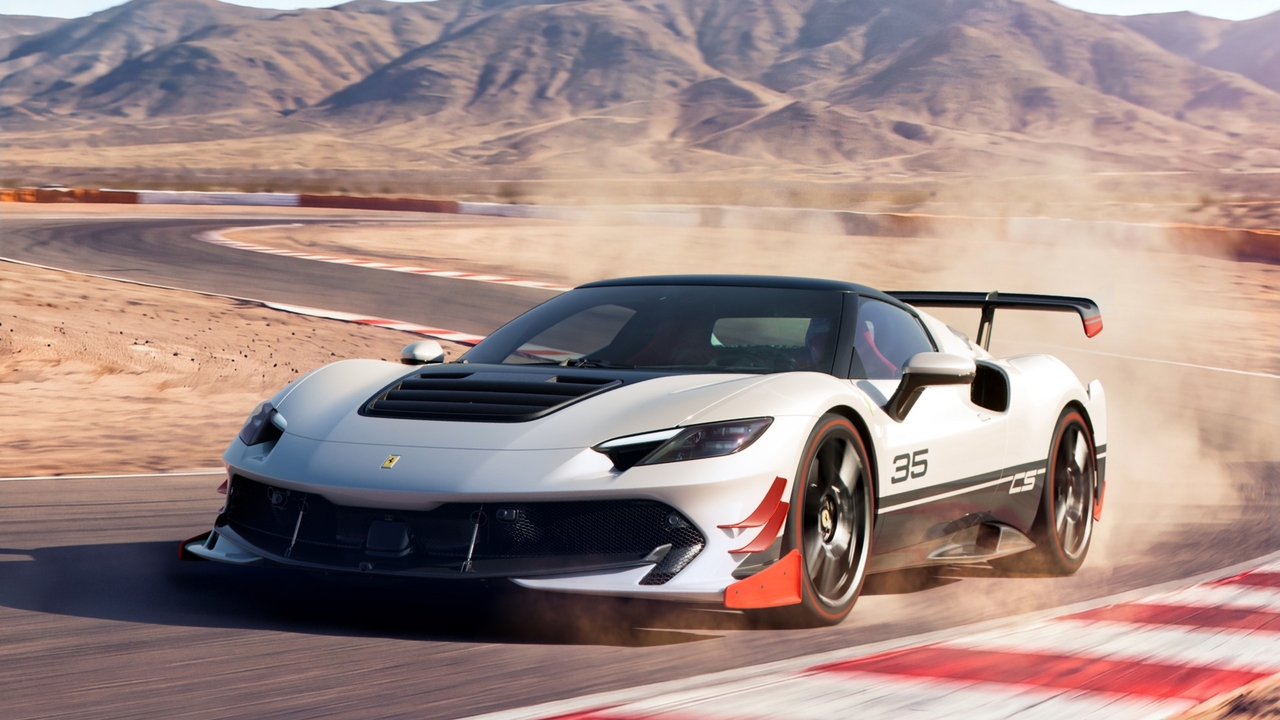
Ferrari unveiled the 296 Challenge Stradale and 296 Challenge Evo at the 2026 Ferrari Finali Mondiali, held at the Circuit de Barcelona-Catalunya in Montmeló, the company announced Sunday.
The 296 Challenge Evo is a further evolution of the model that redefined the Ferrari Challenge benchmark and is set to debut in the 2027 season. Ferrari describes the 296 Challenge Stradale as a road car that distills the essence of racing technology and an uncompromising pursuit of performance.
The 296 Challenge Stradale is the model in Ferrari's current lineup with the most direct connection to its race cars. It strips away unnecessary elements and applies an extremely precise setup, focusing on a vivid, dynamic driving experience that keeps the driver closely attuned to the vehicle.
The 296 Challenge Evo, by contrast, builds on the strengths of the 296 Challenge while pushing absolute performance further without sacrificing ease of driving or stability. An adaptive aerodynamic package, an improved vehicle dynamics control system and a wider operating range combine to deliver faster, more predictable and more consistent lap performance. The driving experience has also been brought closer to that of the 296 GT3 Evo.
Both models are powered by a 120-degree V6 twin-turbo engine displacing 2,992cc, fitted without a hybrid system. The 296 Challenge Stradale produces a maximum output of 670 hp at 8,000 rpm and is paired with an eight-speed F1 dual-clutch transmission. The 296 Challenge Evo delivers 700 hp at 7,500 rpm — 234 hp per liter — and uses a seven-speed F1 gearbox. Eliminating the hybrid system reduces weight and structural complexity while sharpening the direct connection between the driver, the accelerator pedal, the engine and the rear wheels.
The 296 Challenge Stradale has a dry weight of 1,330 kg, a full 140 kg lighter than the 296 GTB, giving it a power-to-weight ratio of just 1.98 kg per horsepower. The 296 Challenge Evo shares the same weight, with both models designed around a focus on lightness and performance.
In terms of design, the volumes and surfaces of the 296 Challenge Stradale have been pared back to reduce visual mass and more clearly express the technical function of each element. Visual continuity with the 296 Challenge Evo is maintained, while the bodywork has been reinterpreted to meet the safety regulations, homologation standards and real-world requirements of a road car.
Aerodynamics is one of the key threads connecting the two models. The 296 Challenge Stradale generates 617 kg of downforce at 250 km/h through an integrated system comprising a fixed rear wing, splitter, flicks, aero dampers, vortex generators and a fully sealed underbody — 72 percent more than the 296 GTB.
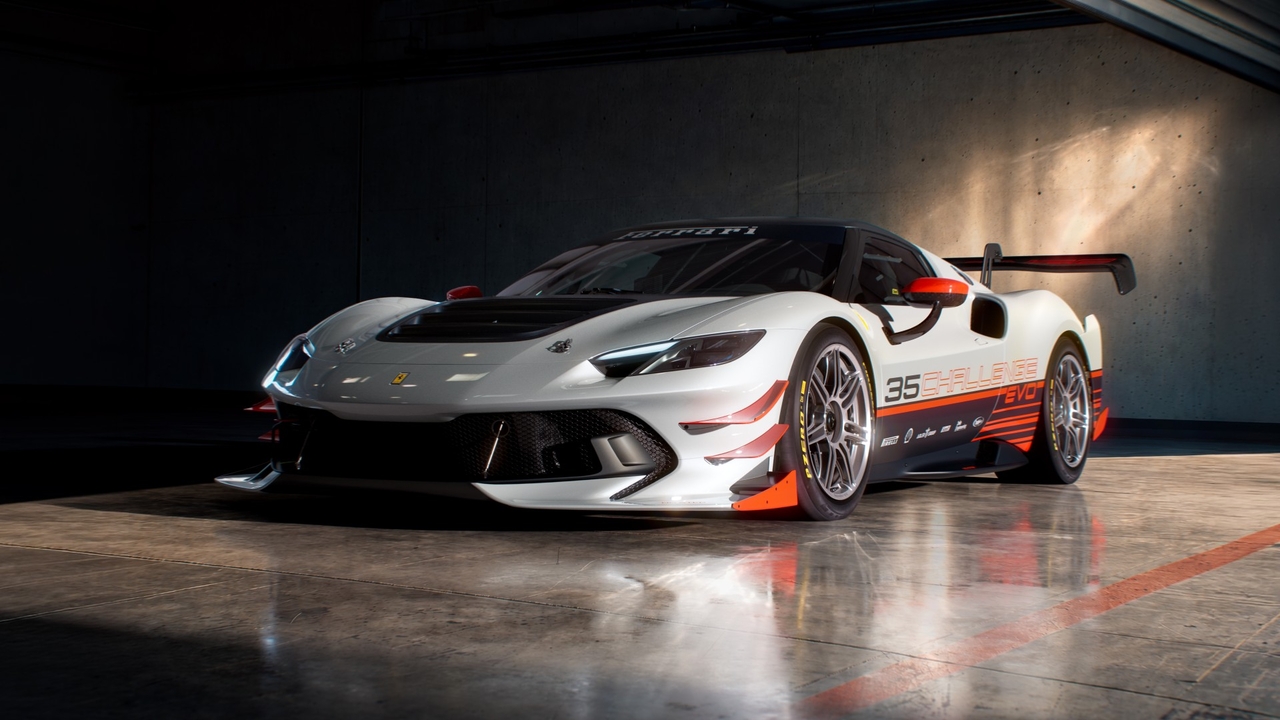
The 296 Challenge Evo improves maximum downforce by 12 percent over the 296 Challenge, equivalent to an additional 100 kg of downforce at 250 km/h. It also introduces a new low-drag setting that cuts minimum aerodynamic resistance by 4 percent.
The 296 Challenge Stradale is equipped with ABS Evo — active across all driving conditions and Manettino settings — along with dedicated control systems, bespoke chassis tuning, and Pirelli P Zero R and P Zero Trofeo RS tires. The 296 Challenge Evo features revised traction control and electronic differential strategies to improve combined performance, braking stability and high-speed cornering agility. A new brake pedal characteristic curve raises braking precision, pedal stroke and pedal feel at equivalent deceleration levels.
The 296 Challenge Evo was also developed to maintain consistent performance throughout a race and reduce tire degradation. In comparative testing it posted faster lap times than its predecessor at every circuit evaluated, cutting the lap time at Mugello by 0.8 seconds compared with the 296 Challenge.
A redesigned instrument cluster improves the readability of driving data, control system intervention levels, tire pressure monitoring system data and lap times. The changes carry added significance given that a new race format will be introduced to the Ferrari Challenge in 2027: the season will feature three rounds of 40-minute endurance races, with the format making its debut at the second round of the season at Mugello.
Meanwhile, the Luce — Ferrari's first battery electric vehicle — recently won the top innovation award at the 2026 Golden Steering Wheel.
The Golden Steering Wheel is one of Europe's most prestigious automotive awards, recognizing outstanding new cars and innovative technology in the industry. This year marks its 50th edition. The award was established in 1976 by Axel Springer and is currently co-organized by Auto Bild and Bild am Sonntag.
likehyo85@heraldcorp.com