All local ordinances — including those proposed by district council members — now subject to child rights impact assessments; ombudsperson system recognized for expertise and independence
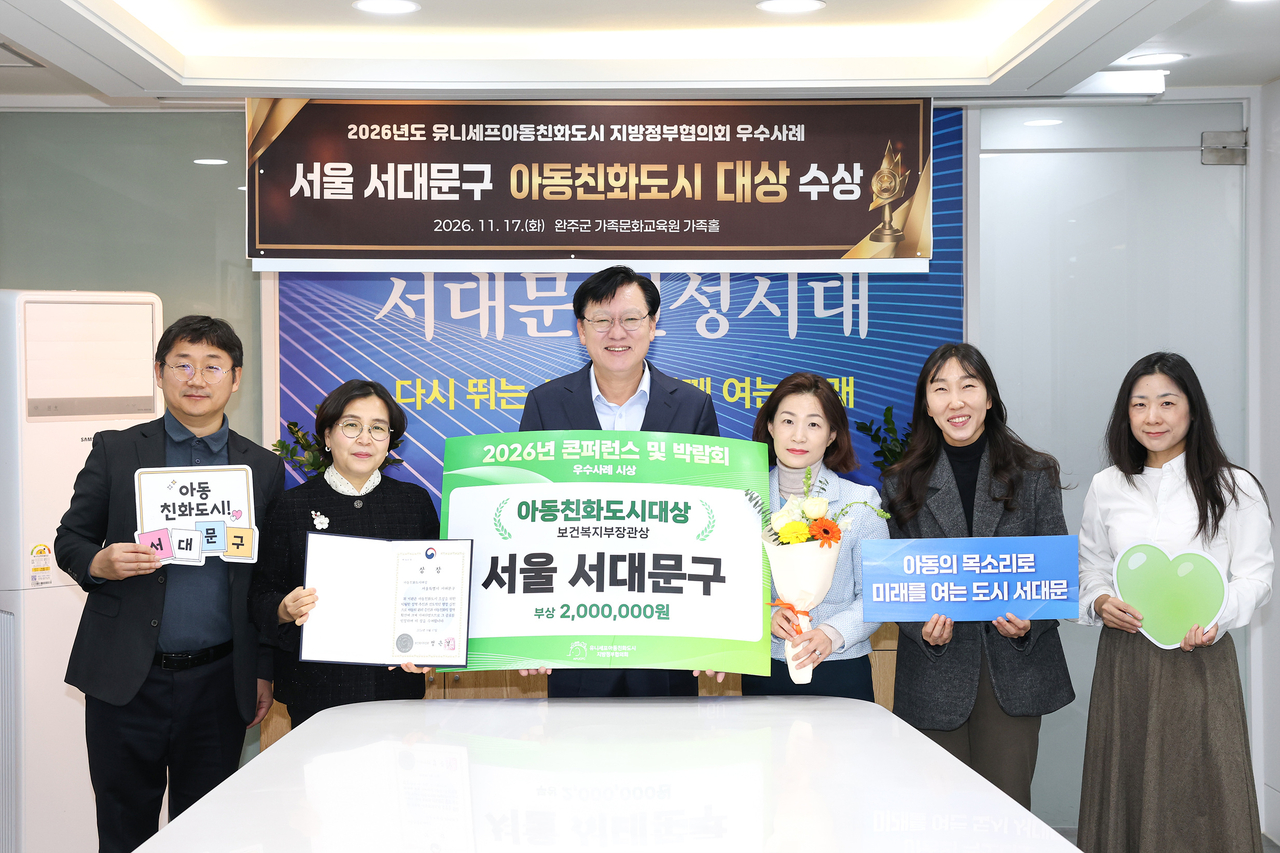
Seodaemun-gu in Seoul has won the top prize at the UNICEF Child-Friendly City Awards for an administrative reform that evaluates the impact on children's rights from the earliest stages of local ordinance drafting.
The district earned particular recognition for becoming the first of Seoul's 25 autonomous districts to extend child rights impact assessments beyond the district office's own legislative proposals to include bills introduced by district council members — institutionalizing child rights protections across both the executive and legislative branches.
Seodaemun-gu announced Sunday that it had won the 2026 Child-Friendly City Grand Prize, awarded by the UNICEF Child-Friendly Cities Local Government Council, in recognition of its child rights impact assessment system for local ordinances.
At the heart of the award is the district's expansion of child rights protections beyond individual welfare projects to encompass the entire local legislative process.
The district formally launched the child rights impact assessment system for local ordinances in October 2025. Under the system, whenever a local ordinance is enacted or revised, its potential effects on children's rights are analyzed and reviewed in advance.
Seodaemun-gu was the first among Seoul's 25 districts to include ordinances proposed by district council members — not just those initiated by the district office — within the scope of the assessment. The arrangement establishes a framework in which both the administration and the council examine children's rights from the legislative drafting stage.
To support this, the district operates a child rights ombudsperson panel composed of experts in law and children's rights. When a draft ordinance is prepared, the ombudsperson reviews its potential impact on children in accordance with the general principles of the UN Convention on the Rights of the Child and issues a written opinion. The relevant department and the district council then consider and incorporate that opinion during the legislative process.
The significance of the system lies in its shift away from reactive, after-the-fact remediation — instead building in checks against potential child rights violations from the moment a policy is being designed.
The ombudsperson panel's hybrid structure — combining full-time staff with appointed external experts — also drew positive recognition from UNICEF Korea as a model for securing expertise, independence and operational stability. The Seodaemun-gu child rights ombudsperson additionally received a commendation for distinguished service in advancing children's rights and building a child-friendly city.
The awards ceremony was held Tuesday at the Family Culture Education Center in Wanju-gun, North Jeolla Province, as part of the 2026 UNICEF Child-Friendly Cities Local Government Council Conference and Expo. Seodaemun-gu presented its best-practice case at the event, sharing details of the system's operation and outcomes with local governments from across the country.
"Children's rights must naturally be considered at every stage of administrative judgment and policy-making," District Mayor Park Woon-ki said. "We will build a Seodaemun where every line of every ordinance is first examined for its impact on children, and where children's voices are reflected in the policies that shape their lives."
Seodaemun-gu first received UNICEF Child-Friendly City certification in 2018, earned an advanced-level certification in 2022, and is currently pursuing renewal of that advanced certification.
seouldream01@heraldcorp.com