Seoul Institute of Public Health and Environment tests 50 types of gloves
Nitrile, latex and natural rubber materials examined
Agency urges consumers to look for 'food-use' label and avoid prolonged contact with hot or acidic ingredients
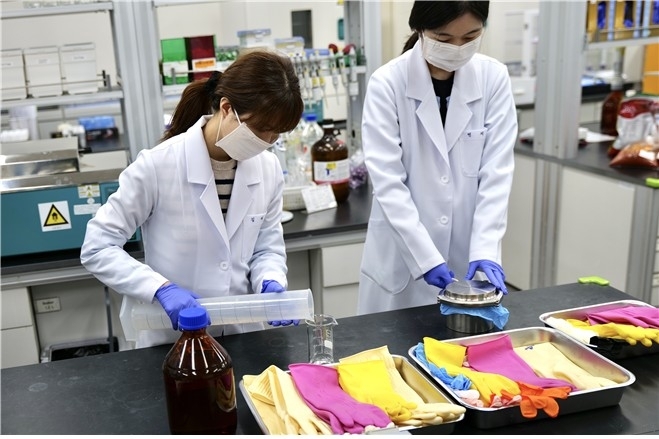
Rubber gloves are a staple of kimchi-making season, used for tasks that involve direct contact with ingredients — salting cabbage, mixing seasoning paste and more. A safety inspection of rubber gloves sold in Seoul found that all products met applicable safety standards.
The Seoul Institute of Public Health and Environment said Sunday that all 50 types of food-use rubber gloves it tested ahead of kimchi-making season passed safety requirements.
The institute examined nitrile and latex gloves, whose use has grown in recent years, as well as natural rubber gloves commonly used during kimchi preparation. Tests measured lead and zinc leaching levels, as well as total migration — the sum of substances that can transfer from the glove into food.
Testing was conducted by placing the gloves in contact with a 4 percent acetic acid solution, which simulates food conditions, and measuring the metals and other substances that leached out.
To reduce exposure to harmful substances during cooking, the institute urged consumers to check that gloves are labeled "food-use" before purchasing. Food-use rubber gloves are regulated under standards for food-contact utensils and containers, and carry a "food-use" label or a designated food-utensil symbol on their packaging — distinguishing them from gloves intended for cleaning or gardening.
Non-food-use rubber gloves may contain catalysts or additives used in manufacturing that could leach into food during cooking, the institute warned.
"Rubber gloves should be used only for their stated purpose and in accordance with the instructions on the label, and care should be taken to avoid prolonged contact with hot foods or strongly acidic ingredients," said Park Ju-seong, director of the institute. "We will continue conducting safety inspections of food-related products so that residents can cook with confidence."
ken@heraldcorp.com