Korea-China FTA deal raises hopes for corporate banking growth
'Future MFN' clause may improve operating conditions
Competition from local banks, tight regulations remain hurdles

South Korean banks operating in China are paying close attention to the possibility of rising corporate banking demand, buoyed by growing expectations for expanded South Korea-China economic cooperation and an easing of the hallyu ban — the restrictions China has imposed on Korean cultural content. If Korean companies ramp up local operations, demand for loans, foreign exchange and trade finance could increase. However, analysts caution that fierce competition from local Chinese banks, combined with diminished Korean corporate appetite for China investment, will make it difficult for any demand increase to translate into meaningful earnings growth.
Major commercial banks are assessing how the substantive conclusion of follow-up negotiations on the Korea-China free trade agreement's services and investment chapters could affect their operating environment in China, according to financial industry sources Saturday.
The two countries declared the substantive conclusion of those follow-up talks at a bilateral summit Wednesday. Under the agreement, China will extend most-favored-nation treatment to Korean content in sectors including film and gaming, and apply a non-discrimination principle to the pre-screening process for online games and films. The scope of co-productions will expand beyond film to include drama series, animation, entertainment programs and documentaries, and Korean companies will gain improved market access in service sectors such as tourism and retail.
In the financial sector, the agreement includes a "future most-favored-nation" clause, under which China would extend to South Korea any financial market opening it grants to a third country in future trade agreements. The deal does not immediately broaden the operating scope of Korean banks in China, but it opens the possibility that conditions for Korean financial firms could improve depending on how far China opens its financial markets going forward.
What the Korean financial industry is most hopeful about is the prospect of increased financial transactions tied to expanded Korean corporate activity in China. As local operations grow in scale, demand could rise not only for working capital and facility loans but also for trade settlement and foreign exchange services. Korean banks currently operate through local subsidiaries and branches in China, providing corporate loans and foreign exchange and trade finance services to Korean-affiliated companies.
"An easing of the hallyu ban will serve as a catalyst for revitalizing economic and cultural exchanges between the two countries," a banking industry official said. "If Korean companies become more active locally, demand for investment and working capital, foreign exchange, and trade finance will gradually expand as well." Another financial industry official said the future MFN agreement in the financial sector "is expected to have a positive effect on improving the local operating environment and expanding business opportunities for Korean financial firms."
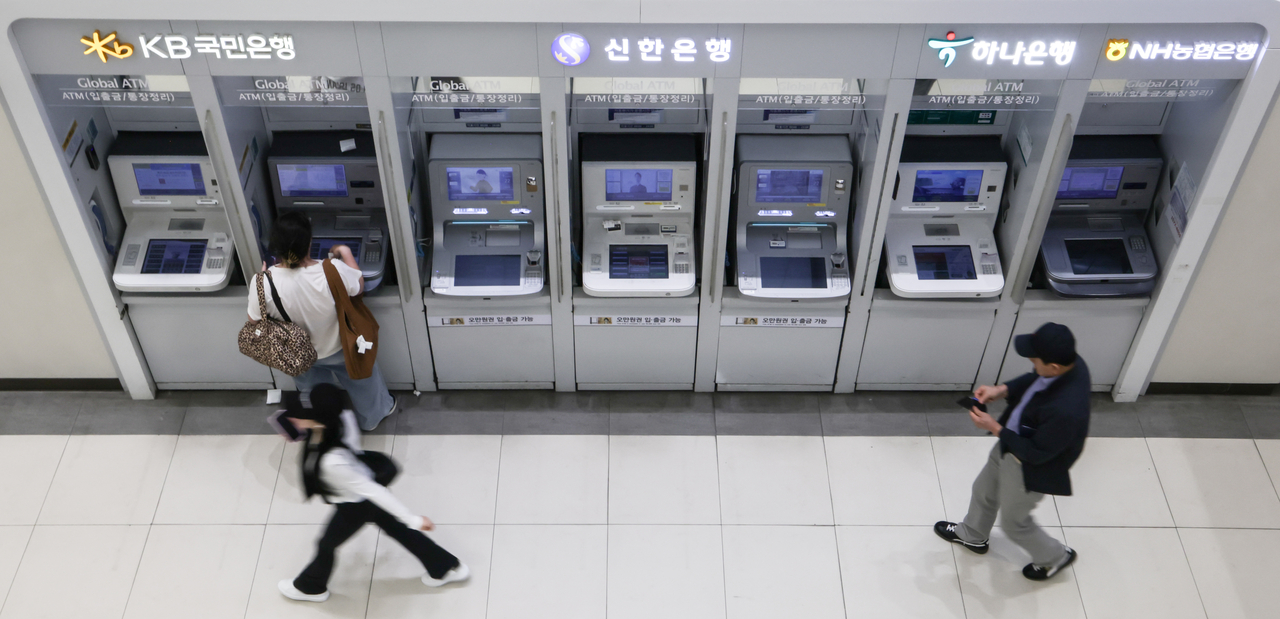
For Korean banks that have struggled in China, the prospect of growing corporate banking demand is welcome news. The combined net profit of the China subsidiaries of the four major commercial banks — KB Kookmin, Shinhan, Hana and Woori Bank — came to 25.77 billion won ($19.4 million) in the first half of this year, down 34 percent from the same period a year earlier. Some banks saw their China subsidiary net profit fall by as much as 70 to 80 percent.
Yet a note of caution is also emerging: expectations for a more open Chinese market may not quickly translate into improved bank earnings. Korean companies that previously entered China have faced difficulties recouping investments and exiting businesses, making them reluctant to commit to further expansion.
"If Korean content can be exported through official channels, it will help boost sales, but I don't think Korean companies will significantly increase their China entry or investment," a financial industry official said. "It is also uncertain how many Chinese consumers who have been accessing Korean content through unofficial channels will actually convert into paying customers."
Competition from Chinese financial institutions adds another layer of difficulty. Local banks hold advantages in corporate credit assessment and distribution networks, and intense competition on lending rates makes it hard for Korean banks to secure profitability. Strict regulations on foreign exchange and cross-border fund transfers are also cited as a constraint on business expansion.
"Chinese financial institutions have a relative edge in credit assessment for local companies and their sales networks," another financial industry official said. "With interest rate competition intensifying, expanding operations while maintaining profitability is no easy task."
Korean banks say they will monitor the implementation of the agreement and local market conditions as they review options for providing financial support to Korean companies operating in China.
rim@heraldcorp.com