PPP pushes special law with harsher prison terms
Democratic Party seeks to extend exam bans up to 10 years
Individual lawmakers introduce a wave of related legislation
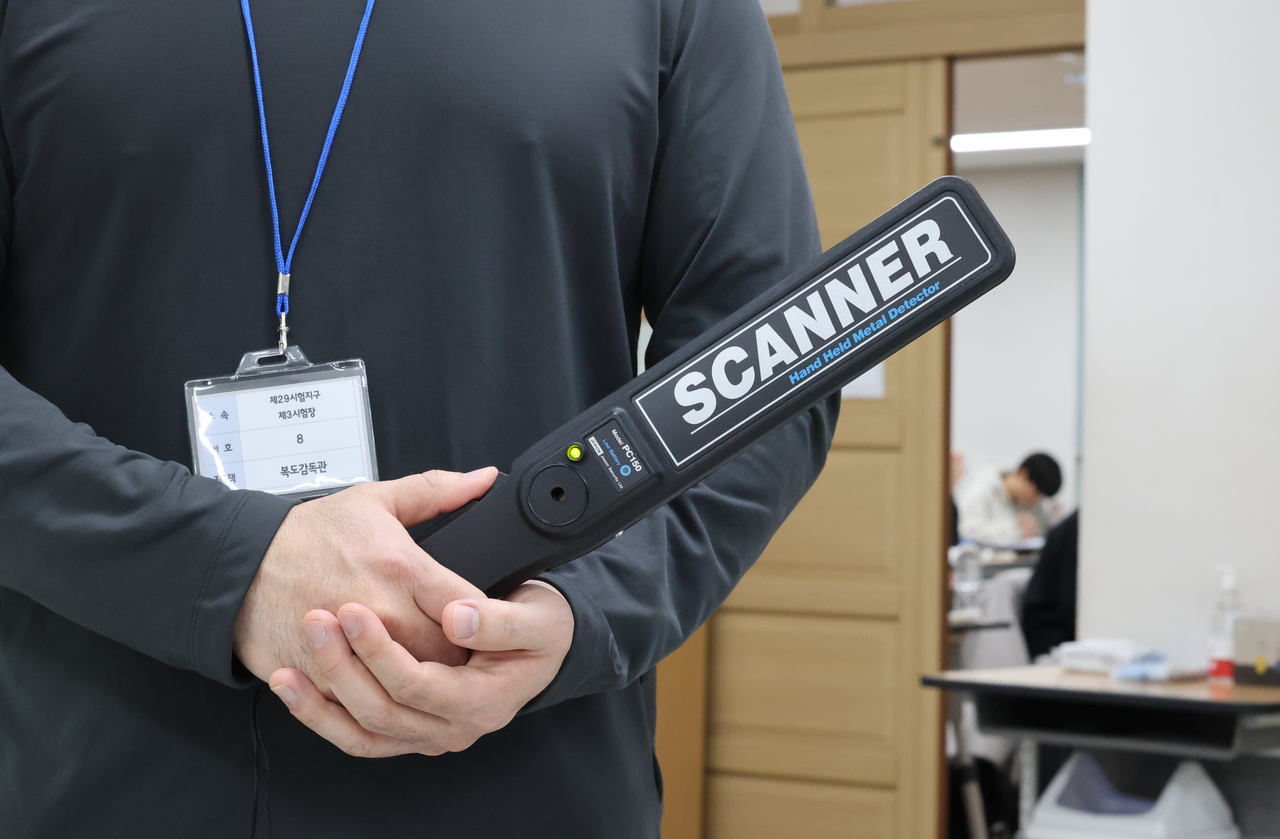
Bills aimed at preventing AI-assisted cheating on national exams are multiplying in the National Assembly. Lawmakers from both the ruling and opposition parties are pushing legislation covering a range of measures — from jamming radio signals at exam venues to toughening criminal penalties and restricting eligibility to sit exams.
Democratic Party of Korea Secretary-General Han Jeong-ae has introduced an amendment to the Higher Education Act that would extend the exam eligibility suspension for College Scholastic Ability Test cheaters from the current one year to a maximum of 10 years, according to political circles Saturday.
The party held a senior policy consultation with the government on Wednesday, the day before this year's college entrance exam, to discuss measures to stamp out AI cheating. Democratic Party leader Kim Min-seok said the party would enact relevant legislation and apply it "starting from this year's college entrance exam" to enable a strong response to AI-assisted cheating.
The People Power Party is pushing to enact a special law imposing harsher penalties for exam cheating using AI. Under the proposed legislation, anyone who uses electronic or communications devices or other illicit means would face imprisonment — with no option of a fine — and be barred from sitting any national exam for 10 years.
PPP policy chief Im Yi-ja criticized the current legal framework, saying it lacks provisions to directly punish exam cheating and that applying charges such as obstruction of business under the Criminal Act has resulted in most cases ending in fines or suspended sentences.
Individual lawmakers from both parties have also filed their own bills. Democratic Party lawmaker Kim Hyeon-jeong introduced a Criminal Act amendment that would allow criminal prosecution of those who cheat on public examinations.
The core of the amendment is the creation of a new "exam obstruction" offense in the Criminal Act. Anyone who cheats on an exam administered by the state, a local government or a public institution would face up to five years in prison or a fine of up to 15 million won ($11,300).
PPP lawmaker Park Jeong-hun plans to introduce a Radio Waves Act amendment and related bills that would allow radio signal jamming at venues for the college entrance exam and other national exams to block AI-assisted cheating. The amendment is expected to include a provision allowing the Minister of Science and ICT to request that telecommunications carriers and others jam signals in the vicinity of exam venues during national exams.
PPP lawmaker Kim Wi-sang introduced three bills — amendments to the National Technical Qualifications Act, the Framework Act on Qualifications and the Tax Accountant Act — collectively dubbed the "three national qualification AI cheating prevention laws." The bills would establish a legal basis for radio-wave detection inside exam venues and searches of examinees' belongings to prevent cheating using AI-equipped smart glasses and ultra-compact wireless communication devices on national qualification exams.
mp1256@heraldcorp.com