The phrase "over-response" in disaster management traces its origins to Yom Tae-young, a National Assembly member and former Suwon mayor, who first used the term during his tenure at City Hall to argue that excessive caution in a crisis is never a bad thing. President Lee Jae Myung later adopted the phrase while serving as Gyeonggi Province governor, and now Suwon Mayor Lee Jae-jun has taken it up as well — helping spread the concept nationwide.
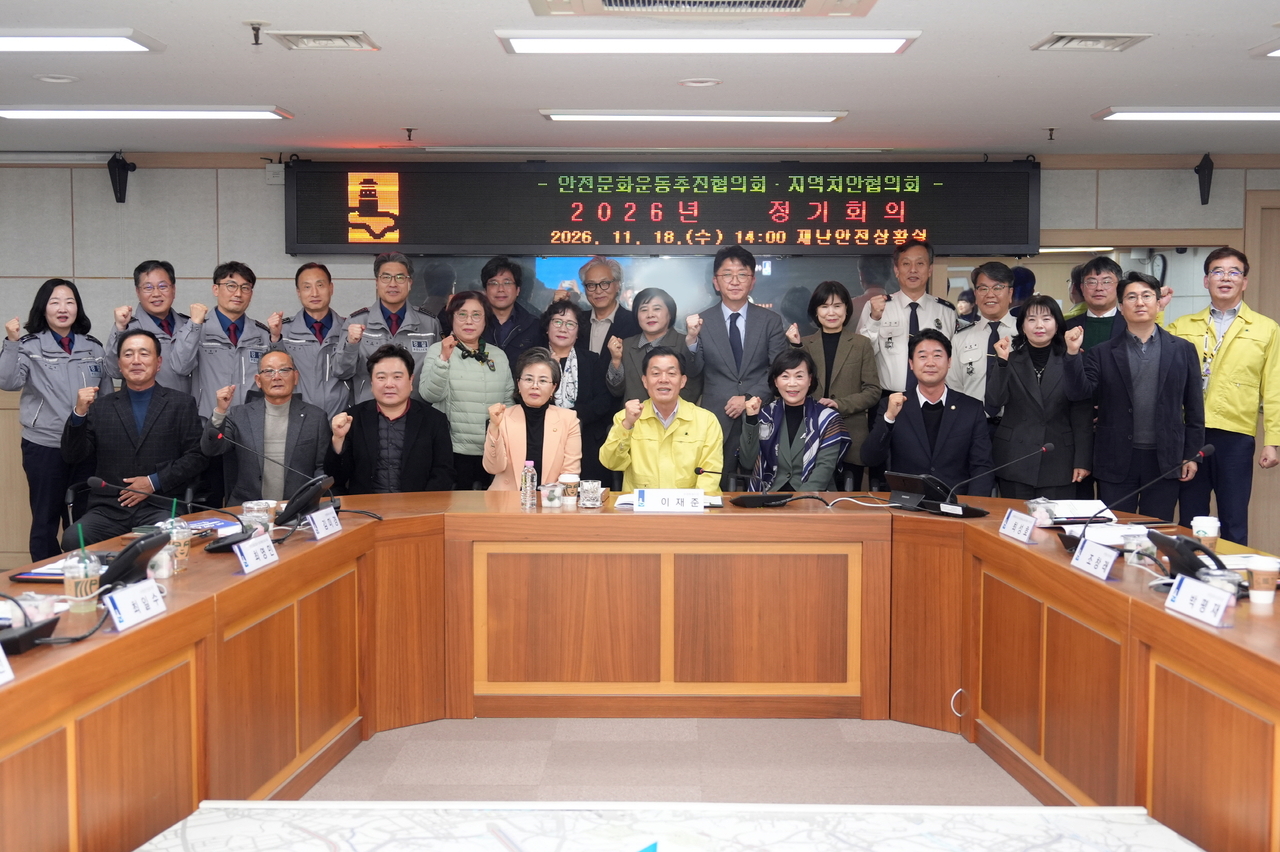
Suwon Mayor Lee Jae-jun chaired a joint regular meeting of the city's Safety Culture Movement Promotion Council and Local Security Council at the city hall disaster safety operations center on Wednesday, saying, "When it comes to public safety, there is no such thing as over-responding."
"Thanks to your efforts, we were able to hold major events like the Suwon Hwaseong Cultural Festival safely," Lee said, urging attendees to continue taking an active approach to safety issues and to help build a safer city.
About 30 people attended the meeting, including Lee, who chairs both councils, council members, and Suwon Special City Council Speaker Kim Mi-gyeong. Participants reviewed reports on safety culture initiatives and public security measures before holding an open discussion.
Suwon's 2026 safety culture program is organized around four areas: expanding civic participation, diagnosing risk factors, improving everyday safety infrastructure, and strengthening disaster response capacity.
Under the civic participation expansion initiative, the city ran 524 sessions of its Saebit Safety Guardian training program, drawing 33,788 participants. Some 18,699 elementary school students took part in survival swimming classes, 251 dog-patrol teams reported 371 safety hazards, and 3,820 parent police volunteers were active across 40 schools.
On the risk-factor diagnosis front, the city conducted safety inspections at 317 sites across various facilities and time periods, carried out focused checks at 122 additional sites under the national Safety Transformation initiative, and processed 300,000 public safety complaints.
Everyday safety infrastructure improvements included the cumulative creation of 40 safe-route-home zones, the installation of 82 new AI-enabled closed-circuit television cameras, and the distribution of residential fire safety equipment to 396 households. To bolster disaster response capacity, the city expanded its metropolitan emergency vehicle priority signal system, conducted infectious disease diagnostic testing, and deployed pedestrian safety assistants at construction sites.
fob140@heraldcorp.com