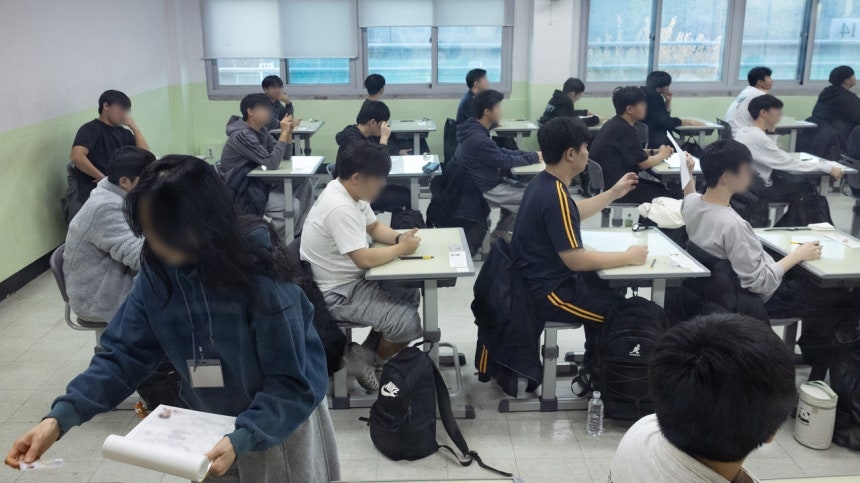
South Korea's Anti-Corruption and Civil Rights Commission announced Thursday it will run a two-month intensive reporting period for cheating on the College Scholastic Ability Test, starting Friday and running through Jan. 19, targeting the use of high-tech devices such as AI-enabled smart glasses and miniature cameras.
The commission said the initiative reflects the rapidly evolving methods of exam fraud, citing recent cases including cheating on the tax accountant licensing exam using miniature cameras and generative AI, as well as smart-glasses cheating detected at some middle and high school internal exams.
Under Article 34, Paragraph 5 of the Higher Education Act, anyone who cheats on the CSAT faces automatic invalidation of their results and a suspension of exam eligibility for a period set by law. Because such disqualification targets conduct that undermines fair competition, it falls within the scope of public-interest reporting.
Reportable conduct includes photographing exam questions using smart glasses or miniature cameras — including button-type or ear-insert models — and obtaining answers through generative AI or from outside sources during the exam.
Reports received will be reviewed as quickly as possible and forwarded to the relevant investigative agency. Under the Public Interest Whistleblower Protection Act, reporters' identities will be strictly protected, and whistleblowers are entitled to reinstatement if dismissed or disciplined as a result of their report, as well as personal security protection against threats to their life or safety.
Reporters may also use an anonymous proxy-reporting system, through which a lawyer listed on the commission's website submits the report without disclosing the reporter's identity. Even those who participated in the cheating may have their penalties reduced or waived if they come forward.
When a report leads to an administrative sanction — such as a suspension of exam eligibility — the commission will pay a reward of up to 100 million won ($75,100) per case under the Public Interest Whistleblower Protection Act.
"Cheating on the CSAT is a serious violation of the public interest that undermines the efforts of countless test-takers and the integrity of fair competition," commission Chairperson Jeong Il-yeon said. "We will do our utmost to protect whistleblowers and process reports swiftly, so that cheating not caught at the exam site can still be corrected through public tips."
Meanwhile, Lee Jin-woo, 32, who had been embroiled in allegations of scoring a perfect mark on the Legal Education Eligibility Test (LEET) through AI-assisted cheating, was found dead Thursday at a motel in Gangdong-gu, Seoul.
If you're thinking about self-harm or suicide, dial the Suicide Prevention Hotline at 109, available 24 hours a day, seven days a week. Please request a translator for English-language services.
youknow@heraldcorp.com