Share count unchanged as book par value drops from 1,000 won to 100 won
First capital restructuring step ahead of Shinhan Financial takeover; 300 billion won rights offering planned for next year
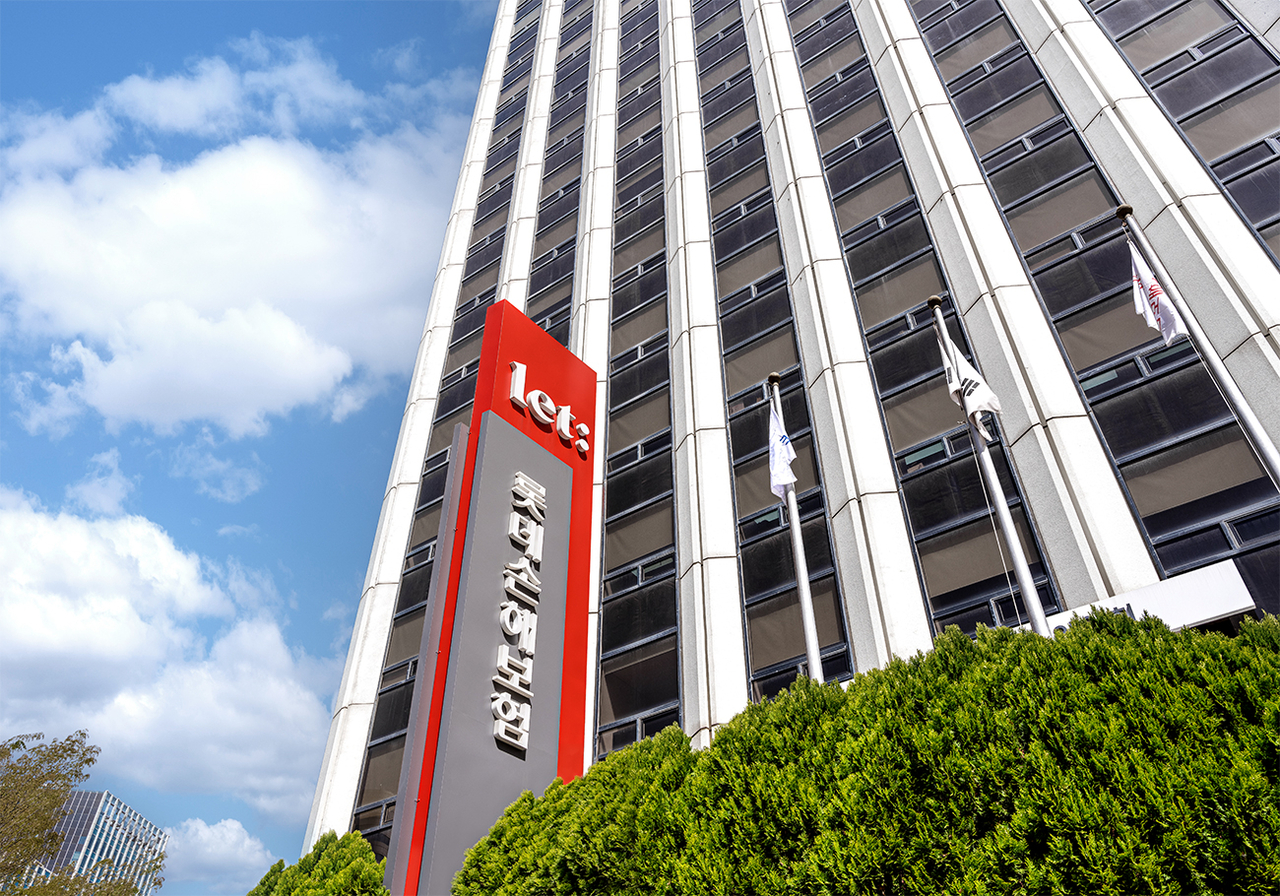
Lotte Non-Life Insurance is pursuing a 10-to-1 par value reduction — cutting the book par value per share from 1,000 won to 100 won — as the first step in restructuring its capital base ahead of its absorption into Shinhan Financial. The move is designed to eliminate a shortfall in its surrender-value reserve and push the insurer's Tier 1 capital, currently negative, back into positive territory. Shinhan Financial plans to complete the acquisition and make Lotte Non-Life a wholly owned subsidiary in the first half of next year, after which it intends to carry out a rights offering of about 300 billion won ($225 million).
According to DART filings Thursday, Lotte Non-Life held a board meeting that day to approve the par value reduction and to call a shareholders' meeting to vote on the plan. Once the reduction takes effect, paid-in capital will fall from 310.3 billion won to 31 billion won, with the 279.3 billion won difference recorded as a capital reduction surplus.
Unlike a share consolidation — which reduces the number of shares outstanding — this reduction lowers only the book par value per share. A shareholder holding one share will still hold one share after the reduction. Because the number of issued shares does not change, shareholders' ownership stakes and voting rights remain unaffected. Lotte Non-Life said it plans to explain this to shareholders so the 10-to-1 ratio is not misread as a reduction in share count.
The par value change will trigger a trading suspension on Lotte Non-Life shares from Jan. 29 to Feb. 23 next year, with new shares scheduled to list on Feb. 24. Because the reduction is not intended to cover accumulated losses, the company must also go through a creditor and policyholder objection process.
What changes is the composition of capital items on the company's books. The reduction in paid-in capital is offset by an equal increase in capital surplus in the form of a capital reduction surplus, so no cash leaves the company and total equity remains the same before and after the reduction. The size of Tier 1 capital under the Korean Insurance Capital Standard, or K-ICS, also stays unchanged at the reduction stage.
Lotte Non-Life is reshuffling its capital items to cover a shortfall in its surrender-value reserve — a statutory reserve set aside within retained earnings to cover refunds owed to policyholders upon contract cancellation. When the reserve falls short of the required level, the shortfall is deducted from Tier 1 capital under K-ICS and reclassified as Tier 2 capital. In Lotte Non-Life's case, the amount reclassified as Tier 2 capital on this basis reached 2.07 trillion won as of the end of June. At the same point, the insurer's Tier 1 capital stood at negative 91 billion won, with a Tier 1 capital ratio of negative 5.4 percent.
Lotte Non-Life plans to transfer the capital reduction surplus to retained earnings through a capital reserve reduction procedure, then use those earnings to build up the surrender-value reserve. Once the process is complete, the insurer estimates the reserve shortfall will be eliminated and its recognized Tier 1 capital will increase by about 460 billion won. That figure reflects only the effects of the par value reduction and the capital reserve reduction, and does not include the impact of Shinhan Financial's planned rights offering. Restoring Tier 1 capital to positive territory is also expected to strengthen the company's ability to comply with the K-ICS Tier 1 capital ratio requirement set to take effect next year.
Shinhan Financial to inject 300 billion won after making Lotte Non-Life a wholly owned unit
Shinhan Financial plans to conduct a rights offering of about 300 billion won after completing the full acquisition. The portion of capital surplus — including share premium generated by the offering — that exceeds 1.5 times paid-in capital will be converted into retained earnings. Shinhan Financial expects that once this process is finished, Lotte Non-Life's Tier 1 capital ratio will reach the 38 to 40 percent range.
Earlier, Shinhan Financial signed a share purchase agreement with private equity fund manager JKL Partners last month to acquire a 77.04 percent stake in Lotte Non-Life for 693.3 billion won. Shinhan plans to acquire the remaining 22.96 percent stake as well, with the total acquisition cost estimated at about 900 billion won.
Shinhan Financial expects to receive regulatory approval from the Financial Services Commission in the first quarter of next year. Upon approval, it will pay JKL Partners and complete the acquisition of the 77.04 percent stake. It then plans to acquire the remaining shares in the first half of next year, delist Lotte Non-Life and bring it in as a wholly owned subsidiary.
Shinhan Financial believes that once Lotte Non-Life joins the group, it will be able to reduce interest costs by refinancing the insurer's hybrid and subordinated capital securities. The group's reasoning is that a credit rating upgrade following the acquisition would allow refinancing at lower rates. Shinhan Financial is also considering issuing bonds directly at the holding company level to fund the refinancing.
As of the end of June, Lotte Non-Life had 856 billion won in subordinated bonds and hybrid capital securities outstanding, carrying coupon rates in the 6 to 7 percent range annually. The insurer paid 54.2 billion won in subordinated bond interest alone over the past year. Korea Ratings has assigned Lotte Non-Life's subordinated bonds and hybrid capital securities credit ratings of BBB+ and BBB, respectively.
On the business side, Shinhan Financial is also considering linking Lotte Non-Life's auto insurance products with the group's auto loan operations. Expanding the sales channel for Lotte Non-Life products through bank branches is seen as a way to help grow the insurer's market share.
Market analysts expect Shinhan Financial to maintain its capital ratio and shareholder return levels even after the acquisition. Jeon Bae-seung, a researcher at LS Securities, said the group is expected to achieve a shareholder return ratio of more than 50 percent this year as it did last year, adding that its Common Equity Tier 1 ratio appears capable of staying in the mid-13 percent range even accounting for the impact of the Lotte Non-Life acquisition.
forest@heraldcorp.com
won@heraldcorp.com