Semiconductor exports reach $398.39 billion from January to October
Chips account for 43% of total exports
HBM at the center of unprecedented semiconductor export performance
SK hynix kept investing despite market indifference
'Rising semiconductor exports are the result of partnerships with suppliers'
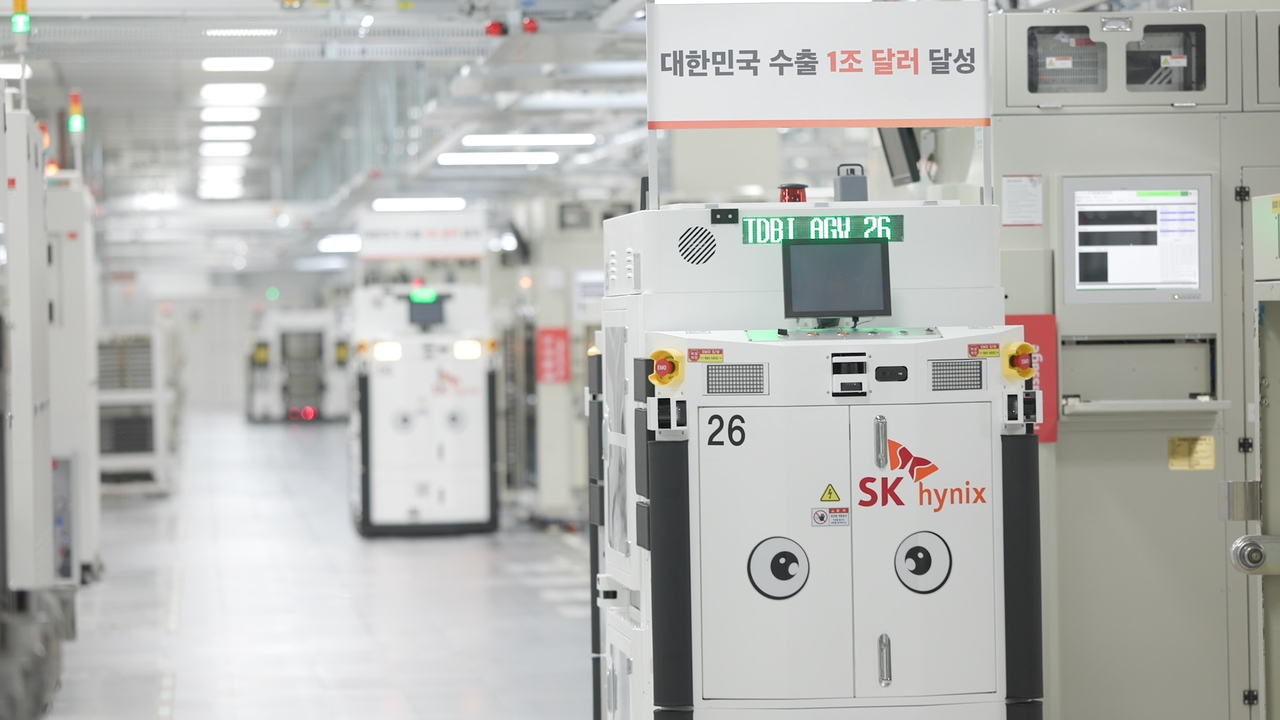
"Hearing the news of $1 trillion in exports from the very site where we weathered so many difficult times — including the IMF crisis — fills me with a deep sense of emotion. I am especially proud that our semiconductors have played such a major role in South Korea's economic development," said Lee Jeong-seok, head of SK hynix's Icheon fabrication plant.
South Korea's annual exports surpassed $1 trillion for the first time in history on Thursday, and semiconductors are by far the driving force behind the milestone.
Semiconductor exports totaled $398.39 billion in the first 10 months of this year, accounting for 42.8 percent of total exports of $930.2 billion. The share has climbed consistently from just 15.6 percent in 2023 to 20.8 percent in 2024 and 24.4 percent in 2025.
According to the Korea Customs Service, semiconductor exports in October alone reached $56.7 billion — a 257.5 percent increase from October last year and the highest figure ever recorded for that month.
At the center of this unprecedented semiconductor export performance is high-bandwidth memory, or HBM. As AI investment has expanded worldwide, demand for high-performance memory chips led by HBM has surged.
HBM stacks multiple DRAM chips vertically, enabling faster data processing than conventional DRAM. That speed advantage has driven explosive demand across industries that must handle massive volumes of data, such as AI server applications.
The rapid rise in demand for high-value-added memory chips has pushed up both the unit price and volume of semiconductor exports, translating into a steep climb in South Korea's chip export figures.
The origins of HBM — now a key driver of the $1 trillion export achievement — trace back 13 years. SK hynix began developing HBM in 2009 and in 2013 became the first company in the world to release a first-generation HBM product. At the time, however, the semiconductor market was not mature enough to embrace a chip with HBM's speed and capacity, and the product went largely unnoticed.
Despite the technological innovation packed into HBM, production difficulty and costs were high while demand fell short of expectations, prompting some in the industry to declare there was simply no market for it.
SK hynix refused to halt its research and development, however, and in 2019 became the first to develop HBM2E, the third-generation HBM, continuing to invest through the skepticism.
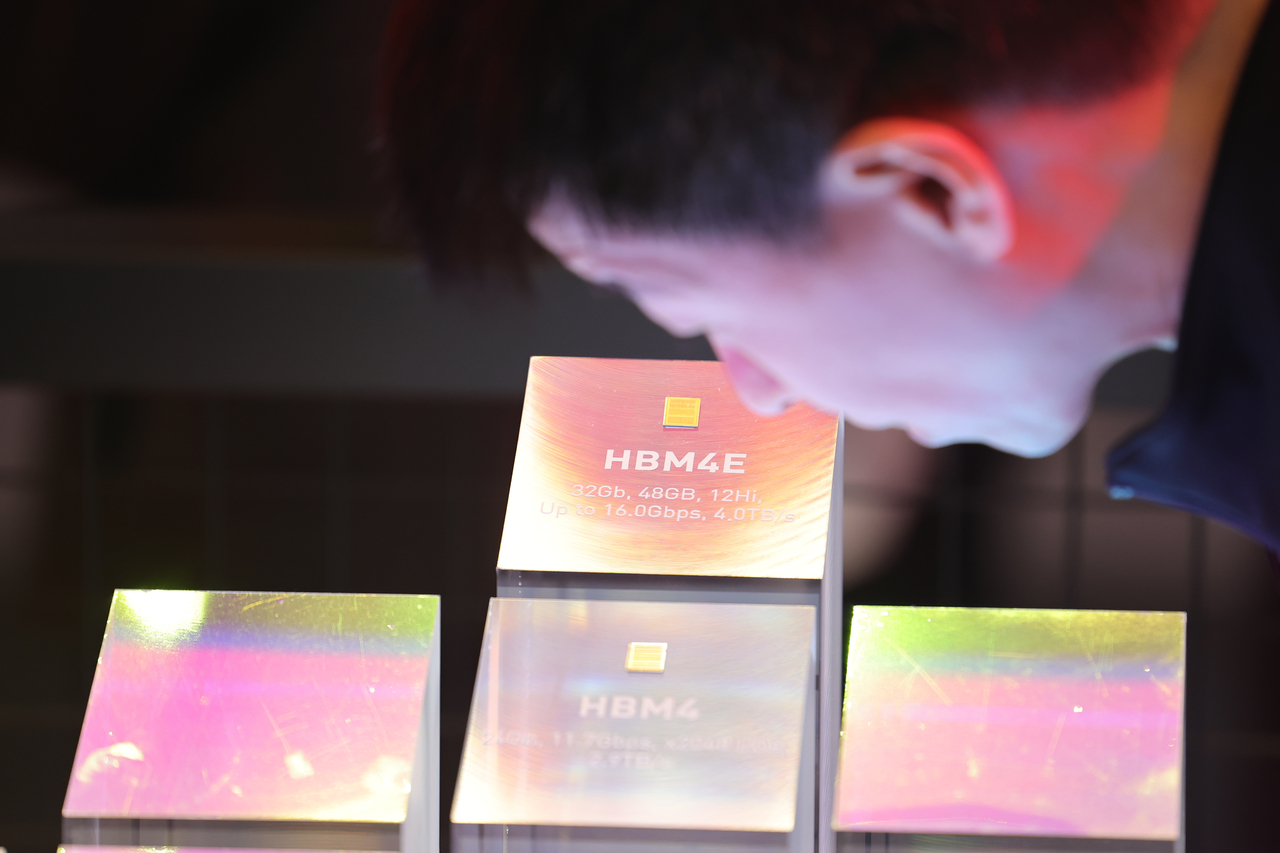
When generative AI sparked a boom in 2022, HBM — long seen as the solution to memory bottlenecks — finally began to attract the attention it had long been denied. SK hynix, which had already built out a mass-production system for HBM3, rapidly absorbed the explosion in demand and extended its dominance in the HBM market.
In 2024, SK hynix broadened its technological reach beyond HBM, becoming the first to develop DDR5 using a 10-nanometer-class sixth-generation (1c) process and successfully achieving mass production of 321-layer NAND — advances that extended the company's edge across both DRAM and NAND.
The success of South Korea's semiconductor exports, led by HBM, is also credited in large part to domestic materials, components and equipment suppliers that provide specialty semiconductor materials and advanced packaging equipment.
"We have strengthened HBM competitiveness by working alongside domestic materials, components and equipment partners to meet ever-higher technical demands with each new generation," SK hynix said. "The steep rise in semiconductor export figures is the result of that partnership."
Looking further ahead, SK hynix plans to reinforce the materials, components and equipment ecosystem — and continue contributing to national export growth — through Trinity Fab, a facility under construction within the Yongin semiconductor cluster.
Trinity Fab will house 55 pieces of equipment in total, including front-end semiconductor process tools and 37 advanced mass-production machines based on 12-inch wafers, in a cleanroom spanning 3,300 square meters. The facility is targeting the start of operations in May next year.
SK hynix plans to make the facility available to materials, components and equipment companies so they can verify the mass-production viability of their products. Small and medium-sized enterprises that have developed innovative semiconductor materials or equipment but lacked the resources to validate mass-production feasibility will be able to rapidly raise their technological readiness in an environment identical to an SK hynix factory.
joze@heraldcorp.com